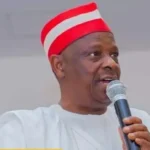
“Dismissing Rabiu Musa Kwankwaso would be strategically unwise. Kano’s electorate has historically demonstrated sensitivity to perceived betrayal and a readiness to recalibrate loyalties. Should an alternative platform present a credible candidate aligned with the movement’s founding ethos, protest sentiment could fracture the APC’s fragile coalition”.
BY BELLO GWARZO ABDULLAHI

The defection of Governor Abba Kabir Yusuf to the All Progressives Congress (APC) has fundamentally reshaped the political landscape of Kano State. The event at Sani Abacha Stadium, though carefully choreographed, failed to convey the intended strength or federal alignment. Instead of signaling consolidation, it revealed a coalition driven by expediency rather than cohesion, exposing an uneasy convergence of rival interests positioning themselves ahead of 2027.
At the heart of the tension is the 60/40 leadership-sharing formula. Allocating 60 percent of party control to the Governor’s Kwankwasiyya-aligned bloc and 40 percent to the legacy APC faction associated with Abdullahi Umar Ganduje may satisfy short-term negotiations, but grassroots politics rarely follows numerical formulas. This redistribution of influence across wards and local governments represents a structural shift that inevitably generates friction.
Longstanding APC chairmen, councillors, and contractors who sustained the party during its opposition years are unlikely to relinquish entrenched positions without resistance. The same applies to those now controlling local governments under the NNPP banner, including commissioners and members of both the State and National Assemblies. In primary contests, loyalty cultivated over time does not disappear because of a negotiated ratio. The unrest in Tudun Wada illustrates this dynamic: enforcing a 60 percent allocation to new entrants effectively sidelined Hon. Alhassan Ado Doguwa within his own base, prompting backlash that reflects deeper undercurrents across the state.
During the formal defection ceremony, these strains became more apparent. When the APC Publicity Secretary publicly criticized absent local government chairmen, it was widely interpreted as evidence of incomplete consolidation. The optics suggested that several stakeholders were uncomfortable with the Governor’s move, viewing it as political betrayal while tactically remaining aligned for the moment.
Public commendation directed at Engr. Abba Ganduje was widely interpreted as a signal to new entrants from Dawakin Tofa, particularly Sanusi Bature Dawakin Tofa, Director General of Media to the Governor and co-anchor of the event, and Alhaji Damaliki, Chairman of Dawakin Tofa Local Government. These gestures reinforced perceptions of subtle internal signaling beneath the rhetoric of unity.
The visible friction between Hon. Doguwa and Senator Kawu Sumaila reflects a clear identity struggle within the party. Hon. Doguwa aligns with Ganduje and Murtala Garo, while Senator Sumaila aligns with Governor Abba Kabir Yusuf, exposing a firm internal division.
Meanwhile, the shadow of Kwankwasiyya politics remains significant. Dismissing Rabiu Musa Kwankwaso would be strategically unwise. Kano’s electorate has historically demonstrated sensitivity to perceived betrayal and a readiness to recalibrate loyalties. Should an alternative platform present a credible candidate aligned with the movement’s founding ethos, protest sentiment could fracture the APC’s fragile coalition.
Federal influence alone will not secure dominance in Kano. The state’s political culture remains deeply rooted in grassroots structures, and alliances that ignore this reality often falter under electoral pressure. Ultimately, the durability of this realignment will depend less on ceremony or rhetoric and more on tangible governance outcomes that resonate with the electorate.
…Bello Gwarzo Abdullahi, a public affairs analyst can be reached via bgabdullahi@gmail.com