Environmental Rights Action/Friends of the Earth Nigeria (ERA/FoEN), has declared that for agroecology to grow and deliver its full potential, it must be backed by supportive policies, sustained public investment, research, extension services, and accessible markets.
The Deputy Executive Director of ERA/FoEN, Mrs. Mariann Bassey-lsson, who stated the position of the organization at a one-day stakeholders’ workshop on agroecology which held in Abuja, noted that agroecology is gaining recognition in Nigeria as a pathway to sustainable food systems, climate resilience, and better livelihoods for farmers.
She however said that policy support, public financing, and backing for farmer-led agroecology remain limited.
Bassey-lsson who spoke at the workshop organized and sponsored by Health of Mother Earth Foundation (HOMEF), in partnership with CAFOD Nigeria and the Alliance for Food Sovereignty in Africa (AFSA),
stated that Nigeria’s food system faces multiple challenges—from climate change, soil degradation and biodiversity loss to rising food insecurity, the growing cost of food, and the increasing vulnerability of small-scale farmers.
She said that the challenges called for more than technical solutions as they require a shift in how we think about food, how we produce it, whose knowledge we value, and where our policies and public resources are directed.
Bassey-lsson, who was on top of the subject matter, said agroecology offers an important pathway for addressing these challenges as it builds on the knowledge, innovations and practices of farmers and communities, strengthens biodiversity, supports livelihoods, and places people and the environment at the heart of food production.
In her words; “W”e want to move beyond simply recognising the value of agroecology to examining the evidence, identifying policy gaps, discussing financing and support mechanisms, and agreeing on practical advocacy priorities and next steps”.
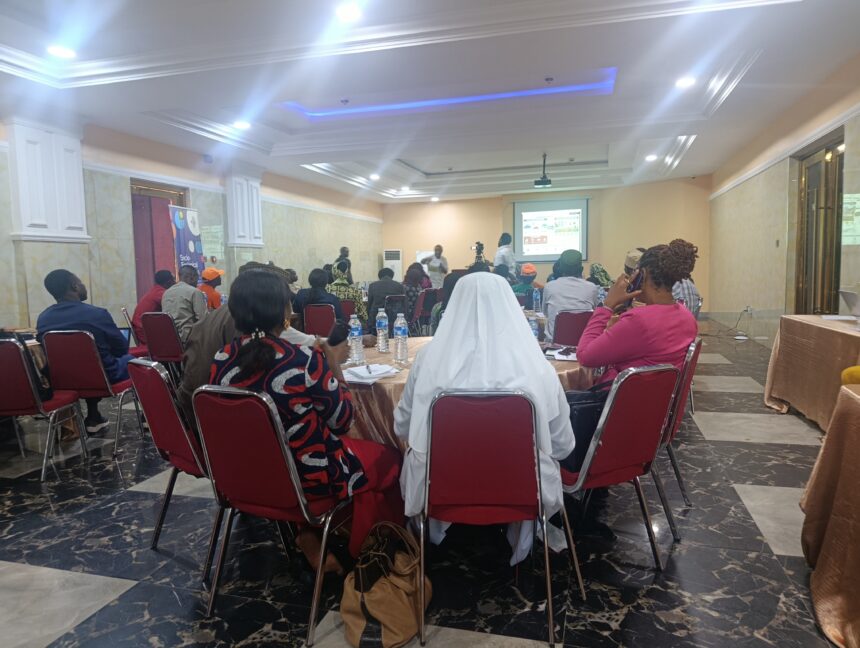
At the workshop which brought together policymakers, government officials, farmers, farmer organisations, civil society, researchers, and the private sector to discuss the state of agroecology policy in Nigeria, the financing and support farmers need, and the priorities for joint action, Bassey-lsson expressed enthusiasm that the workshop being an open one will be constructive and action-oriented, with the voices and experiences of farmers and practitioners central to the discussions.
The workshop which drew participants from different walks of life, witnessed presentation of a keynote address on agroecology policy in Nigeria, lessons from AFSA’s work across Africa, reflections from a farm visit held on November 25, 2026 and later, panel discussion on financing farmer-led agroecology, and group work to agree on advocacy priorities and way forward.
Concluding, Bassey-lsson told the participants that there were gathered for the workshop at a critical time to take a critical look at “Transforming the Nigeria Food System through Agroecology: Evidence, Policy Pathways and Public Financing”.
Thank you for making the time to be here and for your commitment to advancing more just, sustainable, resilient, and people-centred food systems in Nigeria.
The workshop provided an opportunity of learning from Nigeria’s policy landscape and experiences across Africa, and have conversation about what kind of financing and institutional support farmers need to transition to with a view to sustain agroecological practices.