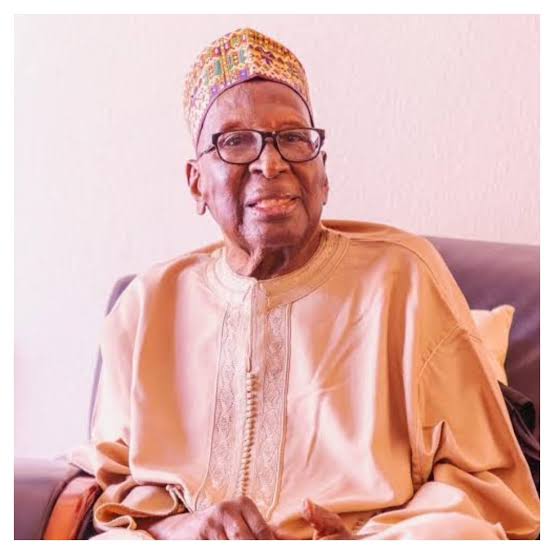
Elder statesman, business mogul, former Governor of defunct Gongola State and past National Chairman of the Peoples Democratic Party (PDP), Alhaji Bamanga Tukur is dead.
Alhaji Bamanga Tukur died on Saturday, September 12, 2026, at the age of 90 after a brief illness.
His death was announced by the Adamawa State Governor, Hon. Ahmadu Umaru Fintiri, who described the late Tukur as an elder statesman, accomplished businessman and distinguished politician.
Fintiri in a statement by his spokesperson, Humwashi Wonosikou, declared three days of mourning across Adamawa State, with all government flags to fly at half-mast.
Fintiri said; “Alhaji Bamanga Tukur was a colossus who made remarkable contributions to the development of Adamawa State and Nigeria. His wealth of experience, wisdom and commitment to public service earned him a place of honour in our national history.
“I will personally miss his wise counsel… His passing has left a significant void that will be difficult to fill,” he stated.
Born in 1935 in Yola, Bamanga Tukur first rose to national prominence as the first civilian Governor of Gongola State from 1979 to 1983 under the National Party of Nigeria (NPN) and at a time when military rule loomed large, Tukur governed the vast, multi-ethnic Gongola with a focus on agriculture, education and infrastructure — laying foundations that still shape present-day Adamawa and Taraba.
Tukur also built himself into an international businessman with interests in banking, insurance, oil and gas, agriculture and media and was the Chairman of Nigeria Ports Authority (NPA), Chairman of Savannah Sugar Company, and also sat on boards that connected Nigerian capital to the world at various times.
The late Tukur was one of the architects of the Peoples Democratic Party (PDP) and later became its National Chairman from 2012 to 2014, and presided over the party at the height of its national dominance, navigated the turbulent period that preceded the 2015 elections.
To many political observers in the country, Tukur symbolized the bridge between the founding fathers and the new generation.
Expectedly, Tukur was regarded as one of the political godfathers in the Northeast and a quiet power broker in Abuja as Governors, ministers and party chieftains routinely sought his counsel.
The Bamanga Tukur’s reputation rested on three pillars: business acumen, political longevity, and a belief in institution-building over personality politics.
Even in his 80s, he remained active in dialogues on national unity, economic diversification and youth empowerment with determined courage, determination dedication, foresight, patriotism and lifelong commitment to public service.
Condolence messages have started pouring in from across the political spectrum
In his condolences, Governor Fintiri urged the people of Adamawa to “draw strength from his enduring legacy of service and leadership” and prayed the Almighty Allah to forgive his shortcomings and grant him Aljannah Firdaus.
With Tukur’s death, Nigeria loses one of the last men standing amongst the political and governorship class of 1979-1983, a generation that helped midwife and shaped the Second Republic and whose imprint is still visible in today’s state structures.
Bamanga Tukur left behind children, grandchildren, and a political and business dynasty that is expected to carry on with his name.