BY COBHAM NSA – The Central Bank of Nigeria (CBN) says sweeping overhauls to the foreign exchange market, monetary policy, and bank capital baselines have fortified the national financial architecture against future shocks.
Additionally, these aggressive reform measures have positioned the financial sector for greater resilience, rebuild investor confidence, refocus the apex bank on its core mandate, and restore market stability. .
The CBN’s position was amplified by its Deputy Governor, Corporate Services, Mohammed Sani Abdullahi, who noted that the corrections were necessary to fix structural vulnerabilities inherited by the current leadership since assuming office three years ago.
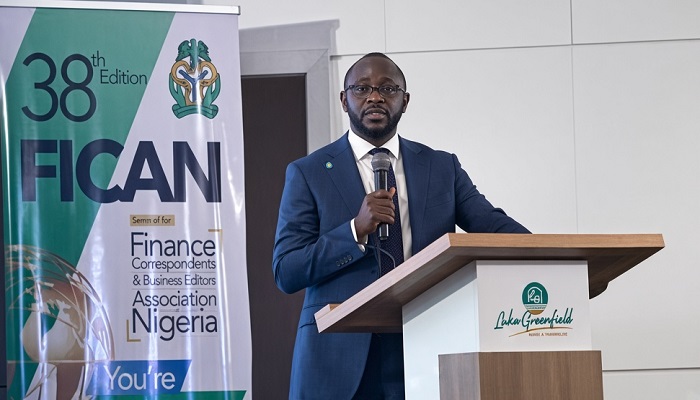
Speaking at the 38th CBN Seminar for Finance Correspondents and Business Editors in Abuja, with the theme, “Towards a Robust and Resilient Financial System in the Post-Banking Sector Recapitalisation Era,” Abdullahi said every tough choice and recent reform are pouring concrete into the deep foundations of Nigeria’s financial system, transforming it into a structure built to weather any future storm.
In his steady and determined message, the Deputy Governor also had kind words for the media noting that the seminar has always served as a critical platform for practitioners and regulators to dissect the future of Nigeria’s financial architecture.
While acknowledging the important role of the media in communicating and scrutinising policy decisions during a period of major economic reforms, Abdullahi said: “You reported difficult decisions when outcomes were still uncertain. You asked questions as markets adjusted and helped businesses and households understand what the changes meant. You also challenged us, as you should”.
He said when the current management came on board in 2023, they inherited a financial system on the brink of collapse with the country battered by severe macroeconomic shocks as the foreign exchange markets were deeply fragmented, external reserves were bleeding, and a surge in market liquidity had shattered investor confidence.
According to him, at the heart of the crisis was a massive, distortive gap between official and parallel market exchange rates, a divide that triggered rampant arbitrage and crippled public trust in the formal banking sector.
The Deputy Governor further explained that to halt the bleeding, the apex bank launched an aggressive rescue plan, including consolidating its multiple trading windows, scrapping a controversial ban that kept 43 import categories from accessing official FX, clearing verified backlogs, and rolling out sweeping transparency rules.
Maintaining that a combination of tighter monetary policy, aggressive liquidity management, and the winding down of intervention programmes has brought stability to the foreign exchange market, Abdullahi said these reforms, paired with the 2024 banking recapitalisation initiative, have given banks the critical capital buffers needed to weather future economic shocks while actively supporting broader national growth.
Hear him: “Three years on, the foreign exchange market is showing greater stability, while the recapitalisation programme is strengthening the capacity of banks to support the economy as broader reforms take hold,”
Also speaking, the Director of Corporate Communications and Investor Relations, Michael Chukwuemeka, who described the FICAN seminar as a vital platform for direct engagement between the CBN and financial journalists, that the conversation has shifted from whether banks can successfully raise fresh capital to how a recapitalized banking sector will deploy those resources to drive economic development and sustain public confidence.
The apex bank spokesman further said: “It is no longer whether the banking sector can raise capital, but what a recapitalised banking sector does with the additional capital that has been raised”, even as he tasked journalists to interrogate policy issues beyond the headlines and seek deeper understanding of economic reforms.
He also said, “The quality of public understanding of monetary policy and financial system reform depends substantially on the accuracy, context and judgement that finance correspondents and business editors bring to their reporting”.
In her remarks, the Director of Stakeholder Engagement and Institutional Relations, Mrs Hakama Sidi-Ali, praised finance correspondents and business editors for driving the three-year transformation of the bank’s communication strategy.
Further attributing the apex bank’s communication successes to active media partnerships, Sidi-Ali urged journalists to sustain this collaboration with the incoming leadership of the Corporate Communications and Investor Relations Department.
Meanwhile, the two-day seminar is uniting regulators, bank executives, and media professionals to dissect banking reforms, financial stability, and Nigeria’s evolving post-recapitalization monetary policy and landscape.