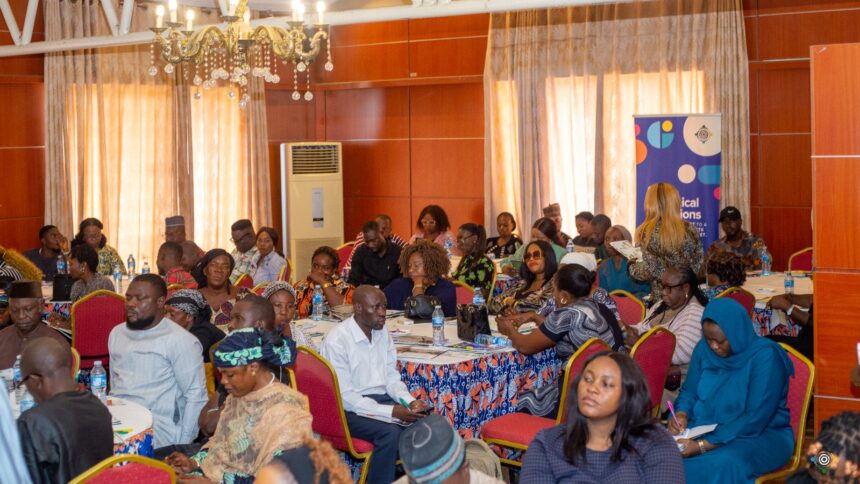
A national conference on Biosafety and Agroecology has expressed deep concern over public health in relation to Genetically Modified Organisms (GMOs) and associated chemical inputs which it noted require independent long-term assessment, robust surveillance, and stronger monitoring systems.
It therefore called on the Government of Nigeria to enforce a moratorium on all GMOs approvals and ensure no new approvals are made without independent, long term and peer reviewed assessment including feeding trials, performance trials as well as environmental and social impact assessment.
Participants particularly tasked the Government to critically review the National Biosafety Management Agency (NBMA) Act to address gaps including by ensuring greater transparency, accountability, and mandatory public disclosure of biosafety risk assessment data and decision-making processes.
The conference which was organised by the Health of Mother Earth Foundation (HOMEF), in collaboration with Corporate Accountability and Public Participation Africa, Kebetkache Women Development and Resource Centre, the GMO-Free Nigeria Alliance, and other partners, advocated for a comprehensive review of GMO approvals and biosafety governance mechanisms in Nigeria.
A communique issued at the end of the two-day conference demanded the promotion of transparency, public participation, and independent risk assessment in all biosafety decision-making processes as well as stressed the need for the protection of indigenous seed systems, farmers’ rights, and Nigeria’s rich agricultural biodiversity.
The conference which took place in Abuja on June 8, 2026, brought together government representatives from the Ministries of Agriculture and Food Security, Health and Social Welfare, Education; Standards Organisation of Nigeria; Agricultural Quarantine Service, National Agency for Foods Drug and Administration Control, the Federal Competition and Consumer Protection Commission, farmers, researchers, civil society organisations, legal practitioners, youth groups, media practitioners, traditional institutions, and other critical stakeholders.
Participants at the conference carefully examined the implications of the continued deployment of Genetically Modified Organisms (GMOs) in Nigeria, saying that assess agroecology remain a viable pathway to sustainable, resilient, and inclusive food systems.
Participants also critically reviewed the increasing approval and commercialization of GM crops in Nigeria, including Bt Cowpea, TELA Maize, and recently registered transgenic cotton varieties, against ongoing concerns about biosafety, environmental protection, farmers’ rights, public health, food sovereignty, ecological integrity, and regulatory accountability.
The conference insisted that Nigeria’s food security challenges require holistic, people-centred, and sustainable solutions beyond technological interventions alone.
Participants noted that concerns remain regarding biosafety, biodiversity loss, genetic contamination of indigenous seeds, monoculture farming, pesticide dependence, and insufficient long-term ecological studies.
The communique stated that while farmers’ rights to save, exchange, and improve seeds are under increasing pressure from proprietary seed systems, with implications for seed sovereignty, rural livelihoods, and local food systems, they however stated that existing biosafety governance frameworks require greater transparency, accountability, independence, scientific rigour, and meaningful public participation.
The communique further stated; “Public health concerns related to GMOs and associated chemical inputs require independent long-term assessment, robust surveillance, and stronger monitoring systems.
“Highly Hazardous Pesticides (HHPs) continue to pose significant risks to human health, biodiversity, soil fertility, and water resources,” it stated.
The conference insisted that food system governance must be inclusive, democratic, and ensure meaningful participation of farmers, women, youth, consumers, researchers, and civil society.
It also stated that agroecology has demonstrated considerable potential to improve soil health, biodiversity, climate resilience, farmer livelihoods, and sustainable food production, stressing that structural barriers continue to limit access to land, finance, information, technology, and decision-making, particularly for women and young people.
The conference emphasised the need to advance a coordinated national agenda for sustainable, equitable, climate-resilient, and health-conscious agricultural development.
It called for strengthen public awareness and evidence-based engagement on the environmental, social, economic, and health implications of GMOs and associated agrochemical use.
The communique further resolved; “Support research, documentation, innovation, and public education on agroecology and sustainable food systems.
Promote stronger market linkages, policy support, and institutional mechanisms for agroecological producers and consumers”.
Key Demands To The Government
Participants called on the Government of Nigeria undertake an independent, transparent, and science-based review of all GMO approvals, including Bt Cowpea, TELA Maize, and transgenic cotton varieties, to ensure compliance with the National Biosafety Management Act and the Precautionary Principle.
It also urged the Government to restore and strengthen public agricultural research, extension service, and farmer support programmes across all levels.
The Conference also called on the Government to protect farmers’ rights to save, exchange, and reuse indigenous seeds, while supporting community seed banks, farmer-managed seed systems, and local breeding initiatives.
Participants further urged the Government to apply the precautionary principle in biosafety decision-making and establish a clear roadmap for the timely phase-out of Highly Hazardous Pesticides.
“Government should recognise agroecology as a strategic pillar of Nigeria’s agricultural transformation agenda and increase investment in agroecological research, training, innovation, and extension services.
The conference called for an independent long-term study on the environmental, socioeconomic, and public health impacts of GMOs and associated chemical inputs.
Participants reaffirmed that ecological sustainability, food sovereignty, public accountability, social justice, human well-being, and the protection of present and future generations must guide Nigeria’s food and farming systems.
The conference further urged government institutions, policymakers, development partners, and relevant stakeholders to work collaboratively towards building a resilient, equitable, and sustainable food system that prioritise people, biodiversity, environmental integrity, and national food security.
The communique was adopted in Abuja, Nigeria, on June 8, 2026 by participants drawn from Health of Mother Earth Foundation (HOMEF), Corporate Accountability and Public Participation Africa (CAPPA), Kebetkache Women Development and Resource Centre, The GMO-Free Nigeria Alliance, Organic and Agroecology Initiative (ORAIN),
Environmental Rights Action, Women and Youth in Agriculture, Be the Help Foundation, Urban Rural Environmental Defenders, Nigeria Women Agro Allied Farmers Ass. (NIWAAFA), Cassava Growers Association Ecosteward Foundation and Cal-Maji Foundation.