“The real question is simpler: can any leader with a functioning conscience stand on the blood-soaked soil of Zamfara and tell its people this administration deserves four more years?”
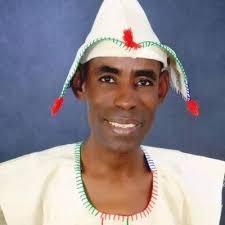
BY BELLO GWARZO ABDULLAHI
I have read Mohammed Bello Doka’s piece on Zamfara titled; “How Will Yari Convince Us Why Tinubu is Yet to Visit Zamfara Amidst Bloodshed and Banditry?” published on 27 August, 2026 more than once, and each time I come away with the same conviction: this is not simply a political critique. It is a moral indictment, and a fair one. Doka has said plainly what many of us in the North have felt but hesitated to put in writing — that the people of Zamfara wake up every day to mass graves, to news of another abduction, to the quiet, corrosive sense that their Commander-in-Chief has forgotten they exist. Having looked more closely at the record myself, I do not think Doka has overstated the case. If anything, the facts make it worse.
To defend President Tinubu’s record in Zamfara at this point is, frankly, an exercise in moral bankruptcy. And I would push Doka’s argument a step further. It is not only Senator Abdul’aziz Yari who has been handed an impossible task. I do not believe any politician with a working conscience could stand in Zamfara, or anywhere in the ravaged North-West, and campaign for this administration with a straight face.
Try to imagine it concretely. A politician walks into a community like Magamin Diddi or Kasuwar Daji, where families are right now selling off whatever they have to raise ransom money, or burying relatives who were killed in cold blood — and he asks them to vote for a President who has never once set foot there. I say this deliberately, not as a rhetorical flourish. Since he was sworn in on 29 May 2023, President Tinubu’s dealings with Zamfara’s insecurity have all happened from behind a desk in Abuja. He received Governor Dauda Lawal at the Villa to be briefed on what officials called “the resurgence of attacks”. He sent his Minister of Defence to address troops at the Fansan Yamma operational base. What he has not done, in more than three years, is travel to Zamfara himself and look its bereaved and displaced people in the eye. A directive from the Villa is not the same as showing up. A delegation sent in one’s place is not presence — it is, if anything, an admission that presence was considered optional.
Leadership, at its core, is about empathy and presence. When disaster strikes, a leader who shows up is telling the people affected: I see you, you matter, you are not alone in this. By that standard, President Tinubu’s physical footprint in Zamfara since May 2023 has simply been nonexistent.
To campaign for him under these circumstances is to ask a politician to look into the eyes of the families still living in informal camps around Gusau, the relatives of everyone killed in this relentless string of attacks, and the families of the more than 70 people abducted in the August 2026 Kasuwar Daji raid — where bandits overran a military outpost and killed soldiers in the process — and tell them their suffering can wait until after the election. That raid was not some isolated horror. It came only weeks after gunmen abducted more than 50 people, children among them, from that same community. And it fits a pattern that Amnesty International has now documented in hard numbers: over 10,200 people killed by armed groups nationwide in this administration’s first two years, with Zamfara recording more kidnap victims than any other state in Nigeria in 2023 alone. I do not see how any politician of conscience makes that bargain. To do so is to accept, quietly, that northern blood can be spilled without consequence and without a flicker of executive empathy.
Doka is right to point out the contrast in how the federal government responds depending on where the tragedy happens. When disaster struck Ibadan, or when abductions occurred in Oyo State, Aso Rock moved fast — public statements, serious federal money, and high-powered delegations that included the National Security Adviser, the Minister of Defence, and the Inspector-General of Police, all on the ground.
Where is that same urgency for Zamfara? Why does one industrial accident in the South attract a multi-billion-naira intervention package and the personal presence of the country’s top security officials, while years of relentless, organised siege on northern farming communities are met with recycled press statements and, at best, a minister flying in to visit a barracks? Why do abductions in one part of the country bring the President’s full attention and the weight of the entire federal security apparatus, while mass abductions along Zamfara’s highways, and the steady emptying of its villages — a pattern that international monitors like Amnesty International and the Soufan Center have now documented as the North-West’s slide into what they call “criminal insurgency” — are met with something close to silence from the Presidency?
This is precisely why I don’t think any self-respecting northern leader can serve as this administration’s envoy right now. Anyone who steps onto a podium to praise the “Renewed Hope Agenda” in Zamfara is, whether he intends it or not, endorsing a hierarchy of citizenship — one where some Nigerians get a presidential visit and billions in relief, and others get apathy, a press release, and a reshuffled military command after the fact.
Senator Yari has accepted the title of Director-General of the APC Presidential Campaign Council, and that is his prerogative. But no title changes what is happening on the ground. A campaign needs a story of achievement, or at the very least, some visible good faith. In fairness, I should note that the administration’s defenders point to a different set of figures — a fall in national oil theft, higher crude output, fewer of the mass school abductions that used to dominate the headlines. These are not nothing. But they are national, aggregate figures, and they mean very little to the mother in Kaura Namoda whose daughter was taken this August, or to the community that buried its dead after the Kasuwar Daji outpost was overrun. Improvement on a national chart does not visit the families still living through the siege. And a government’s own claim that the country has moved from “escalation” to “containment” rings hollow in a state that, by the numbers, is still burying double-digit casualties from single raids.
When a government fails to protect its own people, and cannot even bring itself to visit them and acknowledge their grief, any campaign mounted in its name stops being politics. It becomes deception.
Doka has spoken an uncomfortable truth, and I believe history will vindicate him. This is bigger than Senator Yari’s personal legacy or his record in office. The real question is simpler: can any leader with a functioning conscience stand on the blood-soaked soil of Zamfara and tell its people this administration deserves four more years? Until empathy, equity, and genuine protection are extended to every corner of Nigeria — not just the parts that make the news for the right reasons — campaigning in the epicentre of banditry is not merely tone-deaf. It is a betrayal.
…Bello Gwarzo Abdullahi, a political analyst based in Gombe, can be reached via bgabdullahi@gmail.com