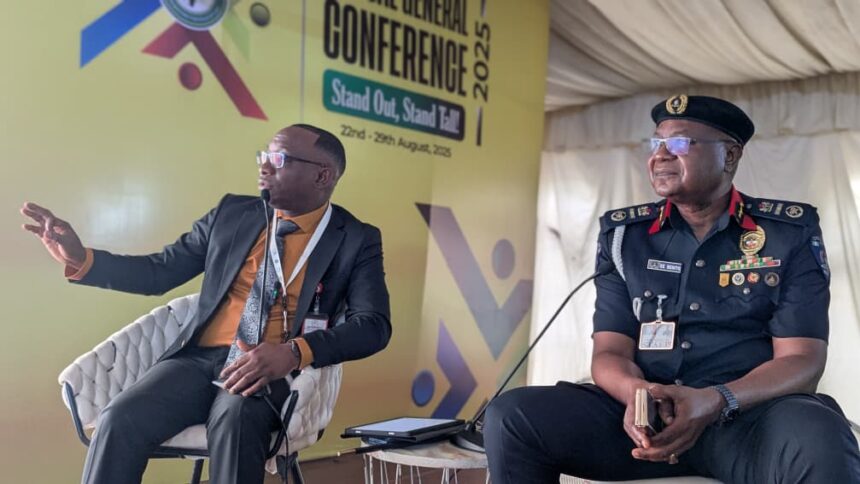
The Director-General of the Bureau of Public Procurement (BPP), Dr. Adebowale A. Adedokun, has declared that if Nigeria is to reduce deficits in public procurement, lawyers have to take ownership of the standard bidding document.
He specifically said that there was the need for the emergence of procurement lawyers to address public procurement deficits and corruption.
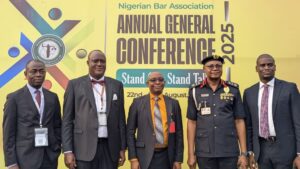
Adedokun, who stated these at the 65th Annual General Conference of the Nigerian Bar Association (NBA) in Enugu, said there was the need for lawyers to understand the standard bidding document.
The BPP DG therefore urged the NBA to consider training lawyers on the revised standard bidding document and other critical components of procurement reforms.
A statement by Zira Zaka Nagga, Head of Public Relations of the BPP, quoted Adedokun as haven listed key recommendations to include; training for Lawyers in order to develop skills their to understand the standard bidding document and its practical application as well as specialisation to encourage expertise in different aspects of procurement and collaboration between departments.
He further recommended; “Contract Agreement Drafting: Improve contract agreement drafting to curb corruption and deficits. Eliminating Loopholes: Champion the cause of eliminating procurement loopholes for a corruption-free system”.
The BPP boss also highlighted the importance of governance reforms, transparency, and capacity in addressing infrastructure deficits, emphasising that without the reforms, increased funding would only lead to more waste due to corruption, weak institutions, and policy inconsistencies.
On Infrastructure Funding needs, Adedokun said that annual funding of $100 billion would be required to fund infrastructure and gave a projection of $3 trillion needed over the next 30 years to close the infrastructure gap.
He noted that procurement is a strategic enabler for national development, ensuring efficient resource utilisation and delivering value to citizens.
Adedokun called for strong anti-corruption measures, transparent procurement, and stakeholder engagement to bridge Nigeria’s infrastructure deficit.