BY NGOZI NWANKWO, ABUJA – President Bola Ahmed Tinubu has approved a total of ₦13 billion for the National Research Fund (NRF), and the provision of Central Multipurpose Laboratories in selected universities nationwide.
Minister of Education, Professor Tahir Mamman, who disclosed this in Abuja, expressed gratitude for this significant investment, saying that President Tinubu’s approval of ₦5 billion for NRF and ₦8 billion for the Central Multipurpose Laboratories underscored his commitment to advancing research for national development.
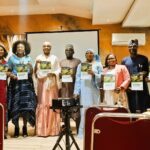
Speaking at the inauguration of key committees, Prof Mamman emphasised the importance of enhancing research capacity across various fields just as he highlighted the need to elevate academic publications in Nigeria as well as reduce reliance on foreign materials through initiatives like the Higher Education Book Development Project.
In his own remarks, the Executive Secretary of TETFund, Mr Sonny Echono, praised the expertise of the committees in driving the implementation of the National Research Fund.
Echono noted that the NRF awarded 912 research grants totalling ₦24,021,679,195.88 since its inception in 2009, promoting applied research and innovation in public tertiary institutions.
He said the Federal Government has set aside N25 billion for the upgrade of equipment in laboratories and workshops in public universities, polytechnics, and colleges of education (technical) in the country.
Echono announced that President Tinubu also approved N25 billion in the Fund’s 2024 budget to be invested in the upgrade of obsolete equipment in laboratories and workshops of tertiary institutions across the country.
He noted that over the years, the focus of the intervention agency had been on infrastructure development and academic staff training, to the neglect of laboratories and workshops that would enhance quality and enable the conduct of cutting-edge research.
According to him; “Based on President Tinubu’s charge to the education sector and on the desire to use the sector as the springboard for improving and growing our national economy, we undertook an assessment of what the requirements are to meet that charge.
“One of the things we discovered was that we have been addressing issues around access and providing infrastructure to facilitate the admission of Nigerians to undertake programmes in our tertiary institutions.
“And over time, due to our poor maintenance culture, we have tended to neglect the issue of quality in terms of the equipment that we have in our laboratories, whether they are functional or the kind of workshops we have to support productive work in terms of hands-on training, things like welding, fabrication, and so on.
“So, in this year’s budget, Mr President approved that we should start with N25 billion to invest in the upgrade of these facilities in our tertiary institutions. We constituted the committee to go around all the schools, not just to focus on this year’s intervention but to give us a kind of roadmap that, starting with this year, outlines what we are going to do and, on a sustainable basis, where we need to put our investment in the next five years, for example.
“In the committee report, you will see what we need to do immediately and how we will sustain it, and in addition, they are even talking about staffing, the quality of staff, and their training, particularly the technical staff that would be able to manage and run the equipment.
“So, this focus is on quality, and it’s for our institutions to be able to meet their mandates in promoting cutting-edge research and be able to produce graduates that are grounded in the hands-on mode of things.
“One of the key things we are emphasising is that we must have constant power around our laboratories and workshops. So, embedded in it is the energy mix: that we must have sustainable power; when the power goes off, we need a support system, an alternative power supply that will guarantee that we have 24-hour power, which is also incorporated into this programme,” he stated.