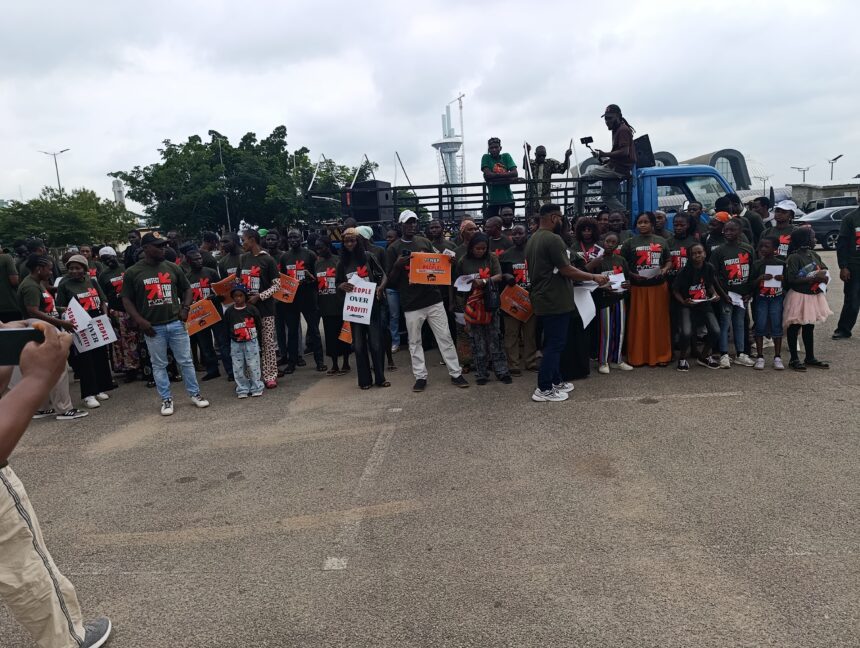
As part of its advocacy and sensitization of the public against the possible adverse consequences that multi-national corporation in communities they are domiciled, Health of Mother Earth Foundation (HOMEF) and HEDA Resource Centre on Thursday, September 3, 2026, organized a major rally against JBS Investment in the nation’s food sector.
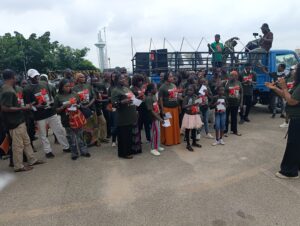
The rally, organized under the aegis of “March for Food Sovereignty And Ecological Justice”, kick-started at the Federal Secretariat located in the Central Business District, Abuja and had participants drawn from all walks of life who marched through the gates of the National Assembly and the Office of the Secretary to the Government of the Federation (SGF) and other major roads in the nation’s capital, Abuja.
Participants in the One-Day rally that included the aged, youths, pregnant women and children, carried different placards bearing different inscriptions and messages that depict the messages they want conveyed to the Nigerian authorities.
Some of the placards read; “People over Profit”, Nigerians Question JBS Investment Plan”, “Power to the People”, “No to Factory Farming”, “Food Not Poison”, “Small Holder Farmers Feed the Nation, Not Foreign Corporation”, “Food Not Poison”, “Disclosed The Deal” among many others.
Addressing participants of the rally, the lead organizer of the rally, the Director of Programmes of HOMEF, Joyce Brown, stated that JBS being one of the biggest meat companies in the world that has indicated interest in coming to invest in Nigeria, has refused to come out clean on its modus operandi.
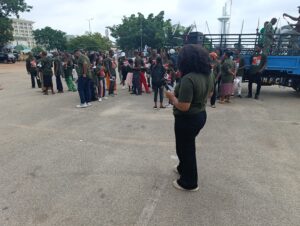
Brown said that it is a common knowledge that “he who feeds you, controls you”, thus the need for ‘Environmental Impact Assessment’ to be conducted before the commencement of the operation in Nigeria.
She said the sorry state of communities left by other companies that operated in Nigeria particularly in the Niger Delta region is enough lessons to guide the Nigerian authorities to act decisively in the interest of the people as against the pursuit of profit.
The HOMEF Director of Programmes further said that other countries in which JBS are operating are suffering from severe environmental degradation and therefore stressed the need for structures to be put in place to ensure that the people do not suffer.
Speaking in turn, Mariann Bassey-Olsson, Deputy Director, Environmental Rights Action of HOMEF, stressed the need for both the Federal and State Governments to ensure that public finance must serve public interest.
Bassey-Olsson stated that while the Civil Society is not against investment of any type, there is however the need to protect the land and the future of the people.
In her words; “What exactly is this investment? It is about our lives, land, sovereignty, environment and the health of the people. Investment must protest the people’s interest”.
Also, speaking, Dr. Mayowa Sobo of HEDA Resource Centre, said that it is difficult to understand that why the Memorandum of Understanding between JBS and the government is being held in secrecy.
Sobo said; “Let the MoU be made public because it is about the life, land and environment of the people. The Government must protect and put the interest of the people above profit”.
Industrial animal farming also known as factory farming presents growing concerns for Nigeria’s agricultural and food production landscape as it raises significant issues regarding public health, environmental sustainability, animal welfare, labor rights, and socio-economic equity.
Globally, companies like JBS, being one of the world’s largest meat processing corporations, have come under scrutiny for their role in driving industrial-scale animal farming, contributing to deforestation, greenhouse gas emissions, and socio-economic disruptions in local communities.
In November 2024, JBS signed a five-year investment plan worth $2.5 billion with the Nigerian government which included building six facilities in Nigeria: three poultry plants, two beef processing plants, and one port facility.
The Nigerian government pledged to provide the necessary and favourable economic, sanitary and regulatory conditions to support successful implementation of this project, while JBS has identified Ogun State as a key investment hub due to its strategic location and infrastructure.
Some other states in Nigeria are positioning themselves as beneficiaries of this project, seeing as it has huge potential for revenue generation. One of the States is Niger State which has committed to make 1.2 million hectares of land available for the project.
It is against this backdrop that Health of Mother Earth Foundation (HOMEF) and Environmental Rights Action in collaboration with Youth in Agroecology and Restoration Network and HEDA Resource Centre organized a stakeholders’ workshop in Abuja and brought together key stakeholders from government, academia, civil society, local farming communities, environmental groups, health sectors, and the private sector to critically examine the potential consequences of the proposed investment by JBS.
The workshop largely examined the promotion of large scale industrial animal farming in Nigeria without appropriate and stringent policy regulation and or oversight and emphasized that the event will connect Nigeria’s realities to global trends and make recommendations for policy formulation/strengthening, advocacy, and a sustain-able food system.