The Nigerian Telecommunications Commission (NCC), has declared that in spite of prospects of accelerated economic growth, multiple taxation, which the World Bank described as ‘nuisance taxes’ remains an impediment to economic development in the Country.
The Executive Commissioner, Stakeholder Management of NCC, Mr Adeleke Adewolu, who stated this at a Regional Workshop with Industry Stakeholders in Ibadan, Oyo State, noted that in addition to the challenges, the economic burden of multiple taxation is further exacerbated by the administrative burden of complying with the taxes.
He also said that the development makes Nigeria an undesirable ground for breeding healthy business and competitive practices, adding that the effect of this is that, business enterprises in Nigeria struggle to compete with their counterparts abroad.
Adewolu tasked participants at the workshop to attempt to answer how a fiscal tool for economic development like taxation can become inimical to economic development.
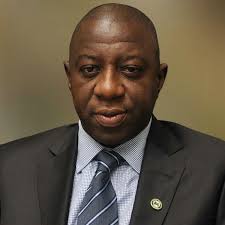
Speaking at the Workshop on Multiple Taxation and Regulations with the theme; “Multiple Taxation: An Impediment to Economic Development”, Adewolu said that Nigeria is widely known to be not only Africa’s most populous country but also the largest economy on the Continent thus, expected that strong economic growth in Nigeria would generate substantial prospects for growth and spill overs for the whole West African region.
Adewolu said that while it is important to emphasize that taxation in and of itself, is a veritable tool for economic development, it is however, imperative to correct some misconception about taxation, particularly the misguided notion of taxation as a penal tool on thriving business enterprise
He further said; “Taxation is the backbone for public finance. It provides guaranteed and sustainable sources of funding for social programs and public investments, it also serves as a tool curated by the government to effectively and efficiently distribute our commonwealth.
“It is thus evident that taxation is critical for making growth sustainable and equitable. Thus, taxation by design is an instrument for economic development and it is important to acknowledge and support the initiative of all tiers of Government in using taxation as an instrument for socio-economic development.
“However, supporting the tax initiatives by the various tiers of Government includes indicating where a category of taxes have become cancerous to economic development. These type of taxes typically manifest themselves in the form of multiple taxation and by design, they reverse growth, stifle innovation and discourage investment.
“In parabolic terms, they are the scarecrows mounted by government to disincentivize development. It is pertinent to note that the National Tax Policy 2017 emphasizes the need to eradicate multiple taxation at all tiers of government.
“Specifically, the Policy states that taxes similar to those being collected by a level of Government should not be introduced by the same or another level of Government. The Federal, State and Local Governments shall ensure collaboration in harmonizing and eliminating multiple taxation
“Also, the President and Commander-in-Chief of the Federal Republic of Nigeria, His Excellency, President Bola Ahmed Tinubu, in his commitment to address the vexed issue of multiple taxation, recently signed a number of Executive Orders to curb arbitrary taxes in the Country. Also, the inauguration of the Committee on Fiscal Policy, Tax Reforms by the President, which is geared towards harmonizing taxes will provide an avenue to further engage various stakeholders in order to identify their pain points and critical concerns bothering tax and fiscal policies.
“This would also facilitate a conducive environment for conducive for local and foreign investment into the country.
“What then is multiple taxation? According to the National Tax Policy 2017, Multiple Taxation is the imposition of the same or similar taxes on the same income base, transaction or person by one or more levels of Government, in one or more jurisdictions,” he said.
The NCC Executive Commissioner noted that while a level of multiplicity is expected in a federal system of governance, he however stressed that the levying of a particular tax on the same person/entity, in respect of the same liability by more than one State or Local Government Council should be avoided.
Adewolu said that the paradox of multiple taxation is the fact that it does not lead to an increment in government revenue, adding that instead, the crippling effect of these taxes, is that it makes otherwise profitable businesses, unprofitable.
He further said; “It negatively impacts the ease of doing business, shrinks the tax base, incentivizes tax evasion and complicate tax compliance.
“According to the World Bank, taxing a specific tax base will lead to increasing revenues up to a specific point, after which the overall tax revenue will decline because companies go out of business, or evasion increases significantly.
“These incidents weakens our economic foundations, devalues the symbol of economic strength, which is our currency – the Naira and contracts our gross domestic product,” he said.
Adewolu explained that the Workshop was therefore an avenue to rethink the approach towards taxation by adhering to its founding principles with a view to identifying the overarching principles of taxation that include;
“Neutrality: Taxation should seek to be neutral and equitable between forms of business activities. A neutral tax will contribute to efficiency by ensuring that optimal allocation of the means of production is achieved.
“Efficiency: Compliance costs to business and administration costs for governments should be minimised as far as possible.
“Certainty and simplicity: Tax rules should be clear and simple to understand, so that taxpayers know where they stand. A simple tax system makes it easier for individuals and businesses to understand their obligations and entitlements. As a result, businesses are more likely to make optimal decisions and respond to intended policy choices.
“Effectiveness and fairness: Taxation should produce the right amount of tax at the right time, while avoiding both double taxation and unintentional non-taxation. In addition, the potential for evasion and avoidance should be minimised.
“Flexibility: Taxation systems should be flexible and dynamic enough to ensure they keep pace with technological and commercial developments. It is important that a tax system is dynamic and flexible enough to meet the current revenue needs of governments while adapting to changing needs on an ongoing basis,” he said.
Adewolu noted that the Policy direction of the Federal Government is that all tiers of government are expected to align, as closely as possible, to the fundamental principles of taxation.
He expressed optimism that thes Workshop will sufficiently clarify common mischief on taxation, adding that after fruitful deliberations, there will be a renewed zeal towards eradicating multiple taxes and more devotion to creating business friendly environment for the economy thrive.
Adewolu specifically said that ultimately, the Workshop was an invitation to both the public and private sector to view taxation as a win-win solution in steering the course of our national economy.