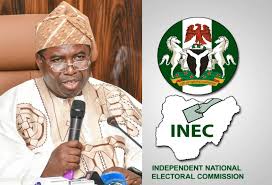
The Chairman of the Independent National Electoral Commission, Prof. Joash Amupitan, has declared that the electoral body has the capacity to transmit election results in 2027 electronically.
He however, cautioned that it may not be able to guarantee a “100 per cent perfect election”, thus appealed to Nigerians to manage expectations, and assured that INEC would strive for excellence, but could not promise perfection.
Amupitan said; “I have noticed that what Nigerians desire is a perfect election, and INEC will strive as much as possible to give this country the best election. However, we may not be able to achieve a 100 per cent perfect election for now.
“But as far as electronic transmission of results is concerned, I said it before the FCT Area Council that we have the capacity to transmit the results, and that we’re going to transmit the results. The only concern was real-time,” he said.
Amupitan, who stated these on Sunday, March 1, 2026, at the Citizens’ Town Hall programme aired live on major television networks, tagged; ‘Electoral Act 2026: What it means for your votes and the 2027 elections’, noted that elections are central to democratic governance, thus stressed the importance of voter education and institutional transparency.
During the live electoral debate which was anchored by Seun Okinbaloye of Channels Television and the Executive Director of Yiaga Africa, Samson Itodo and attended by the National Chairman of the All Progressives Congress, Professor Nentawe Yilwatda, Interim National Chairman of Labour Party, Senator Nenadi Usman, former Minister of Education, Dr. Oby Ezekwesili, Senator Ireti Kingibe, among others, the INEC chairman emphasised that election is the lifeblood of democracy.
Amupitan said; “According to Abraham Lincoln, the ballot is more powerful than the bullets. Also, the ignorance of a voter is very inimical to the security of a nation. So, that is why we cannot underscore the role of INEC, as well as the civil society, in guaranteeing a transparent and credible election”.
He revealed that INEC was actively involved in the process that produced the Electoral Act 2026, which he said began about three years ago through a joint committee comprising members of the National Assembly, civil society organisations and the commission.
According to Amupitan; “As of the time I was taking over, the work was almost concluded. But nonetheless, we still made some important provisions and recommendations in the new acts”.
Commenting on the dicey issue of electronic transmission of results, Amupitan disclosed that INEC pushed for mandatory transmission during legislative deliberations.
He further said; “Talking about the transmission of the results, you will notice that the original provision that came out of the retreat from the National Assembly was not exactly what you have today.
“But when INEC came in, we talked of transmission being mandatory. But let us be sincere and honest. The only problem that we had was how to define what we call real time,” he said.
Referencing the recent Federal Capital Territory Area Council elections as a practical example of the challenges confronting real-time transmission, particularly in hard-to-reach areas, saying that while results came out on time in five Area Councils, that of Kuje where there are 10 wards was delayed by one ward-Kabi which did not come until the following morning.
He further said; “On Saturday, when we mobilised and sent people to that ward from Kuje town, Kabi ward is about three-and-a-half hours’ drive. And the terrain is very bad. So, I was worried. When we sent our polling officials and security agencies to that ward, the moment they entered that place, we could not reach them.
“They were not accessible by phone. And nobody could speak to them until we had to send somebody on Sunday morning, just to be sure that they were safe, before we now got the results and then, it was collated along with the remaining nine wards before the result could be declared,” he explained.
Amupitan however, insisted that transmission itself was not the core problem, saying that from his little experience of over four months in INEC, the problem is not even the network, but the adequacy of the network we have.
He said; For instance, you expect that in a place like FCT, you should be able to transmit your results without any encumbrance. But we had a situation where it was impossible for us to have a real-time transmission of results, especially from the Kabi ward, until the following day. And in some of the wards, some results were transmitted”.