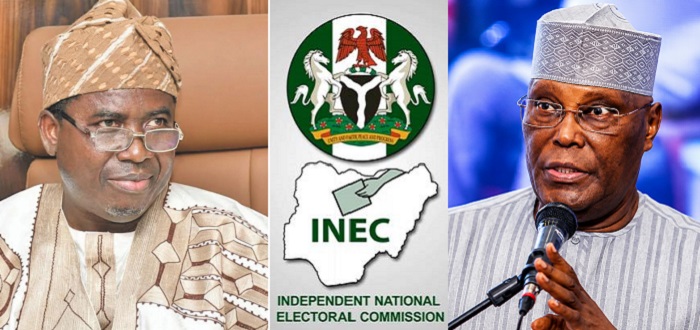
BY EDMOND ODOK – As Nigerians wait with bated breath the outcome of mounting legal intrigues ahead of the 2027 general elections, Chairman of the Independent National Electoral Commission (INEC), Professor Joash Amupitan, says the electoral umpire will strictly bow to the ultimate verdict of the judiciary regarding the presidential candidacy of former Vice-President Atiku Abubakar.
Addressing an audience of policymakers and international observers at the prestigious Chatham House in London on Thursday, Prof. Amupitan underscored that INEC remains constitutionally tethered to the rule of law and is duty-bound to enforce whatever final pronouncement emerges from the courts.
The Commission boss’ remarks came in direct response to pointed inquiries over whether Abubakar’s name would survive on the 2027 presidential ballot should his legal team fail to overturn a pivotal Federal High Court ruling that had nullified the Senator David Mark-led leadership of the African Democratic Congress (ADC), the very faction that handed the former vice-president its presidential ticket.
With the court ruling leaving Atiku’s path to the ballot hanging in the judicial balance, Amupitan said: “If he eventually fails, well, I’m obligated under Section 285 of the Constitution of Nigeria to obey every court order, especially if it is from the Supreme Court.”
While also emphasizing that INEC has no choice but to enforce judicial pronouncements regardless of political fallout, he affirmed the Electoral umpire’s commitment to the rule of law, but noted that the flood of pre-election litigation is threatening the Commission’s logistical preparations ahead of the January 2027 polls.
Prof Amupitan, who expressed concern that INEC is currently battling with over 300 pending court cases just weeks before election day, further lamented: “Some of those issues we have with court cases—over 300 cases hanging on the neck of INEC, and elections are just about 66 days away.”
Disclosing that the Commission has already begun procuring sensitive election materials, making late judicial reversals a major operational headache, he said when the ADC leadership dispute first surfaced in April, the Commission pushed for an accelerated hearing so the matter could be settled within three weeks, allowing INEC to finalize its logistics.
He said it was unfortunate that the case had to drag on till now where the litigants have headed to the Court of Appeal following the ADC’s decision to challenge the lower court’s ruling.
The INEC Chairman, while cautioning that enforcing last-minute court rulings unfairly exposes the electoral umpire to public backlash, said: “The danger is that whenever there is such a decision, and it’s up to you to now implement it, you become the problem. The problem now is transferred unto you.”
Prof Amupitan said to protect future elections from being derailed by ongoing legal battles, upcoming electoral reforms must enforce a strict judicial timeline, specifying that all pre-election disputes should be completely resolved between six months and a full year before citizens head to the polls.
According to him, establishing this clear buffer is essential to prevent courtroom distractions from spilling into the voting window, adding that clearing all legal hurdles well in advance would allow the electoral umpire to focus entirely on smooth logistics, ensuring that the integrity and schedule of future elections are not compromised in anyway