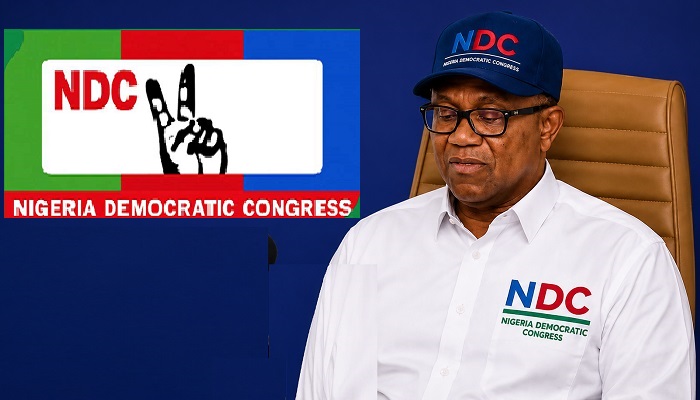
BY SEGUN ADEBAYO – The presidential flag-bearer of the Nigeria Democratic Congress (NDC) for the 2027 general elections, Peter Obi, has challenged Nigerians to break free from past regrets and channel their collective energy toward building a unified, love-driven future for the nation.
Speaking during an exclusive interview on Arise Television, the former Anambra State governor argued that meaningful national progress will remain elusive if citizens stay anchored to history rather than embracing a forward-looking vision.
According to him, for the sake of future generations and the overall survival of the country, Nigerians must stop dwelling on the mistakes of yesterday and immediately start fostering the harmony required to build a better tomorrow for themselves.
The former Labour Party (LP) candidate in the 2023 presidential polls, who addressed historical grievances linked to Nigeria’s political history, particularly attempts in some circles to associate him with the 1966 military coup, said he was only four years old when the event occurred, adding, “I am committed to the future of the North. I believe the North has so much to offer Nigeria. As a country, we can make more money from agriculture than we do from oil.
“There were regrettable things that happened in our collective history. I was not personally involved in those sad events, but it is time to show love and pursue unity in Nigeria. We must not dwell on the past. We can only build through love.”
Besides urging Nigerians to move beyond historical grievances and focus on issues that could further unite the country, Obi said agriculture represents one of the key areas through which Nigeria could expand its economic base, particularly in the North, where large areas of land and agricultural potential remain available.
The NDC Standard bearer, whose comments form part of his broader argument that Nigeria must increase domestic production and reduce its dependence on oil and imported goods, also took aim at the status quo, slamming Nigerian leaders who are quick to jet off abroad for their vacations.
He said an elected president belongs at home, using that critical downtime to touch base directly with the people, pledging that if elected, he will mandate domestic holidays, maintaining that the country’s leader should use the opportunity to visit areas facing serious security and developmental challenges.
“Nigeria’s President must spend his vacation in Nigeria. We cannot continue with this nonsense. Where do other countries’ own leaders spend their vacations? Nigeria’s President should go to Zamfara, to Borno, to Anambra, to anywhere. As President of Nigeria, I will visit other countries, but I will not take my holidays there,” Obi said.
On the security implications of spending vacation time in states affected by insurgency and banditry, particularly Borno, Obi maintained that the President should not use security concerns as a reason to leave Nigeria during holidays, declaring: “It doesn’t matter. Because that’s the country he lives in. That’s why he should not take the money to Europe.”
He drew a comparison with political leaders in other countries, arguing that the conduct of a Nigerian president should similarly reflect a strong connection with the country and its people. “Do you know what it means for the British Prime Minister to say he’s going for vacation in Germany? That will be the end of him,” he said.
Also speaking against what he described as brief presidential visits to states affected by crises, the former Anambra governor said the President should spend enough time on the ground to understand the problems and engage the relevant stakeholders.
For him, “A president who has not slept three nights anywhere in Nigeria” cannot claim to fully know the country he is presiding over, arguing that visits to troubled communities should not merely be symbolic or limited to short official engagements but should involve sustained interaction with residents, traditional rulers, state officials and other stakeholders. He should go to Benue and say, ‘I’m here for the next three days; I want to see these stakeholders in the state.”
Looking ahead, Obi cautioned against allowing ethnic considerations to dominate the 2027 presidential polls, insisting that Nigerians should judge political candidates and their programmes on the basis of what they could offer the country rather than their ethnic backgrounds.
“Our election should not be driven by tribalism”, he said, assuring that his political ambition was not targeted at any region, because he remained committed to the development of every part of Nigeria.