BY COBHAM NSA – In an aggressive capital drive projected to generate 366,000 jobs across Nigeria’s productive sectors, the Federal Government has unveiled a $78.5 billion investment pipeline comprising 65 bankable projects to Polish institutional and industrial heavyweights.
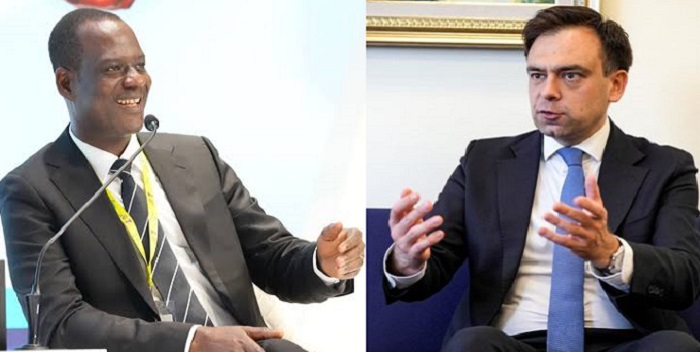
Addressing participants at the second Polish-Nigerian Economic Forum in Lagos on Tuesday, the Minister of Finance and Coordinating Minister of the Economy, Taiwo Oyedele, urged Warsaw to transition from diplomatic pleasantries to direct industrial execution in the country.
Curated through Projects Nigeria, the government’s dedicated deal room, the 65 ventures are backed by completed feasibility studies and engineered to channel private capital directly into infrastructure, manufacturing, and energy.
According to him, Abuja is decisively pivoting its foreign economic strategy to move away from passive raw material exports toward high-impact joint ventures that build factories, modernize transport corridors, and scale domestic production.
Oyedele pointed to the impending groundbreaking for the modernisation of the Lagos Port Complex at Apapa and Tin Can Island, a project supported by Polish financing, as immediate proof that bilateral accords can produce physical infrastructure, saying available data indicate that Poland exported roughly $169 million in goods to Nigeria in 2025, while Nigeria shipped approximately $565 million to Poland, with crude oil accounting for more than 90 per cent of that volume.
Describing the bilateral ledger of $734 million combined as starkly underperforming for a corridor linking Africa’s largest population with a European economy that recently crossed the $1 trillion threshold, the Minister said to correct that imbalance means widening commerce beyond crude oil and raw grain into processed agricultural goods, fertilisers, sesame, industrial machinery, technology, and services.
He said Nigeria’s enterprises must pivot toward exporting value-added finished goods by leveraging Polish engineering and industrial machinery to scale domestic factory capacity, noting that the high-level visit of Polish Minister of Finance, Andrzej Domański, to Lagos signals Warsaw’s view of Nigeria as a primary commercial ally rather than a peripheral market.
Also stating that both treasuries bear a shared mandate to synchronize fiscal policy and development finance to drive mass job creation and boost household incomes, Oyedele said though diplomatic ties are anchored in a 1962 trade pact, signed just two years after Nigeria’s independence, bilateral trade volumes remain starkly underwhelming, even after both nations elevated relations to a Strategic Partnership in 2013 and Warsaw established a Foreign Trade Office in Lagos in 2018.
Further striking a warmer chord, Oyedele reached into football history, recalling Nigerian-born talisman, Emmanuel Olisadebe, whose goals propelled Poland onto the grand stage of the 2002 FIFA World Cup.
Mirroring a legacy in which Poland toasted its adopted hero on European soil while Warri beamed with hometown pride, the Minister painted a vision of commercial partnerships engineered for mutual benefits o both countries.
While capping his address, Oyedele cast Poland’s breathtaking three-decade economic ascent—soaring from roughly $67 billion in 1989 to surpass $1 trillion in 2025—as a north star for Nigeria’s own structural transformation