 BY EDMOND ODOK – Elder statesmen and former Presidents in Africa are worried that the collapse of democracy in the continent is imminent if stakeholders do not take urgent and strategic actions to address existing and emerging challenges of democratic governance.
The warning about democratic structures’ disintegration came from current and past leaders as they compared notes at the Democracy Dialogue of the Goodluck Jonathan Foundation (GJF) held recently in Accra, the Ghanaian capital.
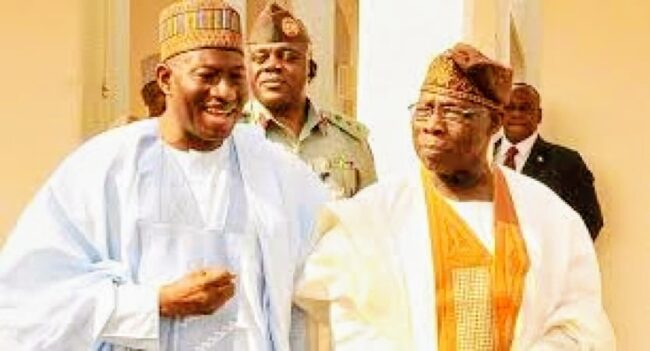
Among the eminent leaders leaders, who sounded the note of caution are Nigeria’s former presidents, Chief Olusegun Obasanjo, and Goodluck Jonathan as well as incumbent President John Dramani Mahama of Ghana
Flowing from concerns raised about threats to democratic values and weakened institutions in the face the authoritarian tendencies among most leaders, Chief Obasanjo led the charge in stressing that crucial reforms are necessary and urgent to preserve democracy in Africa.
Obasanjo, who chaired the dialogue, insisted that in its current form, democracy is weakened and clearly drifting away from its original version of “government of the people, by the people, and for the people.”
According to him, “Democracy dies because democracy has refused to be reformed”, adding, “There are three aspects of democracy that cannot continue to exist the way it was as defined by the American president; government of the people, by the people and for the people.
“In that definition, democracy is meant to be all people’s action, and if democracy will not die and be buried, democracy must be reformed in context, in content, and in practice.”
While lamenting the systematic destruction of democratic structures from within the system, the former Nigerian Leader said, “The thing killing democracy and will kill it is the practice of democracy,” he warned, adding, “All the essentials that should be part and parcel of democracy are being ignored or bastardised in such a way that democracy has failed to deliver.
“And democracy cannot deliver unless it is reformed. If it is not reformed, it will not only fail, it will die and be buried.”
Maintaining that despite its observable flaws, there is no ideal substitute to democracy, in its true form, Chief Obasanjo also knocked what he called flawed interpretation of democracy as simply “government of the majority”.
For him, such flawed explanation not only marginalises the minorities but also undermines inclusivity, adding: “And they talk of government of democracy as government of the majority. If you talk of government of the majority, what do you do with the minority? Then minority is not part of the people?”
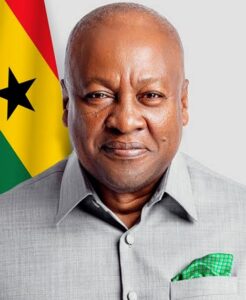
On his part, the Ghanaian President, John Dramani Mahama, expressed worries that democracy may not survive except Africans, both leaders and citizens, work actively to protect and strengthen it on all fronts
He said, “Democracy will not survive if we don’t work for it. We need a reset of democracy and governance to ensure accountability. Anybody who wants to serve must be accountable to the people. Our citizens are tired of corruption, misgovernance, and lack of opportunities.”
“To renew democracy, we must strengthen institutions, deliver development, and educate our citizens. We must protect the media and civic space. A free press is democracy’s immune system.”
Importantly, President Mahama dropped a note of caution saying, “Democracy dies when citizens lose faith, when leaders abandon integrity, and when institutions succumb to capture. But democracy can be renewed when citizens rise to defend it”.
In his intervention, former President Jonathan said if proper elections were conducted, it would give the people an opportunity to vote out any non-performing leader.
Identifying election manipulation as one of the biggest threats to democracy in Africa, Jonathan said urgent reforms must be introduced to ensure democracy does not collapse in the continent.
Quoting the former President, the Communications Officer at Goodluck Jonathan Foundation, Mr Wealth Dickson Ominabo, said in a statement that where democracy fails to meet the people’s expectations, desperation could open the door to authoritarianism.
Urging leaders to demonstrate commitment to democratic governance that guarantees a great future for the children where their voices matter, Jonathan said, “Democracy in Africa continent is going through a period of strain and risk collapse unless stakeholders come together to rethink and reform it. Electoral manipulation remains one of the biggest threats in Africa.
“We in Africa must begin to look at our democracy and rethink it in a way that works well for us and our people. One of the problems is our electoral system. People manipulate the process to remain in power by all means.
“If we had proper elections, a leader who fails to perform would be voted out. But in our case, people use the system to perpetuate themselves even when the people don’t want them.
“Our people want to enjoy their freedoms. They want their votes to count during elections. They want equitable representation and inclusivity. They want good education. Our people want security. They want access to good healthcare. They want jobs. They want dignity. When leaders fail to meet these basic needs, the people become disillusioned.”
On the current participation of youths in government, the Otuke-born Statesman described it as quite encouraging, but said they need the wisdom and experience of older generation as guidance to succeed in governance and avoid the mistakes of the past.
The Dialogue also had in attendance the President of ECOWAS Commission, Dr. Omar Touray, and Bishop Matthew Hassan Kukah of the Catholic Church, Sokoto diocese, and Founder of The Kukah Foundation in Abuja, who delivered the keynote address.