- Demands transparency, accountability in public spending
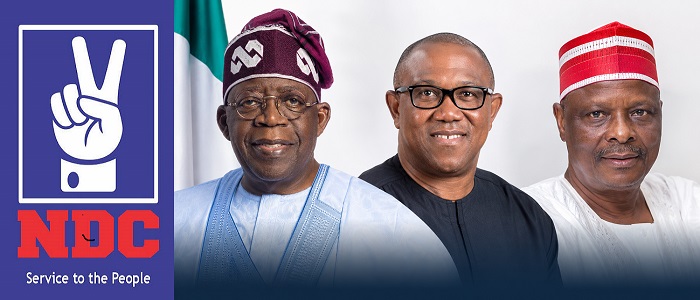
Firing back at President Bola Tinubu over his recent swipe at Mr. Peter Obi regarding Anambra State’s erosion crisis, the opposition Party vowed to decisively deal with the erosion of the country’s resources and stark contradictions in the government’s balance sheet over the last three and a half years of the current administration.
The NDC warned that excessive debt and poor fiscal management have historically crippled powerful empires and modern nations alike, such as 19th-century Egypt, Argentina, and Zambia, saying: ”Nigerians deserve to know what has happened to the promised fiscal benefits of subsidy removal, particularly against the backdrop of the administration’s frequent borrowing, poor debt-service-to-revenue ratio, and worsening economic conditions.”
A statement by Dr. Chiogo Constance Ikokwu, Spokesperson of NDC’s National Presidential Campaign Council, questioned the President Tinubu-led administration’s fiscal direction, highlighting the growing contradiction between the high revenues expected from fuel subsidy removal, the government’s frequent new loan requests, and the persistent underfunding of critical public sectors like health and education.
The statement further pointing to what it calls a “glaring paradox” in the administration’s macroeconomic management, expressing deep concern over the state of the economy, and demanding immediate transparency regarding national revenues and expenditure priorities.
Referencing the President’s comments in Uyo, Akwa Ibom, on Friday, where he claimed to have tamed the Atlantic Ocean as governor of Lagos State, while Peter Obi ran away from erosion in Anambra State, the NDC contrasted the fiscal records of both leaders as former governors, noting that Obi left Anambra with over $500 million in local, foreign, and bond investments in 2014, while also refusing to implement lifetime governor pensions.
It said in contrast, Lagos State carried roughly $190.43 million in external debt when President Tinubu left office in 2007, alongside a controversial gubernatorial pension law that burdened state finances until later reviews.
Specifically addressing the issue of environmental degradation, the NDC defended Obi’s record in Anambra, highlighting his leadership in bringing the World Bank’s Nigeria Erosion and Watershed Management Project (NEWMAP) to the state, building concrete flood channels across several communities, and enforcing strict drainage requirements on all state road projects.
According to the opposition party, the Obi-Kwankwaso campaign offers a clear alternative to President Tinubu’s borrowing-dependent governance model, committing instead to prudent resource management, accountability, and sustainable economic growth for current and future generations.