- Declares zero tolerance for “individual grandstanding”, indiscipline
Senate President Godswill Akpabio says the National Assembly (NASS) will not be swayed by public sentiments and adversarial opinions in dealing with errant Senators.
Accordingly, he warned that no single member will be allowed to hold the legislature “hostage”, because discipline and respect for institutional rules are essential for the survival of Nigeria’s democracy.
In a statement by his media aide, Eseme Eyiboh, titled, “The Trials and Triumphs of a Resilient Nigeria’s 10th Senate”, Senator Akpabio explained that the Senate’s unwavering resolve to always enforce its standing orders is not meant to silence dissenting voices but a necessary act to safeguard order and the sanctity of democratic institutions.
He said, “Without a doubt, Nigeria’s Senate belongs in that global fellowship of parliaments that recognise chaos as the heart of anarchy and order as the soul of democracy.
“Its insistence on upholding internal discipline and protecting the authority of its leadership is, therefore, neither personal nor punitive. It is institutional self-preservation.”
Declaring that the Red Chamber will not succumb to cheap blackmail or be held hostage by any member, Senator Akpabio insisted that the tough stand demonstrate the National Assembly’s collective responsibility over “individual grandstanding.”
The statement further said, “When the chamber asserts that it will not be held hostage by the disruptive instincts of any single member, it is affirming the primacy of collective responsibility over individual grandstanding. This is how strong legislatures endure: not by silencing dissent, but by ensuring that dissent respects the bounds of procedure.”
While emphasizing the importance of parliamentary discipline as a universal standard for democratic governance, the Senate President, who referenced other democracies, said, “The discipline of parliamentary conduct is a universal marker of political civilisation. In the United Kingdom’s House of Commons, the authority of the Speaker is absolute and unchallenged, ensuring that debates proceed with respect and precision.
“No member, regardless of party or popularity, may openly defy the Speaker’s ruling without consequences. In Canada’s Parliament, even the fiercest partisans understand that procedure is sacred. Heated disagreements are channelled through decorum, not chaos.
“Similarly, in Australia, the Senate’s ability to hold the executive accountable depends not on the whims of politics but on the meticulous enforcement of rules that keep legislative integrity intact.”
For him, strong democracies endure not by avoiding dissent but by handling it within the boundaries of procedure and respect for institutional order, adding, “In any democracy, the question is never whether there will be dissent. Instead, it is always about how it will be handled. The real measure of a democratic institution is how it handles internal turbulence.
“The Tenth Senate has faced its fair share of provocations and personality clashes, yet it has consistently chosen the path of principle over populism. When it insists that rules must be followed and that leadership must be respected, it is not acting out of pride but out of duty.
“Every time the Senate enforces its Standing Orders, it sends a message that Nigeria’s democracy is strong enough to discipline itself.”
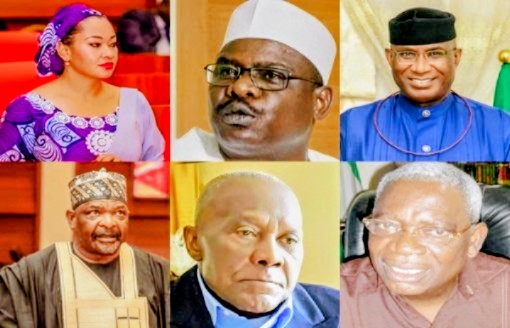
Interestingly, the Senate has over the years, suspended some members for various reasons that range from allegations of misconduct to violations of legislative protocols.
The list include Femi Okurounmu (1999) who alleged that some senators were planning to impeach then-President Olusegun Obasanjo; Joseph Waku (2000) for his controversial statement suggesting that a military coup would be preferable to allowing former President Olusegun Obasanjo to continue in office; and Arthur Nzeribe (2002) whose suspension was linked to allegations of a N22 million fraud during the Senate presidency of Pius Anyim.
Others are Ovie Omo-Agege (2018) suspended after opposing the election re-ordering bill; Abdul Ningi (March 12, 2024) for alleging that the 2024 budget was padded by N3 trillion; and Natasha Akpoti-Uduaghan (March 6, 2025) over alleged misconduct and violation of Senate Standing Rules.