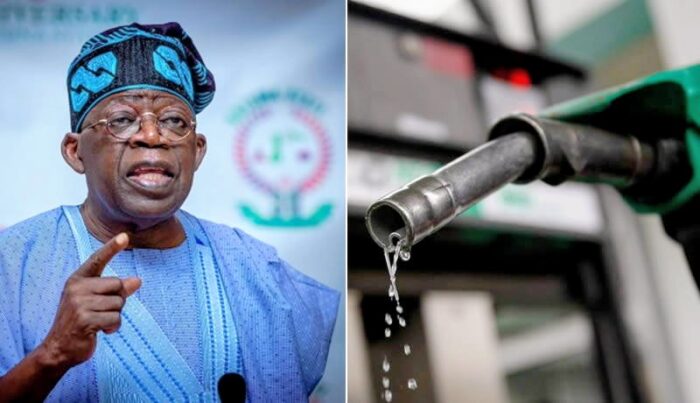
BY EDMOND ODOK – As conversations on the fuel subsidy removal light up the campaign space ahead of the 2027 general elections, President Bola Tinubu has firmly shut the door on Nigeria’s past, declaring that his administration’s controversial decision to abandon the policy is irreversible despite scathing attacks from political opposition
Clearly drawing a hard line against any return to the old economic order where subsidies ruled the day, President Tinubu declared that the bridge to the multi-trillion Naira subsidy regime has been entirely burned, and Nigeria must forge ahead into a new financial era.
The President, who hosted members of the City Boys Movement at the Presidential Villa, Abuja, on Monday, said mounting public pressure notwithstanding, “there is no returning to Egypt”, and stoutly defended the painful fiscal reforms as a necessary purge to rescue the nation from imminent economic collapse.
However, despite acknowledging the severe hardships citizens are currently facing, President Tinubu insisted that reversing the policy would mean reverting to a unsustainable system that enriched a few at the expense of the country’s future.
Deploying the analogy of Moses leading the Israelites out of Egypt, the President said those advocating a return to subsidy were asking the country to back down on an irreversible decision.
He explained the comparison between the policy and the biblical account in exodus saying: “I listen to my political opponents promising the return of subsidy. I remember my scripture studies in either the Bible or the Holy Quran. When Moses left Egypt, they faced the challenge, the Red Sea parted and gave way. You cannot ask Moses to go back to Egypt.”
Tinubu had suddenly announced the petrol subsidy removal in his inauguration speech shortly after assuming office in May 2023,
Instantly, the policy announcement triggered a sharp increase in petrol prices and transportation costs, heightening public concerns over the rising cost of living.
But the Federal Government has continued to defend the decision, arguing that subsidy payments placed an unsustainable burden on public finances and diverted resources that could have been invested in infrastructure and other critical sectors.
Over the last three years, the policy has remained at the centre of public discourse, with critics and opposition figures demanding that lasting measures be put in place to ease its adverse impact on households and businesses across the country.
The latest declaration by Mr President has further demonstrated his stubborn stance against reversing the policy, amid growing demands for the government to address the economic hardship associated with higher fuel prices.
The All Progressives Congress (APC)-led administration has dismissed the promise by former Vice-President Atiku Abubakar and Presidential candidate of the African Democratic Congress (ADC) to reinstate fuel subsidy if elected in next year’s poll.
However, by treating the subsidy removal as a point of no return, the Tinubu-led administration’s stance signals a high-stakes gamble on long-term stability over short-term relief.
This is as the Federal Government continues to woo global investors and local markets that Nigeria is permanently committed to structural reform, even as the immediate fallout continues to reshape daily lives nationwide.