The Federal Government has said that a huge funding gap of about N3 trillion and a cabal working against Nigeria’s dream have held Nigeria steel development back.
The Minister of Steel Development, Mr. Shuabu Abubakar Audu, who stated the position of the federal government during a Podcast interview ‘Deep Insight with Agbonsuremi’ said that a powerful “cabal” actively working in concert with years of poor funding from successive governments are holding back the project to keep the dream in limbo.
Asked to explain how the cabal is being dealt with, the Minister said that those involved in the importation of steel into Nigeria are doing everything to frustrate the government including blocking moves to amend relevant laws in the National Assembly.
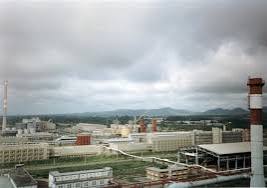
For 47 years, the Ajaokuta Steel Company stands as Nigeria’s abandoned industrial dream even as billions of naira have been sunk into it, yet the plant has yet to produce a single sheet of steel.
Ajaokuta was conceived in the 1970s to drive industrialization and steel sufficiency, but decades of neglect, contract disputes, and alleged sabotage have left it at less than 10% completion. The result: Nigeria imports over $4 billion worth of steel annually.
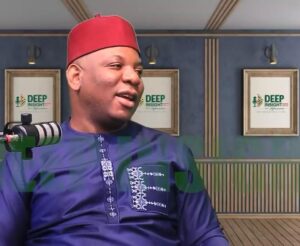
Audu also said the lack of political will and consistent low budgetary allocation have been as damaging as the sabotage by vested interests who benefit from Nigeria’s continued dependence on imported steel.
The minister however, assured that there is hope of sealing a deal with China to revive and complete the plant, stressing that he believes a partnership with Chinese investors and technical partners could unlock funding, technology, and the political backing needed to finally deliver on the promise of Ajaokuta.
He announce that the Ajaokuta Steel Complex will commence commercial production by 2028 if the Federal Government concludes its ongoing negotiations with a Chinese investor this year; saying that the company can be fully revived if President Bola Tinubu is re-elected.
Audu disclosed that the Chinese investor was considering committing between $1.5bn and $2bn to revive the long-abandoned steel complex in Kogi State.
According to him, the investment will come through a combination of cash and equipment, while the Federal Government is considering a production-sharing arrangement that would allow the investor to recover its investment before ownership eventually reverts to the government.
The minister said the government had decided against injecting public funds into Ajaokuta because about N3tn is required to revive the complex, while its 2025 budgetary allocation was only N500m, with N50m earmarked for capital expenditure.
Audu further said; “An ongoing technical and financial audit would determine the exact state of the complex, but it is estimated that about 70 percent remains useful, with the remaining 30 percent requiring significant upgrading”.
The minister explained that the Federal Government initially negotiated with Russian equipment manufacturers, but had to shift its focus to China following the Russia-Ukraine war.
He also said that the government had signed a 20-year gas supply agreement with the Nigerian National Petroleum Company Limited to provide gas to Ajaokuta, making the project more attractive to investors.
Audu said the government also signed an agreement with the Ministry of Defence and Defence Industries Corporation of Nigeria to use part of the Ajaokuta complex for the production of military hardware, including helmets, bulletproof vests and ammunition.
He emphasized that President Tinubu require a second term to consolidate the reforms and achieve the administration’s long-term economic objectives.
According to Audu; “We are hoping, praying, that the President gets a second term so that we can have a 2030 $1tn economy. Nigerians need to support Tinubu’s re-election, because continuity is necessary to consolidate the reforms and complete major projects such as the Ajaokuta Steel company.
The minister also said Nigeria currently imports about $4bn worth of steel annually, warning that beneficiaries of the import business could resist efforts to establish a strong domestic steel industry.
He said; “The people that are benefiting from imports of $4bn in terms of iron and steel annually would fight tooth and nail to prevent the local industry from kick-starting.
“Yet, the steel sector can contribute about $100bn to Nigeria’s economy if Ajaokuta and other major steel facilities operate at full capacity”.
Audu specifically said that the revival of Ajaokuta, Delta Steel and other facilities could create between 500,000 and one million jobs, while Nigeria’s estimated three billion metric tonnes of iron ore deposits in Kogi State provide a strong foundation for local steel production.
The minister expressed confidence that President Bola Tinubu’s $1tn economy target by 2030 is achievable, but stressed that the administration would require a second term to consolidate its economic reforms.