BY COBHAM NSA – Nigeria is on the verge of a massive food system transformation as a powerful coalition of civil society organisations (CSOs) has boldly challenged the Federal Government to place agroecology at the centre of Nigeria’s agricultural and climate policy frameworks.
Armed with firsthand evidence from the frontlines of farming and research, the advocacy groups argued that their aggressive push to overhaul the nation’s agricultural policy has become imperative because bridging critical regulatory gaps is no longer just an administrative fix, but a vital lifeline capable of fortifying national food security.
According to the CSOs, by reshaping how the country approaches farming, the policy shift will directly rescue failing rural livelihoods, strengthen food security and build an indispensable shield against the accelerating shocks of climate change.
Rising from a one-day advocacy workshop in Abuja on Tuesday with the theme, “Agroecology for a Climate-Resilient and Inclusive Food System in Nigeria: Translating Evidence from Participatory Action Research into Policy Action”, the stakeholders agreed that urgent policy measures must be taken to reform Nigeria’s agricultural sector which is currently facing severe vulnerabilities from climate change.
This is as they noted that these existing and emerging crisis, fueled by a volatile mix of unpredictable droughts, severe floods, and skyrocketing inflation, has put a staggering 68 percent of the population in harm’s way, directly threatening their food security.
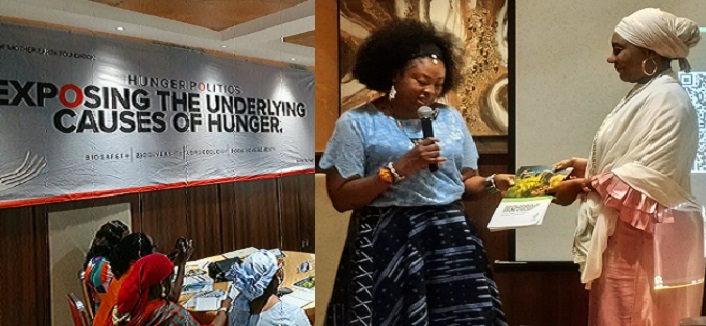
Put together by Health of Mother Earth Foundation (HOMEF) and collaborating organisations, including Environmental Rights Action/Friends of the Earth Nigeria (ERA/FoEN), Corporate Accountability and Public Participation Africa (CAPPA) and Kebetkache Women Development and Resource Centre, participants at the advocacy workshop were together researchers, farmers, civil society organisations, practitioners, policy actors and other stakeholders.
Looking at evidence from participatory research and develop recommendations for transforming Nigeria’s food system, the stakeholders’ meeting warn that compounding, climate-driven, and economic challenges are rapidly outstripping existing defenses, pushing the nation’s food supply chain to the brink.
Opening the workshop, Deputy Executive Director of Environmental Rights Action/Friends of the Earth Nigeria (ERA/FoEN), Mariann Bassey-Olsson, said Nigeria is drowning in agricultural solutions but starved of political action, insisting that the nation’s real crisis is not a lack of farming intelligence, but a failure to convert brilliant local research into functional public policy.
For her, generations of traditional Nigerian farmers have carefully guarded the keys to resilience, mastering seed preservation, soil regeneration, and biodiversity management in the face of a shifting climate, but unfortunately this vast reservoir of indigenous wisdom and modern scientific data remains locked out of government strategy.
“We also have research. We have evidence. So where is the disconnect?” Bassey-Olsson demanded, adding; “Why does good evidence so often struggle to become good policy and meaningful action?”
Laying bare the stark divide between academic proof and state execution, she tasked stakeholders to make the workshop participatory and to place farmers and communities at the centre of the discussions, maintaining also farmers should not be regarded merely as beneficiaries of government food policies but as “knowledge holders and food-system actors.”
Bassey-Olsson, who interrogated the true beneficiaries of resilience and inclusion policies, demanded to know who decides, whose knowledge counts, and who ultimately benefits, even as she argued that instead of just generating evidence, researchers must turn Participatory Action Research (PAR) into tangible policy measures.
Also presenting a document titled: “The Nigerian Food System and Current Realities”, HOMEF Director Joyce Brown highlighted a compounding food crisis driven by farmland conflict, chemical dependency, post-harvest losses, insecurity and ongoing GMO controversies, noting that a staggering 34.7 million people are projected to face acute food insecurity by the mid-2026 lean season—up from 27.2 million in late 2025.
Pointing out that this crisis is actively worsened by insurgency, banditry, and kidnapping, which lock farmers out of their own lands, the HOMEF’s document said the compounding the danger is a toxic reliance on synthetic chemicals, noting that research shows about 80 percent of pesticide brands used by smallholder farmers are highly hazardous, contributing to a massive annual chemical burden of 23,400 tonnes.
For HOMEF and its partners, building a resilient food system demands immediate, increased investment in agroecology, seed sovereignty, robust extension services, and post-harvest loss reduction.
The workshop also had Professor Olugbenga O. AdeOluwa of the University of Ibadan, presenting findings from participatory action research proving Nigerian farmers actively use agroecology but lack formal recognition or vital institutional support.
Spanning six states, including Oyo and Ekiti states in the South-West, Umuahia in Abia State, Ikot Ekpene in Akwa Ibom, Jos in Plateau State, and Abuja, the Federal Capital Territory (FCT), the study utilized focus groups, interviews, and questionnaires, while also identifying widespread use of composting, agroforestry, water harvesting, and indigenous seeds.
The results highlighted significant perceived benefits such as about 94 percent of farmers achieving better yields, income, and soil fertility. However, findings showed that only 34 percent received institutional aid, with over half never receiving any formal training.
While exposing seven critical policy barriers hindering sustainable agriculture as, policy disconnect, limited institutional support, weak agricultural extension, market constraints, insecure land tenure, socio-economic barriers and research funding that favours input-based technologies, the study recommended overcoming them by fully institutionalising agroecology into core climate and agricultural frameworks.
The workshop participants were also treated to a presentation by Olamide Martins of CAPPA, on Osun State’s draft agroecology policy, offering a concrete framework to translate agroecological principles into government action.
The policy targets critical regional challenges, including soil degradation, climate vulnerability, weak markets, food insecurity, knowledge gaps, and fragmented institutional coordination. To drive meaningful change, the policy is structured around five strategic pillars: ecosystem restoration, food security, enterprise development, capacity building, and inclusive governance.
Martins explained that instead of isolating agroecology as a farming issue, its implementation framework enforces cross-sectoral government coordination, noting that key directives include restoring degraded environments, scaling agroecological businesses, enhancing farmer education, embedding and promoting gender equity as well as participatory governance.
As expected, the workshop ignited hard-hitting debates as participants confronted the stark, practical barriers blocking agroecology from scaling across Nigeria. Far from a passive event, the session transformed into a dynamic arena of sharp questions and boots-on-the-ground interventions.
At the heart of the dialogue was a critical, high-stakes question: how can the country successfully bridge the gap between academic research evidence and real-world farming experiences to build policies that honor local knowledge while delivering vital institutional, financial, and market backing?
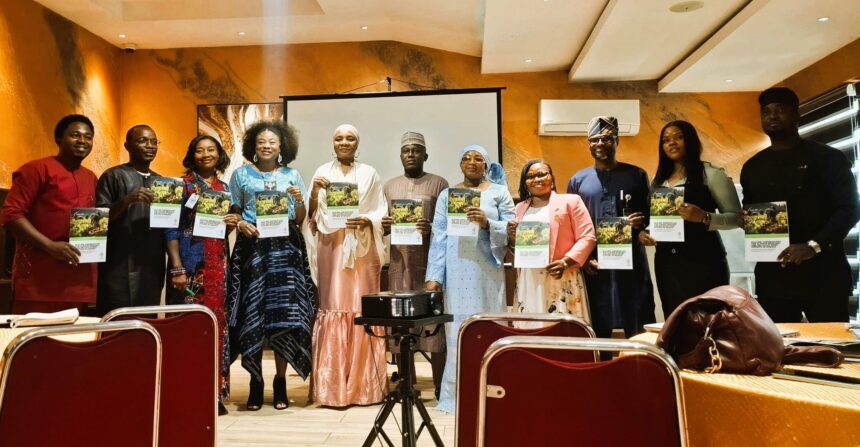
The crowning moment of the workshop arrived when ERA/FoEN’s Deputy Executive Director, Bassey-Olsson took the stage to deliver a transformative blueprint for the nation’s agricultural future. Handed directly to a representative of the Federal Ministry of Agriculture, the newly unveiled Policy Brief, focused on scaling climate-resilient and inclusive food systems, seeks to turn hard empirical evidence into decisive governmental action across Nigeria.