“This is not a moment for complacency. Democracy survives only when citizens remain vigilant. Political actors, institutions, and the public must stay alert and engaged to ensure that the system does not drift in the wrong direction”.
BY BELLO GWARZO ABDULLAHI

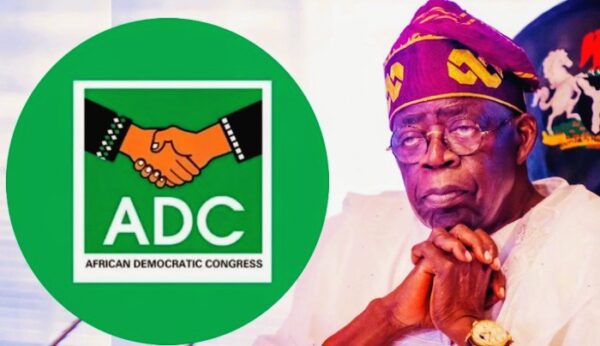
It is a political season, and every such period comes with its own challenges—largely shaped by the actors involved. Lest we forget, this is not the first time Nigeria has witnessed a scenario like this. From the First Republic to date, different scripts have been deployed in attempts to control the political space, and in most cases, they have proven counterproductive. What is now unfolding around the African Democratic Congress (ADC)—the emerging opposition platform—is far from random; it is calculated. For those paying attention, the pattern is familiar and the signs are difficult to ignore.
The situation within the ADC clearly goes beyond routine internal party issues. There are strong indications of external interference. The emergence of factions, seemingly engineered leadership disputes, and rising tensions point to something more deliberate. These developments are creating confusion, weakening the party from within, and diverting attention from what should be the priority—building a strong, credible opposition ahead of 2027.
In all of this, the APC appears to be the primary beneficiary—gaining from defections, capitalising on divisions, and consolidating its hold where it matters most. Across the political landscape, alliances are shifting, interests are being negotiated, and the opposition is becoming increasingly fragmented.
The growing role of the courts is equally troubling. Matters that should ordinarily be resolved politically are now trapped in prolonged legal battles, further complicated by a judiciary that increasingly raises concern. Rather than providing clarity, cases are delayed, conflicting judgments emerge, and technicalities are deployed in ways that complicate rather than resolve disputes. The result is a sustained atmosphere of uncertainty for opposition parties.
Public perception is also being shaped in real time. Crises within opposition parties are amplified, repeated, and reinforced, gradually normalising disunity. Over time, this erodes public confidence and weakens belief in the possibility of a viable alternative.
This is where the real danger lies. When one party dominates not solely on performance, but through the systematic weakening of its rivals, the balance that sustains democracy begins to erode. It does not happen overnight—but step by step, the space for genuine competition shrinks.
It must be stated without ambiguity: even during Nigeria’s military era, attempts at absolute political dominance were resisted. There were limits, and there was pushback. It would be a grave contradiction—indeed, a dangerous precedent—if, in a democratic dispensation, such tendencies are tolerated or allowed to take root.
This is not a moment for complacency. Democracy survives only when citizens remain vigilant. Political actors, institutions, and the public must stay alert and engaged to ensure that the system does not drift in the wrong direction.
Nigeria cannot afford to slide into a one-party state—whether subtle or overt. That is not an option.
The warning signs are already visible. The real question is whether we choose to act—or look away.
…Bello Gwarzo Abdullahi, a political analyst based in Gombe can be reached via bgabdullahi@gmail.com