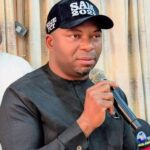
BY COBHAM NSA – The Director-General of the World Trade Organisation (WTO), Ngozi Okonjo-Iweala, and Governor of the Central Bank of Nigeria (CBN), Olayemi Cardoso, on Wednesday urged Nigeria and other African countries to recalibrate and fully embrace the current shifting global supply chain or be left behind.
According to them, unfolding developments present the best time for the continent to sustain economic reforms, strengthen institutions and deepen regional integration while capitalising on emerging opportunities created by shifts in the global economy.
Speaking at the 7th Africa Emerging Markets Forum in Abuja, both financial experts said Africa has a rare opportunity to accelerate industrialisation, attract investment and create jobs with the changing global trade environment, characterised by geopolitical tensions, supply chain diversification and increasing trade uncertainty.
In her keynote address at the event with the theme: “Building Africa’s Resilience Amidst Geo-Economic Uncertainties”, Mrs Okonjo-Iweala noted that the world was witnessing a transformation rather than the end of globalisation and international trade was shifting from cooperative to competitive interdependence.
According to her, “What we are seeing is not the end of globalisation but its transformation from cooperative to competitive interdependence”, stressing that the reorganisation of global supply chains offers African nations a strategic opportunity as alternative investment destinations with multinational companies seeking to reduce dependence on a limited number of production hubs.
The WTO Chief said hope must match reality and tasked African governments on leveraging the continent’s vast reserves of critical minerals, youthful population and expanding consumer markets by developing regional value chains instead of continuing to export raw materials.
Okonjo-Iweala, who was Nigeria’s former Minister of Finance and Coordinating Minister of the Economy, identified the Continent’s rapidly growing youthful population as one of its greatest assets, but cautioned that this demographic advantage may become a major socio-economic challenge without the creation of sufficient jobs, improved skills and expanded economic opportunities.
She said though the African Continental Free Trade Area (AfCFTA) could transform Africa’s future, it will fail without urgent, comprehensive legislative reforms, cautioning that the continent risks losing a historic opportunity for greatness if governments do not act quickly.
On Africa’s success story over the next decade, the WTO boss said: “Leadership… it’s all about leadership”, even as she challenged African leaders to focus on transparent governance, job creation, and effective implementation of reforms while also addressing the structural constraints limiting economic growth.
Mrs Okonjo-Iweala, who noted that recent CBN monetary and foreign exchange reforms are steadily improving Nigeria’s macroeconomic stability, said since the reforms’ success would ultimately be measured by their impact on citizens’ welfare, “Nigeria needs to continue the work on overall macroeconomic reforms.
“Above all, Nigeria needs to focus on creating jobs and economic opportunities for a young and hungry population. Nigerians must feel the dividends of reform in the real economy.”

In his remarks, the CBN Governor, Yemi Cardoso said the apex bank’s reform measures are already restoring confidence in Nigeria’s economy through transparent, credible and consistent monetary policies, assuring the CBN is focused on its core mandate of maintaining price stability while implementing difficult but necessary reforms to stabilise the foreign exchange market, strengthen the banking system and improve policy credibility.
He said “The figures speak for themselves”, especially with the bank having enhanced transparency in policy formulation and avoiding inconsistencies that previously undermined investor confidence.
Acknowledging that, “The era of abundant liquidity chasing returns regardless of risk is over,” Cardoso said countries seeking investment must demonstrate policy consistency and institutional strength, adding: “Credibility is not only a central bank concern; it is a national economic asset”,
The CBN boss said with credibility as one of Africa’s most valuable economic assets, investors are increasingly prioritising countries with transparent institutions, predictable policies and sound governance, even as he canvassed stronger regional economic integration.
However, he lamented that despite the AfCFTA, intra-African trade remains low at 16 percent and to unlock its potential, Africa must upgrade infrastructure, streamline customs procedures, and boost regional value chains
Cardoso further urged African countries to mobilise more domestic resources to finance development rather than relying excessively on foreign capital, citing Nigeria’s ongoing banking sector recapitalisation, where approximately 75 per cent of the capital raised came from domestic investors.
“We must mobilise our own resources,” he said, noting that African countries can no longer depend on the volume of foreign aid and capital inflows that characterised previous decades partnership arrangements.
Going forward, the CBN boss said attracting foreign investment requires a stable environment that first inspires local investor confidence.