…Demands transparency in the 30-day fuel discount
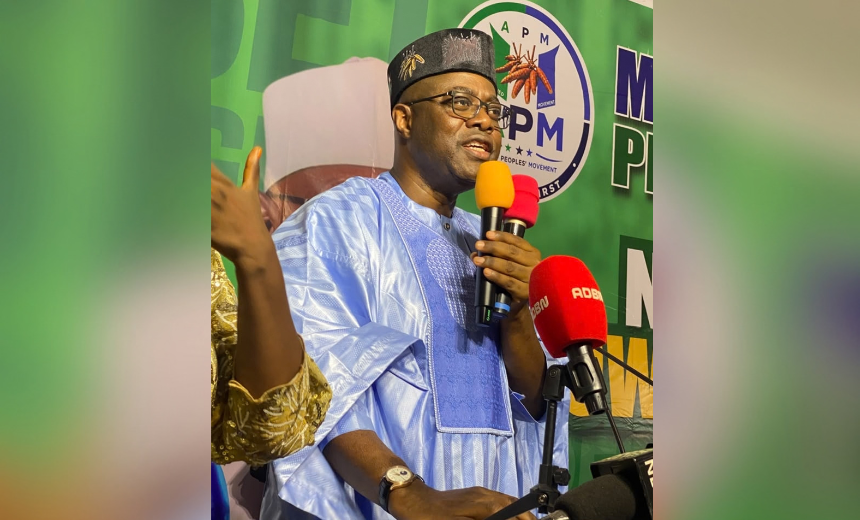
The Presidential candidate of the Allied Peoples Movement (APM) and Governor of Oyo State, Engr. Seyi Makinde, has challenged the Federal Government to be transparent in the pricing template for its 30-day fuel discount policy.
Makinde particularly demanded transparency in the calculation of the proposed relief, stressing that Nigerians deserved to understand the basis for the government’s pricing decisions and should be allowed to contribute alternative solutions to the country’s persistent fuel-price crisis.
The APM Presidential Candidate, who stated these on Saturday at the APM North-East 2027 Town Hall Meeting in Yola, Adamawa State, urged the government to publish the figures and methodology used in determining the discount.
Makinde said; “We are asking for only two things. We don’t want long ‘turenchi’, unnecessarily complicated explanations. Just release to Nigerians your pricing template: how you arrived at your figure, and let Nigerians — they are not dumb — look at your pricing templates, and if they have a better solution, they will present it”.
He emphasized that public office did not give government officials monopoly on knowledge or the ability to solve national problems.
According to Makinde; “The fact that we are in government or you are in the Presidential Villa does not make you the only people with sense”.
The APM Presidential Candidate further tasked the Federal Government to allow Nigerians to scrutinise the proposed policy shift in order to offer constructive and acceptable recommendations.
Nigeria despite being a major crude oil producer in Africa and hosting the Dangote Petroleum Refinery, it has continued to struggle with high and uncontrolled domestic fuel prices, thereby raised serious questions with regards to the relationship between local refining capacity, crude supply arrangement and the cost of petroleum products.
Engr Makinde’s demand has therefore placed serious emphasis on transparency and public accountability in the implementation of the discount programme.
The Federal Government’s release of a detailed pricing template could enable independent analysts, economists and consumers to assess how the discount is calculated, who bears its cost and whether the intervention is likely to provide meaningful relief to Nigerians.
The President Bola Ahmed Tinubu-led government’s fuel discount policy has generated controversy as Nigerians questioned the rationale, thus described it as a possible return of subsidy through the back door. This was as stakeholders also raised concerns over the timing of the intervention ahead of the 2027 general elections.
President Tinubu on May 29, 2023 announced the immediate removal of subsidy in petrol as part of what he described as economic reforms, alongside other measures to unify Nigeria’s foreign exchange market.
While the government insisted that the policies were intended to address structural economic challenges, they have however, contributed to increased cost of living and brought about increased pressure on households and businesses.
Nigeria’s petrol prices have risen significantly since the reforms, with prices reported at over ₦1,400 per litre, compared with approximately ₦830 before the recent escalation associated with the conflict in the Middle East.