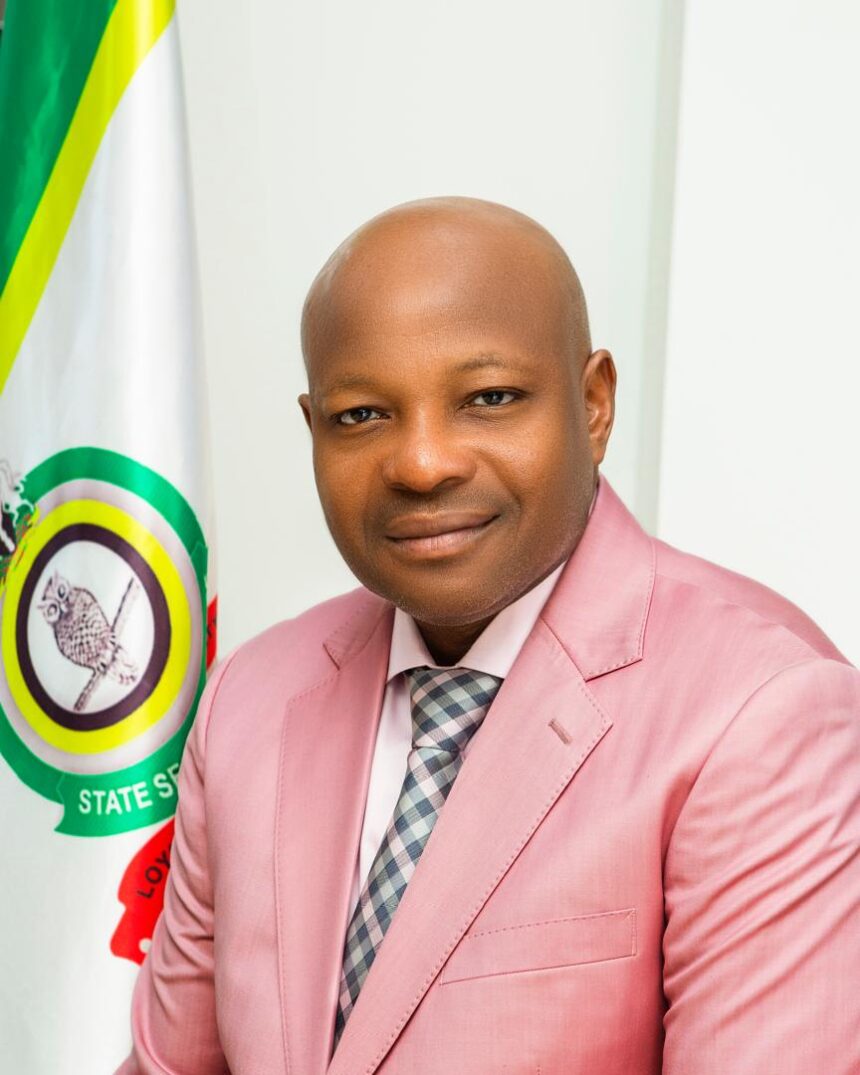
“If Nigeria is serious about building institutions that command public confidence, security agencies must be prepared to demonstrate impartiality, professionalism and respect for judicial authority regardless of the political identity of the person involved”.
BY SUFUYAN OJEIFO
The decision by the Director-General of the Department of State Services (DSS), Oluwatosin Adeola Ajayi, to approach the Federal High Court over the possibility of suspending the prosecution of African Action Congress (AAC) presidential candidate, Omoyele Sowore, until after the 2027 presidential election is one that deserves careful consideration—and, indeed, applause.
At a time when actions involving opposition figures are easily interpreted through partisan lenses, Ajayi has demonstrated something often missing in public administration: institutional restraint.
The request to pause the proceedings should not be mistaken for weakness, political favouritism or an attempt to place anyone above the law. On the contrary, it reflects an understanding that the rule of law also requires fairness, proportionality and respect for the democratic process.
The DSS is not asking the court to terminate the case. It is asking the court to consider whether continuing the prosecution during an election period could unnecessarily complicate the democratic process. That distinction is fundamental.
Sowore, like every other Nigerian, remains subject to the law. If the court approves a postponement, the allegations do not disappear. The prosecution can resume after the election, allowing the legal process to proceed without creating avoidable controversy around a presidential candidate at a particularly sensitive political moment.
This is precisely where Ajayi’s approach deserves commendation.
Security agencies wield enormous powers, and the manner in which those powers are exercised matters greatly. An institution that knows when to act firmly and when to exercise restraint demonstrates confidence in its own professionalism.
The Foundation for Democracy in Africa (FDA), in commending the DSS leadership, described the decision as consistent with democratic principles, due process, the rule of law and the integrity of elections. That assessment deserves attention.
Nigeria’s democracy does not only depend on elections taking place; it also depends on citizens believing that institutions are not being used to influence electoral outcomes.
By placing the matter before the Federal High Court, Ajayi has allowed the judiciary to determine the appropriate course of action. That is a significant point. Rather than unilaterally making a politically sensitive decision, the DSS is seeking judicial guidance.
Such an approach reinforces institutional accountability.
Ajayi’s record, as highlighted by the FDA, also provides useful context. Since assuming office in August 2024, he has been credited with efforts to strengthen due process within the service, including the release of persons allegedly detained in error and compensation for affected individuals.
At the same time, the DSS under his leadership has continued to perform its core national-security responsibilities, including operations against terrorism and insurgency and the arrest and prosecution of high-profile suspects.
This combination of firmness on security and restraint where democratic sensitivities are involved is precisely what Nigerians should expect from a modern security institution.
There is sometimes a mistaken assumption that a strong security agency must always be seen taking the toughest possible position. But strength is not measured solely by arrests, prosecutions or enforcement actions. Sometimes, the greater demonstration of institutional strength is knowing when restraint serves the national interest better.
That appears to be the thinking behind the Ajayi initiative.
The 2027 elections will be an important test of Nigeria’s democratic institutions. Political parties will compete vigorously, candidates will make competing claims and public institutions will inevitably come under scrutiny.
In such an environment, every effort to reduce unnecessary institutional tension should be welcomed, provided it remains firmly anchored in law.
The proposed pause in Sowore’s prosecution can therefore be viewed as an attempt to protect the credibility of the electoral process without compromising the justice system.
It is also important to stress that the decision does not create a special legal status for Sowore. It establishes no permanent immunity and does not erase the case. It simply creates the possibility of allowing the election to take place without an ongoing prosecution becoming an additional source of political controversy.
That is a reasonable position for the DSS to place before the court.
Indeed, the principle should be bigger than any individual or political party. If Nigeria is serious about building institutions that command public confidence, security agencies must be prepared to demonstrate impartiality, professionalism and respect for judicial authority regardless of the political identity of the person involved.
Ajayi’s approach offers an example of how this can be done.
The DSS must remain tough against terrorism, violent extremism, threats to national security and other criminal activities. But that firmness must coexist with respect for constitutional rights and democratic institutions.
That balance is not a contradiction. It is the hallmark of responsible security leadership.
For that reason, the FDA’s commendation of Ajayi is understandable. His decision to seek judicial consideration rather than simply allowing a politically sensitive prosecution to become another flashpoint demonstrates an appreciation of the bigger picture.
In the end, democracy is strengthened not only by the enforcement of laws but also by the responsible exercise of institutional power.
The DSS under Ajayi appears to be demonstrating that restraint can be a sign of strength, not weakness.
And for that, the DSS leadership deserves applause.
…Sufuyan Ojeifo is an journalist and public affairs analyst