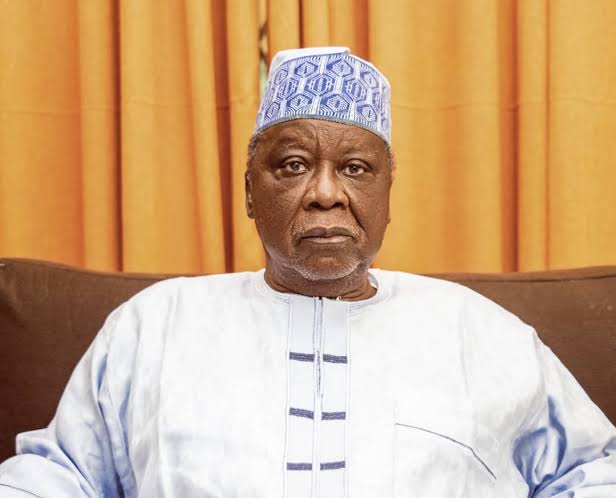
“His good works extend beyond where he hails from, and his 80-year legacy continues to influence and inspire lives at the community, state, and national levels”.
BY SIMON REEF MUSA
Reaching an octogenarian milestone is a moment for reflection, especially when that person’s service offers a profound look at how the nation and citizens have benefited. To understand the dialectics and dynamics that shaped Akau’s life and his deep commitment to service, we need to interrogate his childhood, rooted in an early Christian upbringing that is gradually vanishing, and contrast it with modern times, where materialism has become the acceptable norm. Even as insincerity gradually became an acceptable norm, the young Ishaya rejected it and stood by the ancient landmark, even when rejecting the truth would have benefited him. As a primary school pupil, he refused to stay silent when he discovered that the teacher had miscalculated and recorded high marks for him on his exam paper. He raised his hand in protest and called the teacher’s attention to the mistake. His action drew the ire of his classmates, who wondered what type of pupil he was when the mistake was to his advantage.
Born in Kafanchan on 29th September 1946 to the Christian family of the Late Samuel Akau and Kabenyan Masara, the young Ishaya grew up in a vital railway hub and a melting pot of diverse cultures, setting a backdrop of multiculturalism and communal coexistence that would later shape his work as a peace advocate. He attended primary school from 1953 to 1956 at the Sudan Interior Mission (SIM) Kafanchan, where he earned his Primary IV Certificate. Between 1957 and 1959, he attended the Native Authority Senior Primary School, Wamba, in present-day Nasarawa State, for his Senior Primary Education, where he completed his Primary VII Certificate. Between 1960 and 1967, he attended Government College, Keffi, for his West African School Certificate Grade 1 and Higher School Certificate.
After his HSC in 1967, he was appointed as a classroom teacher at the Provincial Secondary School, now Alhudahuda College, Zaria. After completing his BA in English Language at Ahmadu Bello University in 1970, he was appointed Assistant Lecturer. He later became Lecturer 1 at the Advanced Teacher College (now Federal College of Education), Kano, until 1979. At 33, he was appointed Chief Lecturer at the Kaduna State College of Education, Gidan Waya, where he served as Dean of Languages.
His hard work and craving for truth did not escape his people’s notice. Akau was eventually elected to represent the old Jema’a Local Government Area (LGA), comprising the present Jema’a, Kaura, Jaba and Sanga (LGAs), during the 1977 Constituent Assembly. While serving on the Constituent Assembly, he urged the government to focus on youth development. He warned that if youths were not developed, a time would come when the government would use the same funds to buy weapons and kill these youths who would constitute security threats to the nation. With such a timely warning, Akau became the Nostradamus who was ignored. Contemporary events show Akau as someone who saw the future and warned against current events. He later served as commissioner in the following ministries: Education, Economic Planning and Agriculture from November 1981 to September 1983.
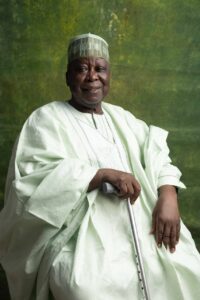
In 1992, he returned to public service as the Director of Administration & Finance at the Directorate for Mass Mobilisation for Self-Reliance, Social Justice and Economic Recovery (MAMSER). He was later moved to the National Agricultural Land Development Authority (NALDA) as Director of Administration & Finance. In 2000, he was appointed a Director in the Office of the Head of Service (PSO) and eventually retired in June 2001. His retirement from public service did not end his further appointments. He continued as the Chairman of the Kaduna State Scholarship Board from January 2000 – May 2003. Between 2003 and 2007, he served as the pioneer Chairman of the National Assembly Service Commission (NASC). As NASC Chairman, Akau worked to insulate the legislative civil service from partisan political pressures. He implemented structural reforms that emphasised merit-based promotion, standardised continuous professional training, and reinforced strict compliance with civil service guidelines. His leadership helped professionalise the workforce supporting the nation’s lawmakers.
At the same time, from June 2001 to June 2006, Akau served as Chairman of the Hospital Management Committee, General Hospital Kafanchan, Kaduna State, among other committees. The man who believes sincerity pays more than crookedness was again recalled and appointed Sole Administrator to salvage the Kaduna State College of Education, Gidan Waya, Kaduna State (May 2009–2011), to tackle certificate forgery and falling educational standards. He was later appointed Executive Chairman of the Kaduna State Universal Basic Education Board (SUBEB) from December 2011 to 2015. At 80, Akau has been honoured with numerous awards that include the Officer of the Order of Niger (OON) in 2006 by President Olusegun Obasanjo; Award of Excellence in Education By The Association of Primary School Head Teachers of Nigeria (2014); ‘Award of Excellence By The Re-Branding Nigeria Initiative’ (June 2014) and an Award By Teachers Without Borders and the International Organisation ‘For Contributions To The Development of Education’ (2008), among others.
Akau’s journey in public service was not without tribulations. The military detained him, along with other politicians, after the fall of the Second Republic. After a long period of incarceration, he was set free. Though he was detained during the ethno-religious crisis that rocked Kafanchan and later spilt to Kaduna, Zaria, and Katsina in 1987, Elder Akau was never found wanting over a crisis he helped to combat by providing shelter for students likely to be harmed. He has continued to use his administrative background to build bridges among ethnic nationalities in southern Kaduna State, while working harder to achieve long-term security by advocating justice, equal economic opportunities, and quality education for the youth. An elder statesman who prioritised institutional leadership over nepotism and other discriminatory practices, Elder Akau has consistently emphasised competence and avoided seeking media attention, preferring to let his actions speak to his leadership acumen.
Elder Akau, at 80, is a bold testament that true leadership is measured not by the wealth acquired in public service but by the strength of the institutions one leaves behind, the peace one helps build, and the positive impact made on ordinary citizens. Sadly, for a society enmeshed in the worship of Mammon, Akau’s footprints are least appreciated. In a multi-diverse society from which he hails, the relegation of his esteemed position is derived from the politics of the region that is deeply divided by religious and ethnic groups. Elder Akau remains an elder statesman whose altruism is uncontestable.
Today, I celebrate a prominent Nigerian elder statesman, high-level public administrator, and dedicated peace advocate who is a metaphor for what is needed in national development and wielding communities for the common good. Born in 1946 in Kafanchan, the headquarters of the present Jema’a Local Government Area of Kaduna State, Elder Akau’s status in national life has grown beyond his nativity and established him as an exemplar of the core values missing in contemporary governance: institutional discipline, unyielding ethical integrity, and a deep commitment to both national and grassroots welfare.
His good works extend beyond where he hails from, and his 80-year legacy continues to influence and inspire lives at the community, state, and national levels. Happy 80th birthday to one of Nigeria’s patriotic elders, whose life path remains a roadmap for our nation’s growth and peaceful co-existence in a diverse nation.
…Musa is an Abuja-based media practitioner and can be reached via simonreef927@gmail.com