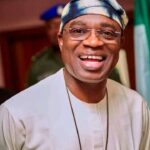
Former Senate President Bukola Saraki has given details of how former President Muhammadu Buhari harassed and intimidated him owing to his opposition to excessive borrowing practices by the Executive arm of government.
Saraki pointedly lamented Nigeria’s failure to fulfill its potential, despite individual Nigerian successes globally, just as he attributed Nigeria’s political challenges to unprepared leaders who take advantage of professionals that avoid politics, labelling it as “dirty.”
This was as the former governor of Kwara State, questioned the lack of effective leadership which he attributed to the absence of “best hands and heads” in politics and passive followership.
Saraki, who stated these while speaking at the King’s College Old Boys Association (KCOBA) reunion in Houston, Texas, said that during his tenure as President of the Senate, the Nigerian elite and public remained passive, saying that such docility impacted negatively on subsequent Senate Presidents.
He noted that no Senate President would want to endure the bare intimidation he faced which later led to a “rubber stamp” legislature, stressing that his successors have become subservient to the executive to avoid similar treatment.
Saraki’s tenure (2015-2019) was marked by a contentious relationship with former President Buhari, stemming from his controversial election as President of the Senate against the ruling APC’s preferred candidate, and later escalated with legal challenges and his eventual defection back to his original Party, the Peoples Democratic Party (PDP).
Saraki as Senate President also faced sponsored attempts at impeaching him which led to a legislative-executive gridlock. Saraki contrasted his experience with the perceived compliance of his successors, namely; Ahmad Lawan and Godswill Akpabio.
In his words; “The legislature under my leadership was silenced, harassed, assaulted, bullied, and blackmailed. It was partly as a result of a failure of followership which has affected the current state of the National Assembly”.
Saraki specifically criticized the building of “strong men and women” over having strong institutions, stressing that many leaders lack clear policies and rely on “government scammers.”
The former Senate President challenged Nigerians to actively participate in politics, support capable candidates, and hold leaders accountable.
Saraki therefore emphasised the need for intentional leadership and well-designed policies and urged Nigerian professionals to reject the notion that politics is “dirty” and to become more involved in governance.