- 2022 Budget captures key execution priorities, strategies of NDP 2021-2025 ― Ahmed
BY COBHAM NSA – Amid disrupting challenges of the global economic downturn and the debilitating effects of COVID-19, it is not all bad news for the Federal Government with its reports of raking in over N1.1 trillion independent revenue as of November 2021.
The figure represents a massive surge from the about N200 billion that was earned in the year 2016, according to the Director-General, Budget Office of the Federation, Mr Ben Akabueze.
Speaking virtually at the public presentation and breakdown of the highlights of the 2022 Appropriation Act in Abuja on Wednesday, Akabueze said; “As of November 2021, the Federal Government recorded N1.1 trillion independent revenue, indicating that this line of revenue will do better in the future.”
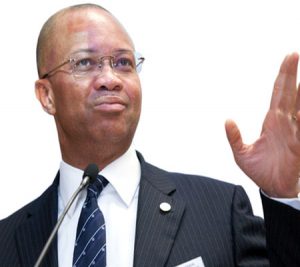
Akabueze, who admitted that the government is facing significant revenue challenges, said the improved figures were products of budgetary discipline and transparency being promoted by the current administration.
He described the budget as a ‘moral and aspirational document’, assuring that the government is resolute in ensuring the implementation of the 2022 Appropriation Act impacts meaningfully on the lives of Nigerians.
Adding her voice to the cheering news, Minister of Finance, Budget and National Planning, Mrs Zainab Shamsuna Ahmed, said; “The trend shows a steady improvement of our independent revenues over the years.
“As of November 2021, we had surpassed all collections for FGN independent revenues from 2017 to date. This reflects the performance of our revenue growth initiatives for this revenue stream.
“We have now for the first time surpassed the one trillion mark collection for independent revenues (N1.104tn collected as of November against a budget target of 973.41bn). Analysts have always considered our projections unrealistic, but we have always insisted on the potentials that exist to grow FGN independent revenues.”
Generally commenting on the 2022 Budget, the Minister said the document is expected to further accelerate the recovery of our economy and facilitate the completion of critical projects, as well as improve the general living conditions of our people, adding; “The Budget reflects the key execution priorities and strategies of the National Development Plan (NDP) 2021-2025”
Mrs Ahmed further stated that; “Government will continue to create the enabling environment for the private sector to increase their investment and contribute significantly to job creation, economic growth and lifting millions of our citizens out of poverty”, this is as she noted that “early passage of the 2022 Budget for implementation from January 1 will significantly contribute towards achieving government macro-fiscal and sectoral objectives.”
Independent revenues of government are streams of funds generated by agencies as captured by the Fiscal Responsibility Act of 2007, which stipulates that any government agency that generates revenue must remit 80 per cent of their operating surplus to the Consolidated Revenue Fund account.
Some of these agencies are the Central Bank of Nigeria (CBN), Nigeria Deposit Insurance Corporation (NDIC), Securities and Exchange Commission (SEC), and Nigerian Shippers Council (NSC). The list also includes the Nigerian Export Promotion Council (NEPC), National Health Insurance Scheme (NHIS), Nigerian Civil Aviation Authority (NCAA), and Nigerian Communication Commission (NCC) among others.
These are incomes received without directly exchanging labour-power for it such as interests on money capital, dividends earned by share ownership, and rental income, etc. This is as many economists and other professionals continue to submit that in modern capitalist economies, there is a need for policies that encourage the acquisition of income-generating capital assets to supplement or replace employment-generated income.
The argument being advanced is that this is driven by the progressive replacement of labour by capital in modern production processes.