- Says all spending has legislative backing
BY COBHAM NSA – The Federal Government has outrightly debunked allegations of operating a secret “shadow budget” after explosive reports suggested that over ₦8 trillion was spent without legislative approval, dismissing the claims as a gross distortion of international economic findings.
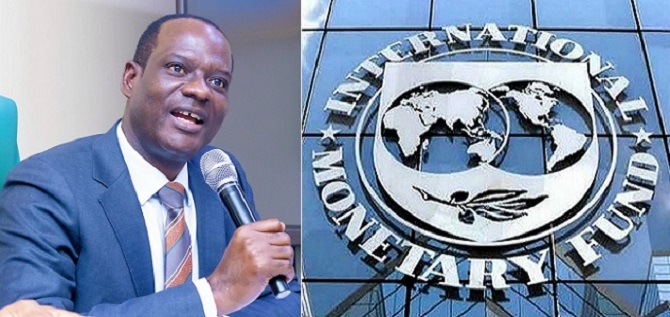
Delivering a robust pushback on the claims, the Federal Ministry of Finance maintained that the controversial figures being flaunted in public space actually stem from a severe garbling of the International Monetary Fund (IMF)’s 2026 Article IV Consultation Report.
According to the Minister of Finance and Coordinating Minister of the Economy, Mr. Taiwo Oyedele, all public expenditures are strictly grounded in constitutional law and National Assembly appropriations, even as he clarified that the reported two percent (2%) Gross Domestic Product (GDP) variance is a mere technical reporting issue rather than so-called illegal spending.
Mr Oyedele, who personally signed an official statement said reports suggesting the existence of a “shadow budget” were false and misleading, stressing that all federal expenditures are made within the constitutional and legal framework governing public finance.
He said the Federal Government does not operate any parallel or secret budget and only withdraws and spends public funds in line with the provisions of Sections 80 to 83 and 162 of the 1999 Constitution (as amended), as well as duly enacted Appropriation Acts, Supplementary Appropriation Acts and other statutory authorisations approved by the National Assembly.
Further explaining that some multi-year capital projects naturally extend beyond a single fiscal year and are implemented through approved capital rollovers in accordance with existing laws, the Minister said such projects should not be misconstrued as expenditures outside the budget.
He argued that allegations of trillions of naira being secretly spent without legislative approval lacked credible evidence, adding that claims of such magnitude should identify the specific projects involved and provide verifiable facts.
Oyedele, who also clarified that Nigeria’s public finance system includes several statutory transfers, first-line charges and intervention mechanisms established by Acts of the National Assembly, said these include statutory allocations to development commissions, and revenue collection costs retained by designated agencies.
Others are separately approved capital budgets for some agencies and the Federal Capital Territory (FCT), security and infrastructure interventions, disaster response programmes, debt servicing obligations and other statutory transfers.
For him, these funds are spent legally, transparently, and are strictly audited. Discrepancies in how they are formatted under international accounting guidelines do not mean the expenditures are illicit
On concerns that the reported amount reflected an increase in the country’s fiscal deficit, the Minister said the conclusion was inaccurate, explaining that a fiscal deficit is determined by the relationship between total government revenue and total expenditure, rather than by the financing mechanism used for approved projects.
He noted that the IMF’s observations relate primarily to the comprehensiveness, timing and presentation of Nigeria’s fiscal reporting and not the legality of government expenditure.
The minister noted that the Federal Government is already implementing reforms to align budget presentation with international fiscal reporting standards.
He recalled that President Bola Tinubu, during the presentation of the 2026 Appropriation Bill to the National Assembly on December 19, 2025, called for an end to the practice of operating multiple and overlapping budgets in favour of a single, harmonised budget framework.
Oyedele said recent financial reforms have strengthened Nigeria’s budget credibility, revenue transparency, and digital systems, gaining recognition from global bodies like the IMF.
While appreciating public scrutiny of government expenditure profile, the Minister called for caution and tasked commentators to always base their analysis strictly on constitutional facts.
This is as he reaffirmed the government’s commitment to transparency in line with international best practices as well as continued partnership with legislative and international oversight institutions for the country’s overall economic good.