- US-drafted ‘peace proposal’ now on course
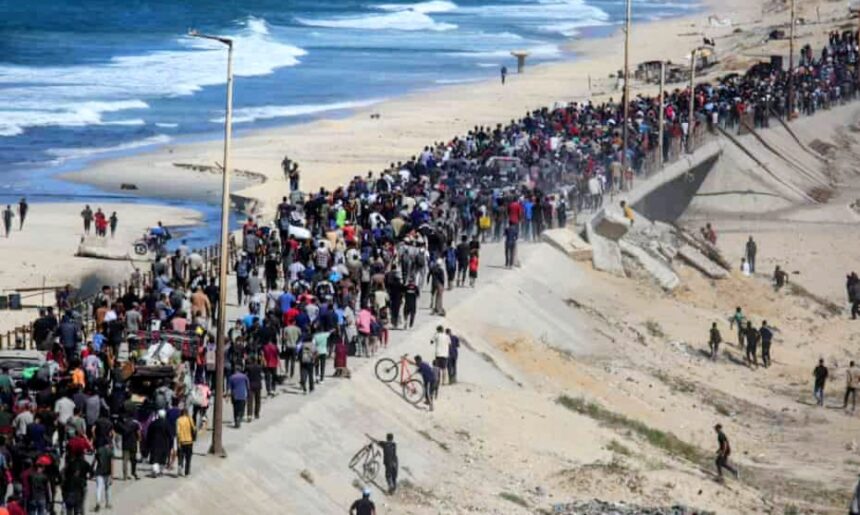
Tens of thousands of displaced Palestinians in Gaza have begun to return to the ruins of their homes after the ceasefire rapidly negotiated in recent days between Hamas and Israel came into effect at noon local time on Friday.
The ceasefire is the first relief from relentless violence that inhabitants of the devastated territory are enjoying since March 2025 when the hostilities escalated.
Israeli troops withdrew to new agreed-upon positions during Friday morning and Hamas is expected to release the 20 living Israeli hostages it is holding early next week, after which Israel will free 250 Palestinians serving long-term sentences in Israeli prisons, as well as 1,700 others detained during the war.
The hostages for prisoners deal, approved by the Israeli cabinet on Thursday night, is the first phase of a US-drafted “peace proposal” announced by Donald Trump last week that has raised hopes of a durable end to the two-year conflict, though all involved recognise the difficulties ahead.
The Israeli Prime Minister, Benjamin Netanyahu, claimed credit for the hostage release, saying in an address on Friday that the “security of Israel” had dictated his actions in Gaza.
“I believed that if we applied heavy military pressure, combined with heavy diplomatic pressure, we would absolutely be able to return all of our hostages,” said Netanyahu, who thanked Trump for his support.
The US president is expected to visit Israel on Monday to address the Knesset in Jerusalem.
Netanyahu, while also threatening a return to violence, said, “Hamas agreed to the deal only when it felt the sword resting on its neck and it is still on its neck … Hamas will be disarmed and Gaza will be demilitarised … If this is achieved the easy way, so much the better. And if not, it will be achieved the hard way.”
Officials from Hamas appeared equally sceptical. Basel Naim, a senior leader of the militant group, said in an interview with Sky News on Friday that it would not disarm, contrary to the Trump plan.
“Our weapons are going to be handed over only to the hands of a Palestinian state, and our fighters can be integrated into the Palestinian national army,” Naim said.
In a joint statement issued later on Friday evening, Hamas, Islamic Jihad and the Popular Front for the Liberation of Palestine rejected any “foreign guardianship” over Gaza, stressing that its governance was a purely internal Palestinian matter.
But they expressed their readiness to benefit from Arab and international participation in the reconstruction of the territory.
Officials have said Israeli forces will remain in control of 53% of Gaza in the initial withdrawal phase before the hostages are released, and Israeli bombing in Gaza had intensified on Friday morning up until the ceasefire began. However, Israeli troops were seen pulling back from areas such as the eastern part of Khan Younis, southern Gaza, and the Nuseirat camp in central Gaza.
With the announcement that a ceasefire had begun, thousands of Palestinians began heading north towards Gaza City, the territory’s biggest urban area, mostly on foot. Nearly half a million Palestinians living in north Gaza were displaced by Israel’s military advance into Gaza City, and many were eager to return to their homes. – With The Guardian report