“The case was overtaken by the subsequent military coup and no compensation was paid; Shugaba said he had forgiven the Shagari-led government for his deportation”.
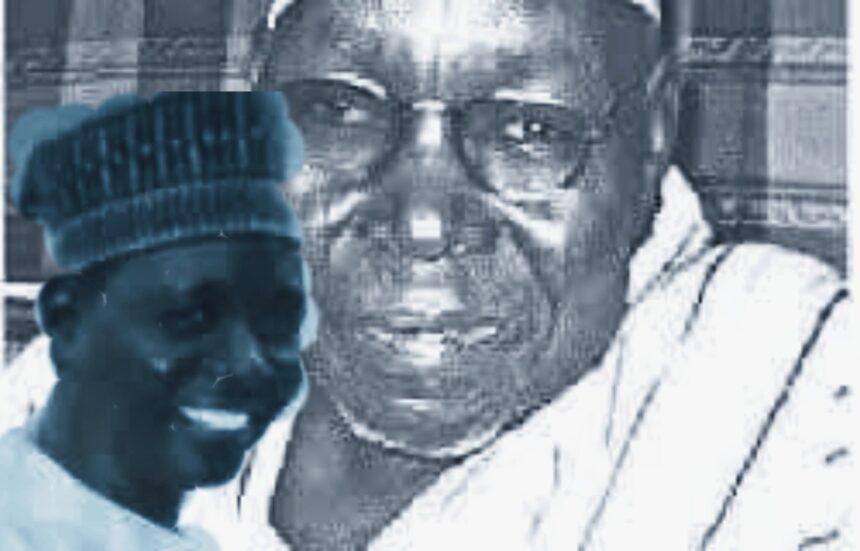
This funny story is about Alhaji Abdurrahman Shugaba Darman, a former Majority Leader of the Borno State House of Assembly and founding member of the Great Nigeria People’s Party.
On January 24, 1980, Immigration officers arrested Alhaji Darman on the strength of a deportation order signed by the Federal Minister of internal affairs, Alhaji Bello Maitama.
A part of the deportation order with the title: “Shugaba Abdurrahman Darman’s Deportation Order 1980”, states: “…Shugaba Abdurrahman Darman at present in Nigeria ought to be classified as a prohibited immigrant…”Shugaba Abdurrahman be deported from Nigeria by the first available means….”
With the order, he was immediately deported to a village in Chad, an action that was seen by many as politically motivated. Shugaba Darman’s troubles had allegedly started with the ruling party of the time, the National Party of Nigeria seeing Shugaba Darman as a stumbling block to its progress.
Shugaba was a charismatic politician who attracted large crowds at political rallies, the crowds were drawn to his speeches in which he always criticized the ruling NPN government and his party was gaining momentum in the Northeast. So, the NPN attempted to curb this growth by deporting the vocal and popular Shugaba. The government’s claim was that Shugaba’s father was from Chad hence he was from Chad.
Following public outcry against his deportation, the government under Shehu Shagari instituted a one-man tribunal of inquiry presided over by Justice P.C Okanbo. The NPN government and President Shagari in particular were quite concerned about the negative press that the issue generated and also about allusions in the press to the partiality of the tribunal.
In a court case challenging the deportation order, Shugaba’s lawyer, G.O.K. Ajayi SAN, obtained an order restraining the tribunal of inquiry from sitting and enforcing Shugaba’s right to freedom of movement within Nigeria, saying it was his fundamental right guaranteed by the Constitution.
During the hearing of the case, the government brought a Chadian woman who, while weeping profusely, claimed that Shugaba was her biological son whom she wanted back. Shugaba denied knowing the woman and claimed that his mother was alive and well known in Maiduguri even though her sight was now poor.
The Maiduguri high court ruled in Shugaba’s favour in the case, revoked the deportation order and awarded damages to the tune of 350,000 Naira to Shugaba. The government appealed the verdict at the Appeal Court in Kaduna and lost. The case was then taken to the Supreme Court and Shugaba won in a unanimous judgement by the four justices led by Justice Coker.
The case was overtaken by the subsequent military coup and no compensation was paid; Shugaba said he had forgiven the Shagari-led government for his deportation.
Born in 1920, Shugaba passed away on 23 April 2010.