“…when Ambassador Jimoh visited the Presidency in Abuja on Wednesday, July 15, 2026, and announced to the world that: “The President has generously agreed to attend the UNGA meeting of the United Nations,” he was insulting Nigerians”.
BY OWEI LAKEMFA
I do not support the call by Oyo State Governor Seyi Makinde that international bodies like the United Nations (UN) should participate in probing the 56-day abduction of 39 pupils and six teachers in the state.
In receiving the freed victims, he called “on the appropriate international human rights and accountability mechanisms, including those within the United Nations system, to closely examine the facts surrounding this abduction and the circumstances of its resolution.”
He explained that: “Such scrutiny is not intended to undermine our institution. Rather, it is intended to reinforce public confidence that the truth will be established and that every person found to bear responsibility, regardless of office, influence or affiliation, will be held accountable.”
He added: “This is not about politics. It is about justice for the victims, reassurance for our people, and restoring public confidence that every Nigerian child can go to school without fear.”
But the Tinubu administration was livid, saying the governor’s call was “absolutely unnecessary.” Its spokesperson, Mr. Bayo Onanuga, declared: “It is just unfortunate that Mr. Makinde, maybe because of politics, because he is a presidential candidate now, doesn’t have any trust in our own institutions and is now calling on an external body to come and investigate.”
Even the sleepy Senate woke up from its slumber to caution Makinde for making such a call.
Makinde, as a human being, has the fundamental right to call for UN assistance in a case that involves children as young as four, threats to life, murder and the gross violation of human rights. Also, the Presidency has the right to disagree with him.
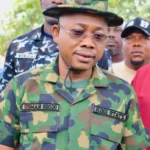
What I, however, find disagreeable are the declarations of Nigeria’s Permanent Representative to the United Nations, Ambassador Jimoh Ibrahim, who purports to know, but is clearly not conversant with the UN Charter, resolutions and practices.
Jimoh declared magisterially: “The United Nations does not interfere in the internal affairs of its member states. It is not an institution established to investigate domestic security incidents. Security within a country’s territory remains the primary responsibility of the government at all levels.”
He is wrong. The UN, when it considers it necessary, interferes in the internal affairs of its member states. Also, it does investigate domestic security incidents, as it has done severally in Nigeria concerning terrorism and banditry. Just in June 2026, the UN Special Rapporteur on Freedom of Religion or Belief, Nazila Ghanea, conducted an eleven-day enquiry in Nigeria.
Equally, while internal security remains primarily a domestic issue, the UN does intervene in cases of gross human rights violations and the need to protect civil populations.
In fact, if the UN considers the repeated inability of the Nigerian government to protect the civil populace, especially school children, it can, by a declaration of its Security Council, decide on a military intervention in the country with or without government permission or approval. This is contained in the 2005 UN Responsibility To Protect (R2P) resolution which, in paragraph 138, declares it the duty of a state “to protect its populations from genocide, war crimes, ethnic cleansing and crimes against humanity.” But if it fails in that responsibility, that responsibility, in paragraph 139, passes on to the UN, which can use military force under Chapter VII of its Charter.
The UN Security Council, under Article 41 of the UN Charter, can impose sanctions on a country unable to protect its populations or that endangers them. If these fail, Article 42 states that: “Should the Security Council consider that measures provided for in Article 41 would be inadequate or have proved to be inadequate, it may take such action by air, sea, or land forces as may be necessary to maintain or restore international peace and security. Such action may include demonstrations, blockade, and other operations by air, sea, or land forces of Members of the United Nations.”
It was under this that the UN passed Resolution 1973 of 2011, which imposed a no-fly zone and authorized the international bombing of the legitimate Libyan armed forces during its civil war. This destroyed the Ghaddafi government and gave victory to the rebel forces who, until today, run at least three governments in that country.
South Africa joined the UN on November 7, 1945, as one of its 51 original founding members. But despite the principle of non-intervention in the internal affairs of member states, as Jimoh Ibrahim is arguing, the UN found that country’s internal apartheid policy unacceptable. So, on November 12, 1974, its General Assembly, by a 91–22 vote margin, not only suspended South Africa, but also called on all member states to end military and economic relations with the country.
What Jimoh may also not know is that the UN can criminalize the production and sale of Nigerian oil if it reaches the conclusion that it fuels internal conflicts. For instance, when it concluded that diamonds from then-conflict zones like Sierra Leone, Angola and the Democratic Republic of Congo were fueling violence, it backed the Kimberley Process under which diamonds from those countries were banned from reaching the international market. In fact, former Liberian President Charles Taylor is serving a 50-year sentence for allegedly aiding Sierra Leonean rebels to commit crimes against humanity which were funded by what the UN classified as “blood diamonds.” So, the UN can classify our oil as “blood oil” and prevent its sale.
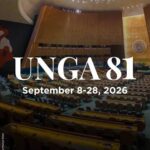
Ambassador Jimoh is a non-career diplomat; therefore, I will not blame him for knowing little about the world body, its politics and nuances. So, he should settle down to read the UN Charter, its main resolutions and practices. If he does, he would realize that there is no global stage bigger than the annual United Nations General Assembly. It is where world leaders unfold their countries’ programmes, agenda and foreign priorities, and can meet on the sidelines to discuss and better familiarize themselves. It is the deliberative and representative organ of humanity.
So, while it is not compulsory for a head of state to attend and speak on the universal platform, it is advisable. Therefore, when Ambassador Jimoh visited the Presidency in Abuja on Wednesday, July 15, 2026, and announced to the world that: “The President has generously agreed to attend the UNGA meeting of the United Nations,” he was insulting Nigerians. President Tinubu should not “generously” agree to represent and speak for 230 million Nigerians; it is his duty!
Ambassador Jimoh should also listen to our career diplomats in the UN. As a businessman, he is used to playing the boss and, given his running of businesses like NICON, National Mirror and Newswatch, he does not appear to listen to good advice. His performance in the UN must be different in the interest of the country and Africa.