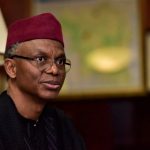
BY Barr. OLUWOLE OSAZE-UZZI
Law is a set of rules that are created and are enforceable by social or governmental institutions to regulate behaviour, with its precise definition a matter of longstanding debate. It has been variously described as a science and as the art of justice.
The Nigerian Constitution is founded on the rule of law, the primary meaning of which is that everything must be done according to law. It also means that government should be conducted within the framework of recognised rules and principles which restrict discretionary power.
The Rule of Law
The rule of law is the legal principle that law should govern a nation, and not arbitrary decisions by individual government officials. It primarily refers to the influence and authority of law within society, particularly as a constraint upon behaviour, including behaviour of government officials.
The development of the phrase “the rule of law” can be traced to Professor Albert Venn Dicey who wrote a book in 1885, titled: “Introduction to the Law of Constitution”, where he stated that the concept of the rule of law means that the state is governed, not by the ruler or the nominated representatives of the people but by the law and that government must be based on the principles of law and not of men.
Dicey stated that the doctrine of the rule of law operates with three principles. According to him, the first principle is the supremacy of the Law of the land. This means that everybody in a society must be ruled by the law of that society and by the law alone and not by the arbitrary or discretionary powers of the government.
The second principle is the equality before the Law of the land. This means that all categories of people in the society, irrespective of their ranks, status, whether rich or poor must be subjected equally to the same laws of the land.
The third principle is the predominance of Legal Spirit. This means that the Constitution is the synthesis or collation of the laws of the land; that the fundamental rights enjoyed by the people in the society preceded, predated or existed before any civilized existence or political society and that they are only entrenched in the constitution for protection and to have the force of law. So, it is important to take notice that all these principles are constant any time one tries to comprehend the intrinsic nature of the doctrine of the rule of law, and up to this present time, they remain very verifiable.
The point that is derivable from the foregoing is that rule of law is instituted for the purpose of governance and governance is about the people. That has been captured succinctly in the definition of democracy by Abraham Lincoln and in the 1999 Constitution of the Federal Republic of Nigeria. Thus, on November 19, 1863, at the official dedication ceremony for the National Military Cemetery at Gettysburg in Pennsylvania, Abraham Lincoln, the 16th President of the United States of America defined constitutional democracy as “the government of the people, by the people, for the people.”
On this foundation, the 1999 Constitution of the Federal Republic of Nigeria has made it intelligible that the government is all about the people, hence, under section 14(2), it provides: “it is hereby, accordingly, declared that – sovereignty belongs to the people of Nigeria from whom government through this Constitution derives all its powers and authority; the security and welfare of the people shall be the primary purpose of government; and the participation by the people in their government shall be ensured in accordance with the provisions of this constitution.”
The corollary of these provisions is that the people are the reason government exists, thence, without any equivocation; the people are the principal while the government is a mere agent. Thus government is expected to do the will of the people and a government that is not doing the will of the people is like a rampaging army of conquest that has conquered the people.
Democracy
Nigeria is a country that is running democracy. Section 14(1) of the Constitution of the Federal Republic of Nigeria has made it lucid and comprehensible that Nigeria is a state based on the principles of democracy and social justice. At this juncture, one question is germane: is Nigeria running democracy in accordance with the rule of law? A democratic state under the rule of law is a state where citizens elect their own leaders, and the government itself is bound by law, while also helping to ensure that the law is respected by the citizens of the state.
A country that qualifies as constitutional democracy is a country where there is a sound system of government with checks and balances, an independent judiciary whose decisions are enforced, independent electoral commission, independent media, and a country where civil rights and basic political freedoms are respected.
It is not the reverse where the executive arm of government dominates the political space over and against the other arms of government and want the people to see it as superior over the other arms of government. Consequent upon that the legislature and judiciary are portrayed as weak and failing in their responsibilities. The legislatures are weak because of the overbearing and the domineering influence of the executive arm of government. The legislatures continue to concur and acquiesce, consent and assent to anything before it with the belief that if they do not, access to the piece of the gateau will be a mirage.
Judgments in courts are disobeyed in a conspicuously or obviously offensive way with freedom from the injurious consequences of an action. This has continued unabated and not only unabated but gets worse by the day. The governments still wallow in the mud of ignorance of recognizing the fact that the court is the bastion through which the hope of a common man can be realized and that the courts have nothing more than the orders they give and when the orders are not obeyed, the very reason for the existence of court is totally defeated.
Development
Progress and development of a country or nation are dependent on good governance and rule of law. This has been asserted once again by President Barack Obama in his remarks to the Ghanaian Parliament, in Accra International Conference Center, Accra, Ghana, on 11th July 2009, when he stated: “…development depends on good governance or rule of law….
Governments that respect the will of its own people, that govern by consent and not coercion are more prosperous, they are more stable and more successful than governments that do not…. No country is going to create wealth if its leaders exploit the economy to enrich themselves, or police can be bought off by drug traffickers. No investor wants to invest in a place where the government skims 20 percent off the top, or the head of port authority is corrupt. No person wants to live in a society where the rule of law gives way to the rule of brutality and bribery. That is not democracy; rather, that is tyranny…”
Conclusion
Nigeria must realise that the rule of law is the bedrock of democracy and development. Until this is realised, Nigeria will be revolving in a circle without real and actual development.
Excerpt of a presentation by the Commissioner for Justice and Attorney-General of Edo State, Barr. Oluwole Osaze-Uzzi, during the 2023 Public Lecture Series on: ‘Promoting a stable political and Legal environment for Industrialization in Nigeria’, organised by the Nigeria Society of Chemical Engineers (NSChE) FCT/Nasarawa Chapter.