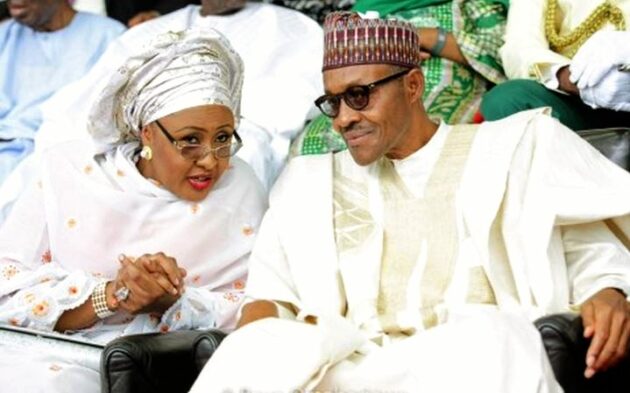
BY SEGUN ADEBAYO – Nigeria’s former First Lady, Aisha Buhari says rumours within the Presidential Villa unfortunately made her late husband, Muhammadu Buhari, to suspect that she had plans to harm him.
In retrospect, Aisha said the development disrupted her late husband’s feeding routine and largely contributed to the health crisis that kept him away from office for months in 2017.
Aisha’s account is contained in a newly published biography titled, “From Soldier to Statesman: The Legacy of Muhammadu Buhari” and authored by Charles Omole.
According to the book launched at the State House on Monday, Mrs Buhari said gossip and fear mongering within Aso Rock briefly created mistrust between her and the President.
Furthermore, the book detailed claims by Mrs Buhari of a climate of mistrust within the Presidency, including alleged surveillance and the bugging of private conversations, which she said contributed to anxiety during his final years.
Noting that the development caused him to alter his personal habits, including locking his room and missing meals, the former first lady said the disruption of a carefully managed nutrition schedule marked the beginning of Buhari’s illness.
Mrs Buhari, who explained that for years she had personally supervised Buhari’s meals and supplements, a routine she said was necessary to support his health, said: “This is given his long history of nutritional challenges. Buhari’s illnesses were neither mysterious nor the result of poisoning”.
The book said after relocating from Kaduna to the Presidential Villa, responsibility for Buhari’s feeding routine shifted to official handlers, leading to delays, skipped meals and the suspension of prescribed supplements.
Also, Aisha explained in the book that for nearly a year, President Buhari failed to take lunch regularly, adding that the breakdown in dietary management weakened him significantly.
Offering further insights, she said the deterioration eventually led to Buhari’s prolonged medical trips to the United Kingdom in 2017, totalling 154 days, during which he transferred presidential authority to Vice President Yemi Osinbajo.
Upon his return, Buhari publicly admitted that he had never been so ill and confirmed receiving blood transfusions during treatment abroad.
The biography noted that late President’s absence from the country fuelled widespread speculation and conspiracy theories, including claims of poisoning and allegations that he had been replaced by a body double.
While dismissing such claims as false and insisting that the root of the crisis was the loss of a consistent nutrition routine, she said doctors in London prescribed an intensified feeding and supplement plan, which she personally ensured was followed.
The book explained that Buhari’s recovery was swift once the regimen was restored, with Mrs Buhari noting that within days he regained strength and resumed receiving visitors.
Importantly too, the author also addressed criticism of Buhari’s reliance on foreign medical care, insisting that specialised treatment for elderly patients may not always be readily available locally due to years of underinvestment in Nigeria’s health sector.