The first female Senator in Nigeria, Senator Franca Afegbua, has died at the age of 79
She passed on yesterday (Sunday, March 12, 2023) in Benin City, the Edo State capital in a private hospital after battling with undisclosed ailments in the last few months.
Her death was confirmed by one of her younger brothers, Kassim Afegbua, a journalist who served as a Commissioner for Information in Comrade Adams Oshiomhole administration in Edo State and currently a member of the Tinubu’s Presidential Campaign Council.
Kassim stated that her sister died yesterday morning and that her body has been taken to the University of Benin Teaching Hospital (UBTH) mortuary.
The late Franca Afegbua hailed from Okpella in present day Etsako East local government area of State. Born on October 20, 1943 into the royal and Afegbua dynasty, Afegbua was elected on the platform of the defunct National Party of Nigeria (NPN) in 1983 as a Senator to represent the then Bendel North Senatorial District.
She served in the upper chamber of the National Assembly representing Bendel North from October to December 1983 before the Major-General Muhammadu Buhari-led military coup d’etat sacked the Second Republic on December 31, 1983.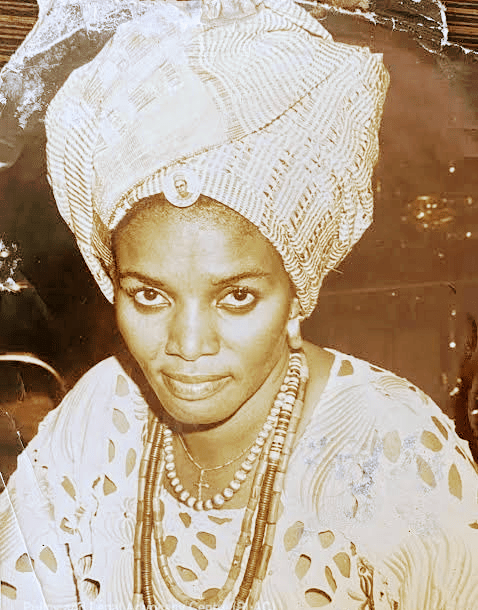
Indeed, her story is nothing short of inspiring. Aside from being the first Nigerian female Senator since the nation’s independence, she is also reputed as the first elected black female Senator in the world.
As a high-end Bulgaria-trained beautician, the Lagos-based Hairdresser first came to prominence in 1977 when she won an international hairstyling competition.
Reports also indicated that she enjoyed a close relationship with Joseph Sarwuan Tarka, a Nigerian politician from Benue State and a former Minister for Transport and then Communications under General Yakubu Gowon.
And it was Tarka who introduced her to his party, NPN. In 1983, when she announced her intention to make a challenge for a senatorial seat in Bendel and only very few felt that she could do the impossible since her party was in opposition in the State that was being governed by the Unity Party of Nigeria (UPN).
With the incumbent governor, late Professor Ambrose Alli and senator respected men in the community, Afegbua, built on her winning an international hairstyling competition in 1977 and strategized that wooing more women to vote could give her a victory.
Following her victory in the hairstyling competition, Franca became a household name within her Etsako community. Targeting the women voters, her campaign gained so much steam and it was too late for the powers that be to stop the momentum. And it was not surprising that she defeated her opponent John Umolu by a slim victory in the August 1983 polls.
It was history made for her to capture the Bendel North Senatorial district seat in a political atmosphere dominated by men, not very different from what obtains today. Running for office on the NPN platform against the incumbent at the time, a seasoned politician from the opposition UPN that was in control of old Bendel State (present-day Edo and Delta States), Afegbua showed that women support women in politics.
However, since that September 1983 general elections when Senator proved most book makers wrong by becoming the first elected female Senator in Nigeria, the electoral fortune of women has not witnessed any dramatic improvement.
Quite sadly, the number of elected women in Nigeria’s politics remains abysmally low, a development that led to serious advocacy and demands for special measures to be taken to increase women’s representation in elective offices.
But recent constitutional amendment efforts to increase the number of women in the federal and state legislatures failed to gain traction in the male dominated National Assembly, leading to public outcry.
Undaunted, agitations have continued from many groups and Civil Society Organisations (CSOs) on the need to revisit the bill in order to deliberately catch up with the global trend of improving the participation of women in governance and politics in the country.