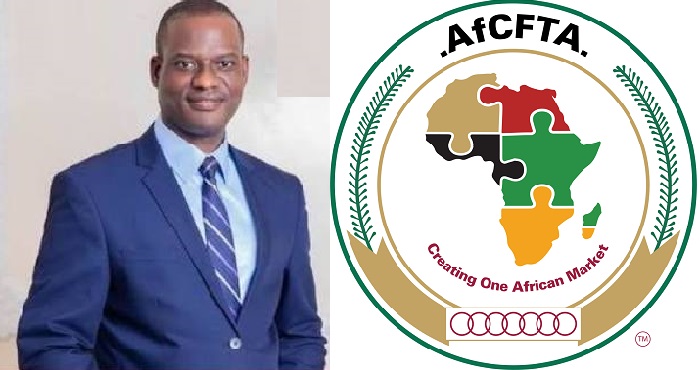
BY COBHAM NSA – Nigeria’s Finance Minister and Coordinating Minister of the Economy, Taiwo Oyedele, has delivered a blunt ultimatum to the continent, warning that the historic African Continental Free Trade Area (AfCFTA) risks becoming a paper-thin promise unless African nations dismantle rigid border controls and aggressively overhaul their crumbling infrastructure.
Speaking at the Africa’s Golden Future Forum in Bangkok, Thailand, Oyedele warned that fragmented markets, regulatory bottlenecks, and deficient transport networks continue to strangle domestic production, making it absurdly easier for African businesses to trade with China than with their own neighbours.
He said to salvage the trade pact’s massive potential, immediate structural reforms are required for a unified, continent-wide effort to fast-track investments in energy networks, logistics hubs, and border technologies.
According to him, Nigeria’s ongoing deployment of a National Single Window system, designed to fully digitise and streamline border procedures, presents a critical blueprint for eliminating the administrative gridlocks currently holding Africa back from becoming a single, competitive global economic powerhouse.
He said the country’s experience with economic reforms offers valuable lessons for African countries seeking sustainable growth, stronger regional trade and improved living standards, while also highlighting the importance of carefully sequencing reforms, communicating policy decisions consistently and building public trust.
Oyedele identified fuel subsidy removal, foreign exchange liberalisation and tax reform as major components of Nigeria’s economic reform programme, noting that the order in which policies are implemented can influence their impact on citizens and businesses.
Submitting that removing the fuel subsidy before liberalising the foreign exchange market helped manage the effects of rising costs, the Minister said ongoing reforms are laying strong foundation for inclusive growth, job creation and economic expansion, adding that African countries must also address structural barriers that limit trade and investment across the continent.
Oyedele listed key issues as open borders where stringent visa regimes and bureaucratic bottlenecks will not choke intra-African commerce; as well as improved infrastructure in terms good road networks, modern rail systems, and reliable power grids to ensure moving goods between neighbouring countries become cost-effective.
Similarly, he pointed out that political will is required, cautioning that signing agreements is meaningless without the courage to implement free movement and invest heavily in regional logistics.
The Minister said AfCFTA’s huge opportunities will be unlocked with the removal of trade barriers, improved infrastructure and stronger regional integration, stressing that Nigeria is developing an economic policy framework to align trade, fiscal and monetary policies and improve coordination.
While identifying energy, logistics, storage and processing infrastructure as critical to strengthening African trade and competitiveness, Oyedele also stressed the need to protect vulnerable citizens from the effects of economic reforms through effective social protection measures.
He stated that so far, Nigeria’s cash transfer programme had reached over 10 million households, while over 1.5 million students have already benefited from education support.
In his remarks, President of the African Development Bank (AfDB), Sidi Ould Tah, demanded practical implementation of reforms across Africa, saying policy commitments must translate into tangible results.
He said having backed reforms in Nigeria and Egypt through budget support, the Bank was working with development partners to expand electricity access across the continent, citing Mission 300, an initiative launched with the World Bank and other partners to connect 300 million Africans to electricity by 2030, as an example of the scale of cooperation required to address Africa’s infrastructure gaps.
The AfDB President said over 30 African countries had signed energy compacts requiring coordinated reforms, infrastructure investment and private sector participation to expand electricity access, noting that intra-African trade accounted for about 15 per cent of the continent’s total trade, compared with 40 per cent and 60 per cent in other regions.
Additionally, he said the bank poured over 60 percent of its financing into massive infrastructure works, focusing heavily on regional projects to bind the continent together and supercharge integration.
Ould Tah also revealed that in a major boost for cross-border development, the African Development Fund (ADF) can now bankroll up to 90 percent of regional projects involving two or more African nations, stressing that this aggressive funding mechanism aims to permanently bridge the financial gaps that historically stall critical continental networks.