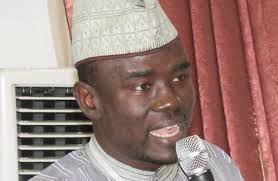

BY EDMOND ODOK, ABUJA – A Public Relations (PR) specialist, Yushau Shuaib, has dismissed as flawed the impression that gifts easily compromise the integrity of media practitioners and the industry.
He said it is wrong to assume that any kind of gift item is unethical and tends to generally corrupt the business of communication.
Addressing participants at a Media Workshop on Legal and Ethical Issues in Investigative Journalism in Nigeria, Shuaib insisted that not all favours and gifts are intended to compromise the journalists’ uprightness in performing their professional duties.
The seasoned practitioner, who is the founder of PRNigeria and author of an award-winning PR book ‘An Encounter with the Spymaster’, told participants that there is a clear difference in professional conduct in public relations practice which is a legitimate business of communication and the ethical standard in journalism on news reporting.
According to him; “The western world by their orientation and contentment perceive a gift as an improper behaviour to gain an advantage through illegitimate means, while the rich African culture and traditional belief recognise a gift as a demonstration of mutual relationship and love.
“We should also note that there is a distinction between an advertisement which is a payment for media space and Public relations practice which encourages mutual and beneficial relationships.”
“In PR practice, seasonal gifts, honorariums, sponsored fellowship, reciprocal presents, other show of support and kindness are not intended to compromise the integrity of the recipients, but to acknowledge partnerships, appreciates diligence in professional conducts and facilitate creativity and productivity.
“As PR Practitioners, we strongly kick against any inducement that tends to compromise the integrity of reporters, but we nevertheless see nothing wrong in organizing events that appreciate the stakeholders through sponsored programmes, corporate Social Responsibilities, promotional gifts, facility tours and other expenses that are not necessarily provided in cash but in kind.”
He further stressed that; “The concept of ‘glocalization’ rather than globalization should address our local peculiarity as we see nations offer their partners a commitment to reciprocity and fairness”, adding; “It is time Africans jettison some practices by the western media which are alien to our national identities and cultural peculiarities.”
In his paper on ‘Security Agencies and Media in Nigeria: An Overview’, Executive Secretary of Centre for Crisis Communication (CCC), Air Commodore Anas Yusuf, said the relationship between the security agencies and press is very critical in safeguarding and shaping the democratic credentials of a nation.
The CCC boss, represented by Commodore Kabir Yusuf (rtd), charged the media to shun sensationalism in the coverage of security activities and endeavour to balance reports on military engagements with terrorists.
In his words; “As much as possible, the media is expected to reduce or moderate its partisan disposition in reporting or analyzing security issues. It should be neutral as much as possible while covering security operations.”
Also speaking at the event, a veteran broadcaster with the African Independent Television (AIT), Mr Mac Amarere, said national interests and public good are regrettably relegated to the background by state institutions, like the judiciary, those who enact laws and security agencies, in pursuit of vested interests or to champion the narrow agenda of political leaders and some influential elite.
“In Nigeria, interests of the ruling class constitute national interest. Unlike other developed society, the interests of the elite and ruling class are what constitute national interest in developing countries such as Nigeria.”
Amarere is sad with the communication disconnect between security agencies and the press, just as he canvassed strong collaboration between both institutions for the overall public good.
The Workshop, organized by Daily Trust Foundation, in collaboration with Centre for Media Law and Development and MacArthur Foundation, had in attendance journalists, public relations experts and representative of critical institutions and security agencies.
At the end of the one-day workshop, certificates were presented to participants.