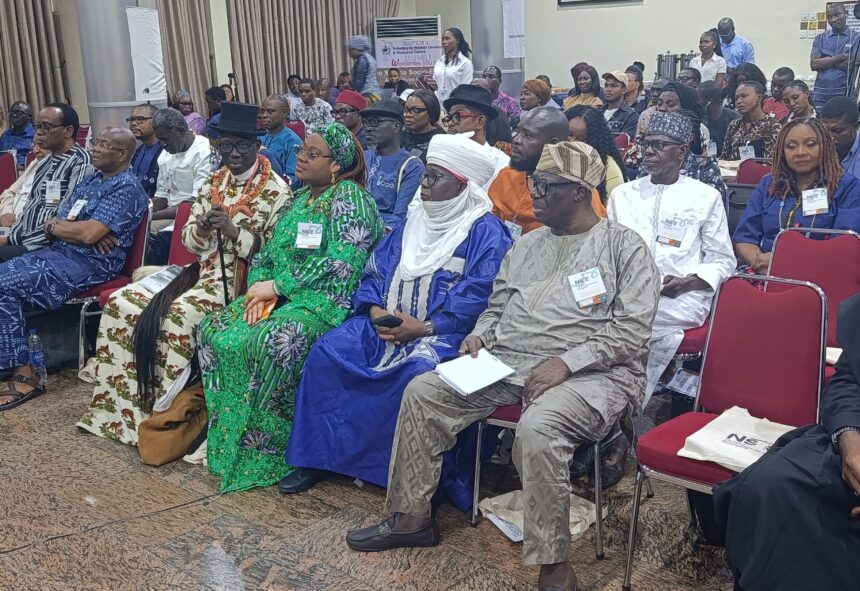
COMMUNIQUÉ Issued at the End of the Third Nigeria Socio-Ecological Alternatives Convergence (NSAC), held at Rockview Classic Hotel, Abuja, Federal Capital Territory, Nigeria, on 14 July 2026 with the theme ‘‘Deforestation, Mining, and the Crisis of Human Security in Nigeria’’
Preamble
The Third Nigeria Socio-Ecological Alternatives Convergence (NSAC) was convened by the Health of Mother Earth Foundation (HOMEF) and partner organisations on 14 July 2026 in Abuja under the theme, “Deforestation, Mining and the Crisis of Human Security in Nigeria.” The Convergence brought together government representatives, traditional institutions, academics, civil society organisations, labour unions, host and frontline communities, youth and women groups, the media, development partners and environmental justice advocates to examine the ecological, governance and human security implications of deforestation and extractive activities, while reaffirming NSAC as a platform for evidence-based policy dialogue and collective action towards ecological justice.
The Convergence took place against the backdrop of Nigeria’s worsening ecological crisis, marked by rapid deforestation, expanding extractive activities, environmental degradation, biodiversity loss, climate change impacts and rising insecurity. Participants noted that Nigeria has lost more than 70% of its forest reserves and continues to lose an estimated 250,000–300,000 hectares annually, threatening livelihoods, food and water security, public health, community resilience and sustainable development. While the global transition to low-carbon economies presents opportunities through growing demand for critical minerals, participants cautioned that, without strong governance, it could replicate the environmental destruction, inequality and displacement associated with decades of extractivism.
Deliberations emphasised that Nigeria’s ecological crisis is fundamentally a governance and development challenge requiring a shift from profit-driven resource exploitation to people-centred, rights-based and environmentally responsible development. Participants stressed the need to protect forests, wetlands, rivers, farmlands and other common resources from unsustainable exploitation, land grabs and poorly regulated extractive activities, while promoting ecological integrity, democratic resource governance, transparency, accountability, indigenous knowledge and respect for the rights of affected communities.
The Convergence featured presentations by leading experts, including Nnimmo Bassey; His Royal Highness Emir Ibrahim Usman Jibril, Emir of Nasarawa, represented by Dr. Salisu Dahiru, immediate past Director-General of the National Council on Climate Change; a keynote address by Professor Omolade Adunbi; and panel discussions featuring Professor Ibrahim Umara, Hauwa Mustapha, Dr. Martins Egot and Nasreen Al-Amin.
Objectives of the Third Nigeria Socio-Ecological Alternatives Convergence (NSAC)
The Convergence aimed to:
- Examine the environmental, socio-economic and governance impacts of deforestation, mining and other extractive activities on communities, ecosystems and national development.
- Assess the opportunities and risks presented by the global energy transition, particularly the growing demand for critical minerals, and their implications for ecological sustainability, community rights and equitable development.
- Foster multi-stakeholder dialogue on transparent, accountable and people-centred natural resource governance.
- Identify policy, legal and institutional reforms needed to strengthen environmental governance, safeguard community rights and advance ecological justice.
- Elevate the perspectives and experiences of frontline and resource-dependent communities affected by environmental degradation, extractive activities and climate change.
- Develop actionable recommendations to promote sustainable resource management, ecosystem restoration, democratic participation and a just, inclusive and environmentally responsible development pathway for Nigeria.
Observations:
Following presentations, keynote addresses, panel discussions and plenary deliberations, participants observed that:
- Nigeria’s socio-ecological crisis is largely driven by the interests of techno-feudalists and corporate profiteers with climate change, deforestation, biodiversity loss, pollution, desertification and coastal erosion as resultant effects, all fuelling ethnocultural tensions and conflicts.
- Though the growing global demand for critical minerals presents economic opportunities but also risks entrenching a new extractive model that reproduces the environmental injustices of the oil and gas sector unless governed by justice, transparency, accountability and community rights.
- Mining expansion is occurring amid weak environmental governance, poor regulatory enforcement, illegal mining, inadequate monitoring and limited institutional capacity, resulting in ecological degradation, social disruption and insecurity.
- Host communities continue to bear the environmental, social and health costs of extractive activities while receiving limited benefits. Community consent, customary land rights and meaningful participation remain inadequately protected.
- Forests, wetlands, farmlands and other critical ecosystems are increasingly threatened by logging, mining, infrastructure development, land acquisitions and poorly regulated carbon market initiatives, undermining biodiversity, climate resilience and traditional livelihoods.
- Environmental degradation, illegal mining and climate change are intensifying conflict, displacement, organised crime, food insecurity and socio-economic vulnerability, particularly among women, youth, Indigenous Peoples and rural communities.
- Environmental governance remains constrained by weak institutions, poor enforcement, ineffective Environmental and Social Impact Assessments (ESIAs), inadequate transparency, limited public participation, and weak mine closure, remediation and restoration practices.
- Environmental defenders, journalists and civil society actors increasingly face intimidation, undermining transparency, accountability and democratic governance.
- Nigeria’s transition to a low-carbon economy must be people-centred, ensuring energy security, ecological sustainability, community ownership and environmental justice, while preventing new forms of exploitation and displacement.
- Nigeria has the knowledge and institutional potential to achieve sustainable natural resource governance through stronger political commitment, accountability and coordinated action by government, communities, civil society, academia, the private sector and development partners.
Resolutions and Demands:
The Conference hereby resolves and calls for the following:
- Adopt a National Just Energy Transition and Critical Minerals Strategy that prioritises ecological security, climate action, renewable energy, environmental protection, industrialisation and community development.
- Strengthen environmental and mining governance by enforcing existing laws, empowering regulatory institutions, and tackling illegal mining and logging.
- Make Free, Prior and Informed Consent (FPIC) mandatory for all projects affecting indigenous peoples and host communities.
- Protect community rights and ecologically sensitive areas by recognising customary land rights, ensuring equitable benefit-sharing, and prohibiting extractive activities in forests, wetlands, biodiversity hotspots, watersheds and other No-Go Zones.
- Promote transparency and accountability through independent ESIAs, restoration bonds, mine closure plans, regular audits, and public disclosure of licences, contracts, beneficial ownership and environmental compliance.
- Advance responsible mineral development through domestic value addition, local content, technology transfer, sustainable formalisation of artisanal mining, and a circular mineral economy.
- Increase investment in renewable energy, ecological restoration and climate resilience, particularly for underserved communities.
- Protect environmental defenders and strengthen multi-stakeholder collaboration to advance transparency, accountability and ecological justice.
- Require the private sector and development partners to uphold high environmental, social and governance standards, support responsible investment, and respect community rights.
- Affirm that Nigeria’s energy transition must be people-centred, rights-based and environmentally sustainable, ensuring community consent, strong environmental safeguards, transparent governance, equitable benefit-sharing and ecological restoration.
Declaration
The Third Nigeria Socio-Ecological Alternatives Convergence (NSAC) unanimously adopted this communiqué, reaffirming that Nigeria stands at a defining moment in its environmental and development trajectory. While growing global demand for critical minerals presents opportunities for economic growth and industrial transformation, participants stressed that these must not come at the expense of environmental sustainability, ecological integrity, community rights, human rights, social justice, intergenerational equity or meaningful public participation.
The Convergence further affirmed that forests, land, water, biodiversity and mineral resources are public ecological assets whose governance must serve the public interest and avoid repeating the environmental and governance failures of decades of oil and gas extraction. Participants committed to strengthening collaboration among government, communities, traditional institutions, civil society, academia, labour and the private sector to advance democratic natural resource governance and sustainable, people-centred development.