Concerned over it described as hidden inherent dangers in the $2.5billion farming investment in Nigeria by JBS, concerned Civil Society Organizations (CSOs) in the country have raised the red flag and stressed the need for serious caution by the various governments in the country.
The CSO led by Health of Mother Earth Foundation (HOMEF) and Environmental Rights Action (ERA) in partnership with Youth in Agroecology and Restoration Network and HEDA Resources Center warned that the mirage investments need careful study and better understanding to avoid short changing and putting the lives of Nigerians in serious danger in the nearest future.
Some states including Ogun, Niger, Nasarawa, Cross River, and Lagos States are basking in the euphoria of securing $2.5billion investments of JBS allegedly to boost livestock development.
But, the concerned CSOs warned at a Stakeholders workshop in Abuja on Wednesday, August 20, 2025 that there was the dire need for due diligence to be properly conducted on JBS company in order to protect the country from unforeseen inherent dangers of industrial farming for a country such as Nigeria.
At the workshop tagged ‘Implications of Industrial Animal Farming in Nigeria’, the CSOs noted that industrial farming posed several risks including environmental degradation, climate impact (biodiversity losses), economic displacement, food security, trade offs and governance accountability questions.
They also raised concerns of land grabbing in communities, militarization of communities, casualization of workers, deforestation through felling of tree and chemical spraying which poses serious health and environmental concerns among others.

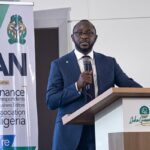
In hispaper, Mr Tenison Williams, who is the Regional Director for Africa, World Animal Protection, said that his organisation is not anti-investment, but strong believe in an equal playing field for all, stressing that the guiding principle should be transparency, fairness, and community involvement in decision-making.
Williams emphasised that the various CSOs are only interested in ensuring that JBS’s investment benefits both the company and the local communities, stressing that they are concerned about JBS’s investment model, which prioritizes massive animal production over community well-being and transparency.
In his words; “They take away power from communities to decide on land acquisition, and their track record is not transparent. JBS has a comparative advantage in acquiring credit or loans from big banks, which they use to convince countries to partner with them. This raises concerns about the balance of power in negotiations and the potential for exploitation”.
Williams noted the mistakes made in the oil sector which had left the South South region severely devastated, saying that Nigeria must not repeat the mistakes of the past, like the experience with Shell.
He said; “We urge the government to ensure transparency and fairness in negotiations with JBS. Millions of hectares of land are at stake, and Nigeria’s wildlife could be compromised”.
In her own presentations, Mrs Marrian Bassey-Olson, Executive Director, Environmental Rights Action, said that while Nigeria, particularly the CSOs are not anti-investment, they are however interested in the protection of the people, the environment, and the health of the citizens, saying that if food by JBS becomes tainted, it ends up in the tummies of the people.
Bassey-Olson wondered if the Nigerian government had carried out due diligence on JBS and if JBS as a corporate body had carried out Environmental Impact Assessment on the communities they want to work in and also if farmers and communities have asked how JBS activities will impact on them.
In her words; “We are Nigerians, and we have a right to be protected. We have a right to live in an environment that is safe, not just for us, and also to live it for generations unborn to come in and eat safe food and safe environment, as provided in the African chapter”.
Speaking in turn, Mrs Joyce Brown, Director Programmes of HOMEF said there was the need for government to be more critical of large-scale industrial farming investments with long term implications on environment, sustainability and livelihoods of local food producers and communities.
Brown cautioned that Nigeria governments and the people must ensure that proper environmental and social impact assessments are conducted before allowing JBS to invest in anything.
In her words; “We must also strengthen policies to ensure proper regulation of industrial activities. One critical provision to strengthen in our policy is strict liability to ensure accountability on the part of corporations”.

Similarly, Mr Opeyemi Elujulo, Executive Director, Youth in Agroecology and Restoration Network (YARN), said his concerns is hinged on the fact that JBS is a multinational company, thus would out-compete small scale farmers over resources like land and water which have consequential effect on the communities.
He further said; “My concerns bothers on JBS Investment leading to a competition for communities’ resources, environmental degradation and impact on small holder farmers, who are majorly the ones known to be feeding the nation
“Large-scale farming by corporates like JBS can lead to land degradation, deforestation, and pollution, impacting biodiversity, climate, and public health. Smallholders may struggle to compete with big corporates, potentially driving them out of business and affecting their livelihood,” he said.
Elujulo therefore tasked the government to promote sustainable agriculture and also build the capacity of young farmers in sustainable practices to reduce production costs and make farming more viable.