The President Donald Trump administration has reversed a policy that had effectively blocked many Nigerian and other foreign physicians from continuing their work under a travel ban-related processing freeze.
Accordingly, physicians of Nigerian origin and other foreign national physicians will now be able and free to obtain and renew visas to practise in the United States.
The Department of Homeland Security had implemented a measure tied to a January travel ban covering citizens from 39 countries, which halted decisions on visa extensions, work permits and green cards.
The policy left many international medical professionals in midpoint, with some placed on administrative leave and others at risk of losing their jobs in already strained health systems.
However, the U.S. Citizenship and Immigration Services last week, updated its website without formal announcement, stating that physicians are now exempted from the processing suspension.
While confirming the change, the Department of Homeland Security (DHS) in a statement said that “Applications associated with medical physicians will continue processing,” thus signalled that visa and work permit adjudications for doctors would resume.
The reversal comes as the United States continues to face a significant shortage of medical professionals, just as the Association of American Medical Colleges estimates a deficit of about 65,000 physicians, a gap expected to widen as demand for healthcare increases and older doctors retire.
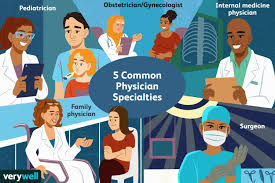
Foreign-trained doctors play a major role in filling that gap as more than 60 percent of them work in primary care fields such as family medicine, internal medicine and pediatrics—areas often avoided by U.S.-trained physicians due to demanding workloads and comparatively lower pay.
Commenting on the development as quoted by The New York Post, the chair of the Board of Regents for the American College of Physicians, Dr. Rebecca Andrews said; “I am glad that the administration took measures to ensure that we can keep our dedicated international physicians. We need to recruit the most skilled doctors no matter where they are from”.
It is estimated that foreign physicians make up about 25 percent of the U.S. medical workforce, with many coming from Africa, the Middle East and Venezuela among those most affected by the earlier restrictions.
One of those impacted was Ezequiel Veliz, a Venezuelan family doctor, who lost his legal status after delays in processing his new visa and was detained by federal agents on April 6, at a checkpoint in Texas and was released 10 days later.
However, concerns over the policy prompted widespread backlash from the medical community.
Specifically, on April 8, more than 20 medical associations—including the American academies of family physicians, neurology and paediatrics—sent a letter to the Secretaries of State and Homeland Security warning of severe consequences.
The organisations expressed “urgent concern” about barriers preventing “qualified, vetted physicians” from entering and remaining in the United States.
They therefore demanded a national-interest exemption and faster processing of affected cases.
But, despite the policy shift, uncertainty remains for many doctors already caught in the system.
The policy shift follows a series of immigration restrictions introduced under President Trump, including a June travel ban covering 19 countries and a broader expansion to 39 countries in January, echoing earlier bans from his first term.