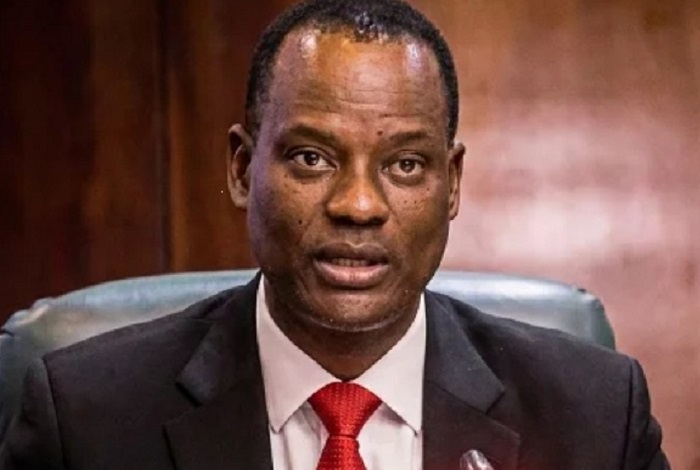
BY COBHAM NSA – The Minister of Finance and Coordinating Minister of the Economy, Taiwo Oyedele, says Nigeria urgently needs a specialized, digital Commercial Dispute Resolution Tribunal (CDRT) to boost investment growth and bypass the typical lengthy, years-long delays in the country’s traditional courts
He said the proposed Tribunal will not only enforce contracts and eliminate investor uncertainty, but also help fast-track capital market disputes resolution and attract long-term investments.
Delivering his inaugural lecture as a Fellow of the Capital Market Academics of Nigeria (CMAN) at their 2nd Biennial Conference in Abuja, Oyedele said accelerated resolution of business disputes and faster justice delivery remain critical in attracting long-term investment and deepening Nigeria’s capital market activities.
The Minister, who addressed issues around the conference theme, “The Nigerian Capital Market as a Catalyst for Equitable and Inclusive Growth”, described delays in resolving commercial disputes as one of the biggest obstacles to investment in the country.
He said regrettably commercial cases currently take an average of 15 years to progress from the High Court, through the Court of Appeal to the Supreme Court, lamenting that such prolonged litigation creates uncertainty, discourages investors and significantly increases the cost of doing business in Nigeria.
According to him, staffed by judges and arbitrators with expertise in commercial, financial and capital market matters, the Tribunal will effectively address existing challenges while operating with digital case management systems and mandatory timelines to ensure swift resolution of disputes involving businesses, suppliers, joint venture partners and other commercial entities.
Aside from complementing existing investment protection mechanisms by providing a more efficient avenue to resolve disagreements that generally delay investments and weaken investor confidence, Oyedele said every financial instrument, including bonds, syndicated loans, private placements and structured notes, is based on enforceable contracts, and speedy dispute resolution essential for the growth of the capital market.
On Nigeria’s rising debt profile, the Minister said borrowing is not inherently harmful but a financial tool to support economic growth when channelled into productive investments, and urged Nigerians to shun their long-held negative perception of public borrowing
He said debt should be judged by what it finances rather than its size, saying: “The relevant question is never simply how much debt there is. It is always debt for what, at what cost, against what return and repayable on what terms.”
Analysts and commentators who rush to condemn government borrowing without examining its propriety are not spared Oyedele’s knocks as he called for proper investigations that would reveal if the loans are being invested in projects capable of generating sustainable economic returns for the country.
He said governments and businesses that borrow to finance productive assets yielding returns above the cost of capital are making rational financial decisions, adding that refusing to borrow under such conditions could amount to foregoing valuable development opportunities.
The Minister said beyond judicial reforms and debt management, there is also need for Nigerian entrepreneurs to reset their minds away from resisting external investors in the name of retaining full ownership of their businesses.
The Minister, who said owning 100 per cent of a small enterprise often creates less value than holding a substantial stake in a much larger and well-capitalised company, also spoke about the “seven laws of capital attraction”
He said investors are primarily attracted by trust, policy consistency, strong institutions and the rule of law rather than generous tax incentives, noting that capital seeks predictable returns instead of merely pursuing the highest returns.
This is as he cautioned that countries with unstable policies often lose investment to jurisdictions offering lower but more reliable returns, adding: “Capital hates uncertainty more than taxation.”
Attributing investor hesitation to policy reversals, regulatory inconsistencies, foreign exchange uncertainty and weak contract enforcement, the Minister said investors commit long-term capital to countries with credible institutions rather than to individual political leaders.
He also identified an independent judiciary, a credible central bank and an efficient public bureaucracy as critical pillars for attracting sustainable investment, while challenging government officials, professionals and the media to improve communication around economic reforms.
In his remarks, Director-General of the Securities and Exchange Commission (SEC), Dr Emomotimi Agama, sought robust partnership between regulators and academics, noting that research-driven policymaking would strengthen Nigeria’s capital market and promote inclusive economic growth.
Agama described CMAN as an important bridge between academic research and financial market regulation, saying: “I have long believed that good regulation begins with good thinking. The policies we make at the Securities and Exchange Commission are only ever as strong as the evidence and the ideas that inform them.”
He said peer-reviewed research is essential for developing adaptive, evidence-based regulations in the Nigerian financial sector, adding that SEC values academics as strategic partners whose research shapes policies, strengthens investor confidence, and drives market development.
Calling for collaboration to deepen capital market participation, Agama noted that Nigeria’s capital market is undergoing major reforms following the enactment of the Investments and Securities Act, 2025, and the implementation of a new 10-year Capital Market Master Plan.
The SEC boss also commended CMAN for choosing a conference theme focused on equitable and inclusive growth, describing it as timely and relevant to Nigeria’s economic development agenda.
Also tasking participants to ensure their deliberations produce practical recommendations capable of influencing policymaking and improving market operations, the SEC boss said: “The Commission’s door is open to evidence, to challenge and to fresh ideas, wherever they may lead. The finest measure of these two days will not be the sessions we hold, but the policies and the practices they go on to shape.”
Speaking earlier, the President of Capital Market Academics of Nigeria (CMAN), Professor Uche Uwaleke, canvassed stronger partnership between the academia and the financial services industry, noting that effective collaboration is essential to deepening Nigeria’s financial markets and accelerating economic growth.
Uwaleke said Nigeria has the academic talent and financial expertise but lacks a framework to unite them for national growth, and described CMAN as Nigeria’s top financial think tank, converting academic research into practical economic solutions.
He said education authorities must value professional experience alongside publications for lecturer promotions in order to bridge the existing academia-industry gap
The CMAN President said to better prepare graduates for the workforce, universities should recruit retired finance and capital market practitioners as adjunct lecturers, emphasizing that the National Universities Commission (NUC) must support this by tying academic accreditation points to the integration of industry experts.
He urged major financial regulators to establish sabbatical and research fellowships for academics, saying these programs would let scholars conduct policy-driven research while providing regulators with independent expertise to sharpen policy-making.