- Thousands of flights affected
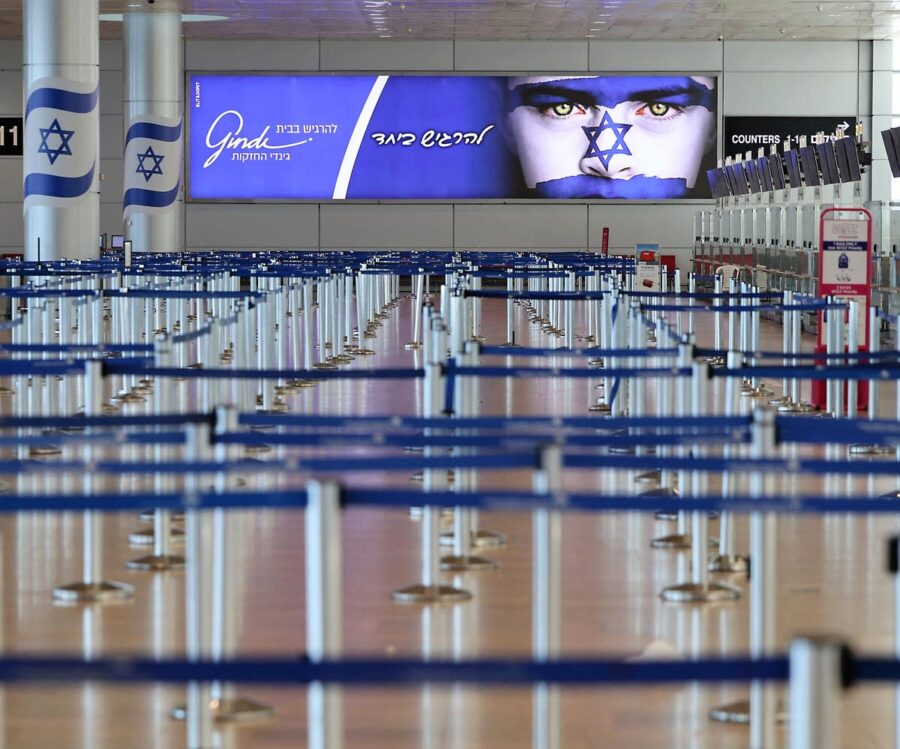
Amid the raging conflict in the Middle East, the airspace over Iran and Israel remained largely empty with many airports in both countries closed to air traffic on Saturday morning.
Flight data from the tracking service, FlightRadar24 showed that an estimated 3,000 flights have been affected by the crisis.
Since the exchange of fire began on Friday and Saturday, both Israel and Iran took pre-emptive steps to close their airspace with neighboring Iraq, Jordan and Syria following suit.
However, though the neighboring countries are cautiously reopening their airspace, major airlines in the region have canceled flights, while others diverted their routes, adding both travel time and fuel costs to their journeys.
On Saturday, Iran’s state news media reported that Iran’s airspace would remain closed until 2 a.m. the next morning.
And in Israel, Ben Gurion Airport remains closed until further notice while Israel’s three major airlines have also moved their fleets outside the country to prevent them from being damaged in Iranian airstrikes, the Israeli news media reported.
Jordan reopened its airspace at 7:30 a.m. on Saturday, and Syria’s Civil Aviation Authority also announced the full reopening of Syrian airspace to civilian air traffic. But the Iraqi Civil Aviation Authority said Iraq’s airspace would remain closed “in light of rising regional tensions.”
Some airlines canceled flights, while others altered their routes to avoid the conflict. Many carriers opted to fly over Saudi Arabia, while others flew over Turkey and Azerbaijan to avoid Iranian airspace, flight tracking data showed.
Emirates, a major carrier and Dubai’s flagship airline, canceled all flights to and connections via Iran, Iraq, Jordan and Lebanon until Sunday. FlyDubai, a budget carrier, suspended flights to 16 destinations.
In Lebanon, Middle East Airlines, the national carrier, suspended its flights on Friday, sending rumors swirling through the country that something terrible was looming, given that the airline had continued flying throughout the conflict with Israel last year. By Saturday afternoon, the airline said its flights would resume.
Lufthansa, Germany’s largest commercial airline, said it was canceling all flights to Tehran and Tel Aviv until July 31, while all flights to Amman, Beirut and Iraq’s Erbil airport were canceled until June 20.
United Airlines has paused all flights to and from Tel Aviv until July 31, and Delta Air Lines has canceled all flights from Tel Aviv to New York until Aug. 31.
On Friday, Air India, which flies over the Middle East to reach destinations in Europe and North America, canceled or diverted more than a dozen flights.
In some cases, it was operating alternative extended routes in a bid to avoid further cancellations, the carrier said on Saturday.
Two days earlier, Air India suffered its own unrelated deadly disaster when one of its commercial flights crashed in Ahmedabad, India, killing more than 270 people. – Agency reports