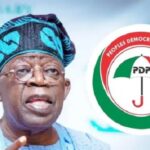
“If the opposition wants to defeat Tinubu, it must stop behaving as though public anger is enough. It is not. Anger must be organised. Votes must be mobilised. Agents must be trained. Polling units must be covered. Results must be documented.”
BY BELLO GWARZO ABDULLAHI
As the 2027 elections draw closer, Nigerians are doing what Nigerians have always done before an election: calculating, speculating and making predictions. The conversations are everywhere, in offices, motor parks, markets, homes, party meetings and roadside gatherings. Everybody seems to have a theory about who will win and why.
So, The Economist’s recent assessment, “Nigerians Dislike Their President, But May Re-elect Him Anyway,” should hardly come as a surprise. What makes it interesting is that it gives a sophisticated version of an argument many Nigerians have already heard: President Bola Ahmed Tinubu may be unpopular, but the advantages of incumbency, a divided opposition and voter apathy could still carry him to victory.
Much of that assessment is difficult to dispute. The APC controls the federal government and has enjoyed a remarkable wave of defections. It has access to the machinery of government and the resources that come with incumbency. The opposition remains divided between Atiku Abubakar of the ADC and Peter Obi of the NDC, while other parties have their own presidential candidates. Religion and regional identity remain powerful considerations. Voter turnout has fallen dramatically over successive elections. And after years of insecurity, hardship and failing public services, some Nigerians have understandably lowered their expectations of government.
All these are real advantages, but they are not destiny. That, in my view, is where The Economist risks underestimating Nigeria. The central lesson of our political history is that apparently overwhelming advantages can disappear remarkably quickly when circumstances change. Nigerian politics is not a laboratory in which today’s variables remain fixed until election day. It is fluid, emotional, personal and often unpredictable.
President Tinubu is constitutionally entitled to seek a second term, and nothing about his candidacy should be compared directly with military rulers who manipulated constitutional transitions or annulled elections. The comparison I am making is narrower: have the advantages enjoyed by those in power ever proved permanent in Nigeria? The answer is no.
Consider first General Ibrahim Babangida. His transition programme was launched in 1987, and the promised return to civilian rule was repeatedly postponed. Political parties were created and dissolved, politicians were banned and unbanned, and the military government retained enormous control over the political process. Yet on 12 June 1993, Nigerians did something the architects of the transition could not control. They voted.
Moshood Kashimawo Olawale Abiola, a Yoruba Muslim from the South-West, won a presidential election widely regarded as one of the freest and fairest in Nigeria’s history. He defeated Bashir Tofa, a Muslim from Kano, and won support across ethnic, regional and religious boundaries. The military annulled the election.
The consequences were enormous. Protests erupted, lives were lost, businesses were shut and the country entered one of the darkest political crises in its history. Babangida eventually stepped aside and handed power to an Interim National Government under Ernest Shonekan in August 1993. General Sani Abacha removed that government on 17 November. The episode nevertheless left behind a profound lesson: a political system can control institutions, parties and political processes, but it cannot always control the ultimate judgment of voters. June 12 remains a reminder that Nigerians can surprise those who believe they have already calculated the outcome.
General Sani Abacha took political control to another level. In 1995, he announced a transition programme. Five political parties were eventually approved, and by April 1998 all five had adopted Abacha as their sole presidential candidate, even though he had not formally declared his intention to contest and was not a member of any of them. On paper, it looked unbeatable. But it was not.
The opposition to military rule had become a broader social movement involving NADECO, pro-democracy activists, journalists, civil society groups and ordinary Nigerians. The regime’s apparent political unanimity concealed deep opposition underneath, and the struggle came at an enormous human cost. Ken Saro-Wiwa and eight other Ogoni activists were executed in 1995. Kudirat Abiola was assassinated in 1996. MKO Abiola remained in detention until his death in July 1998.
Abacha himself died on 8 June 1998, before his transition programme could be completed. Providence certainly played a part, but the programme had also been discredited by sustained opposition. General Abdulsalami Abubakar subsequently abandoned the arrangement and dissolved the five parties. The lesson is important: unanimity manufactured from above can be remarkably fragile. A political system may look invincible because every institution appears to be saying the same thing, but that appearance can vanish very quickly when circumstances change.
The third-term controversy of 2006 provides another lesson. President Olusegun Obasanjo’s administration backed a constitutional amendment that would have enabled him to extend his tenure. The proposal had substantial support within the ruling establishment, but it ultimately failed. On 16 May 2006, the Senate discontinued consideration of the bill, and the House of Representatives followed the next day. The political establishment had not been defeated by an armed rebellion. It had been defeated on the floor of the National Assembly.
The opposition was broad. Politicians, civil society organisations, organised labour and other groups resisted the proposal. Vice-President Atiku Abubakar and many northern politicians also opposed it. There are different accounts of precisely who did what behind the scenes, but the structural lesson is more important than the personalities. The constitutional system contained several gates, and the proposal had to pass through them. It did not.
As an engineer, I find the analogy irresistible. In a power system, we do not rely on one relay to protect the entire network. We build layers of protection: if one fails, another should operate, and if the fault persists, another layer isolates the affected section. Democracy works best in exactly the same way. Institutions, legislators, courts, parties, civil society and, ultimately, voters provide different layers of protection against excessive concentration of power. The third-term project showed that even a powerful incumbent can reach a point beyond which the system says: No further.
But the example most relevant to 2027 is Goodluck Jonathan in 2015. There was no constitutional manoeuvre and no military government, simply an incumbent president seeking re-election. Jonathan had the federal government behind him. He controlled the enormous machinery of the PDP, then one of Africa’s largest political parties, and his administration had access to considerable political resources. Yet he lost. Why?
Because the opposition eventually discovered something that Nigerian opposition parties have repeatedly struggled to understand: anger alone does not win elections. Organisation does. The ACN, CPC, ANPP and other political forces came together to form the APC. PDP governors defected. Atiku Abubakar joined the emerging coalition. Bola Tinubu was widely regarded as one of the principal architects of the merger.
Atiku and Rabiu Kwankwaso contested the APC presidential primary and lost to Muhammadu Buhari. But they stayed, and that was crucial. The opposition did not insist that its preferred candidate must personally win. It understood that defeating the incumbent required a common vehicle. Buhari went on to defeat Jonathan by 15,424,921 votes to 12,853,162, a margin of about 2.6 million.
But the numbers tell only part of the story. Jonathan’s most important contribution to Nigeria’s democratic history came after the election. Before the final result was formally declared, he called Buhari and conceded. His subsequent statement that “nobody’s ambition is worth the blood of any Nigerian” captured the gravity of the moment. Nigeria had experienced terrible post-election violence after the 2011 election, with hundreds of people killed, and Jonathan’s decision helped prevent another potentially catastrophic confrontation.
That is why 2015 matters so much. It demonstrated that an incumbent can be defeated when three things come together: a dissatisfied electorate, a sufficiently united opposition and a credible electoral process.
Which brings us to 2027. The presidential election is scheduled for 16 January 2027. President Tinubu is the APC candidate. Atiku Abubakar is contesting under the ADC, while Peter Obi is the NDC candidate with Rabiu Kwankwaso as his running mate. Other parties have also produced presidential candidates. This is the landscape from which The Economist draws its conclusion.
But beneath the formal structure of parties and candidates, something else is happening. There is growing frustration, particularly in parts of the North. One does not need an opinion poll to notice it. Listen to conversations in markets. Listen to commercial drivers, traders and farmers. Listen to young people. Listen to families calculating what they can buy with money that used to go much further.
The important point is not that every Nigerian is against Tinubu, which would clearly be an exaggeration. The point is that the depth of dissatisfaction should not be underestimated simply because it has not yet produced a single opposition structure. A political mood does not always begin inside a party headquarters. Sometimes it begins around the family table. It appears in jokes, complaints, songs, conversations and quiet decisions, and then, eventually, it reaches the polling unit.
Political songs have already begun to re-emerge as instruments of mobilisation. That should not be dismissed as mere entertainment, because Nigeria has a long history of political music becoming a vehicle for popular mobilisation. A political song can travel where a political manifesto cannot. It can enter a market, a motor park, a wedding, a village gathering and a family compound. It can turn a complicated political argument into one memorable line. That is how a political mood becomes a political movement.
The Economist is right that incumbency matters, but Nigeria’s recent history tells us that incumbency is an advantage, not a guarantee. Jonathan had incumbency in 2015. He lost. The APC’s present control of a large number of states is certainly important, but political defections are not always permanent expressions of ideological loyalty. Nigerian politicians have historically been pragmatic, and they move when circumstances change. A politician may join the governing party today because it is in power and leave tomorrow because it is no longer advantageous. That is why I would be careful about reading the APC’s current numerical strength as evidence that the electorate has permanently moved in its direction. The real test is not the number of politicians wearing APC colours. It is the number of voters prepared to vote APC at the presidential level, and those are not necessarily the same thing.
On the divided opposition, however, The Economist is absolutely right. The greatest advantage President Tinubu currently enjoys may not be his popularity. It may be the opposition’s inability to convert dissatisfaction into a single political force. The 2023 figures demonstrate the problem. Tinubu received 8,794,726 votes. Atiku received about 6.98 million and Peter Obi 6,101,533. Together, Atiku and Obi received substantially more votes than Tinubu, and Rabiu Kwankwaso added roughly 1.5 million more.
Of course, presidential elections are not won by adding up the votes of candidates after the fact. They are won by presenting a candidate capable of assembling a winning coalition before voters cast their ballots. That is precisely why 2027 may ultimately be decided not by whether Nigerians are angry with the government, but by whether the opposition can organise that anger. The opposition has no shortage of votes. It has a shortage of coordination.
The argument that a Muslim-Muslim ticket automatically gives Tinubu an advantage in the North also deserves closer examination. Religion matters in Nigerian politics, and pretending otherwise would be naïve. But Nigerians do not eat religion. They eat food. They pay school fees, buy petrol and pay rent. They seek medical treatment. They bury relatives killed by insecurity. They worry about unemployment and the future of their children.
The 1993 election demonstrated that religious identity does not always override political judgment. Abiola, a Muslim, defeated another Muslim and secured support across Nigeria. In 2006, many northern politicians, Muslims among them, opposed a southern Christian president’s bid to extend his tenure. In 2015, a northern Muslim candidate won the presidency while also attracting substantial support outside the North. Identity matters, but identity is not destiny. When economic hardship becomes severe enough, voters can begin asking a much simpler question: What has this government actually done for me? That question can be more powerful than religious slogans.
The same caution applies to the “son-of-the-soil” argument. Being from a particular state or region gives a politician an advantage, but it does not guarantee that voters will follow. In 2023, for example, Peter Obi won Lagos State, the political home of Bola Tinubu. That should remind analysts that even the strongest local identity can be overridden by political sentiment. The assumption that Lagos, Kano, Katsina, Borno or any other state belongs permanently to one political party is dangerous. States do not vote. People do.
If there is one factor that could genuinely protect an unpopular incumbent, it is voter apathy, and the numbers are worrying. Presidential turnout fell from 53.7 percent in 2011 to 43.6 percent in 2015, 34.7 percent in 2019 and just 26.7 percent in 2023. INEC itself has described the decline as a serious concern for Nigerian democracy.
This is where the opposition has a responsibility. It is not enough to tell Nigerians that the government has failed. It must convince them that voting can change something. A frustrated citizen who stays at home contributes nothing to an opposition victory, while an angry voter who votes strategically can change an election. The opposition must therefore do more than criticise the APC. It must build confidence around the ballot itself, from voter mobilisation and protection at polling units to collation and legal follow-through. The fight cannot end when voting ends.
With that in mind, I would make five predictions that can be tested after 16 January.
First, if Atiku and Obi remain on separate presidential tickets without a meaningful understanding, the election will again be decided by plurality rather than majority, and the winner could secure considerably less than half of the votes cast. If that happens, The Economist may prove correct, but not necessarily because Tinubu is more popular. He may simply benefit from opposition fragmentation.
Second, turnout will be one of the most important indicators. If it remains close to the depressed levels of 2019 and 2023, the incumbent retains a structural advantage. If it rises significantly, particularly among voters who previously stayed away, the contest becomes much less predictable.
Third, watch the movement of political insiders. Defections in Nigeria are often dismissed as political opportunism, and sometimes they are. But when significant numbers of governors, senators, legislators, party officials and local political structures begin moving in one direction close to an election, it can be a signal that the political wind has changed.
Fourth, watch the credibility of the count. The narrower the margin, the more important transparent results transmission and credible collation become. A close election with trusted results can be peacefully accepted. A close election accompanied by serious doubts about the counting process is a recipe for prolonged litigation and political tension.
Fifth, compare the presidential vote with the down-ballot vote. This may be the clearest test of the mood I am describing. If voters in northern states continue to support APC governors and National Assembly candidates but reduce their support for Tinubu at the presidential level, then party loyalty and presidential preference are separating, and that is exactly the kind of development that traditional political calculations can miss.
A sceptic may accuse me of selecting historical examples that support my argument, and that criticism is fair. Only one Nigerian incumbent has actually lost a presidential election at the ballot box: Goodluck Jonathan in 2015. Babangida and Abacha were not defeated through elections. Obasanjo’s third-term bid was defeated in the legislature. June 12 was annulled rather than honoured. And today’s opposition is hardly a picture of political perfection. There have been disputed primaries, rival factions, defections and personality conflicts.
But none of that invalidates the larger lesson. In every major episode, something happened that the people in power had not fully anticipated. In 1993, voters crossed ethnic and religious boundaries. Between 1994 and 1998, civil society and opposition forces sustained pressure against military rule. In 2006, legislators refused to provide the constitutional votes needed for tenure extension. In 2014 and 2015, opposition politicians who had previously competed against one another accepted that defeating the incumbent required them to work together. None of those outcomes was inevitable beforehand. That is the point. Politics is not destiny.
If the opposition wants to defeat Tinubu, it must stop behaving as though public anger is enough. It is not. Anger must be organised. Votes must be mobilised. Agents must be trained. Polling units must be covered. Results must be documented. Collation centres must be monitored. Legal teams must be prepared. And, above all, the opposition must decide whether its objective is to win the presidency or merely to preserve the individual ambitions of its leading politicians. Blood, they say, is thicker than water, but in our present situation self-preservation is thicker than blood.
…Bello Gwarzo Abdullahi, a political analyst based in Gombe can be reached via bgabdullahi@gmail.com