- Insists there is no excuse for not paying beyond N70,000
BY EDMOND ODOK – With increase in federal allocations to all tiers of government, the Nigeria Employers’ Consultative Association (NECA) says state governments have no excuse not to pay civil servants above the N70,000 minimum wage.
For the Association, no excuse is currently tenable, especially given the escalating cost of living in the country and its strangulating effect on the citizenry.
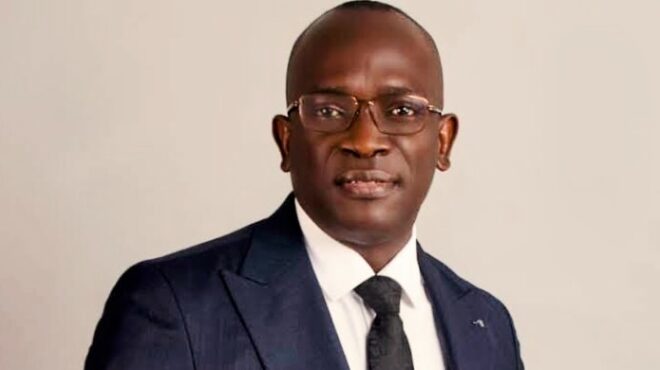
Director General of NECA, Adewale Smatt-Oyerinde, who made this submission, said the increased inflow of revenue from the Federation Account has effectively addressed the usual argument by some states on their inability to pay the minimum wage.
Canvassing NECA’s ‘no excuse’ position in an interview on Channels Television’s, The Morning Brief, Smatt-Oyerinde said, “No State really has an excuse in the context of the current reality to stay at that N70,000, especially with people struggling with the price of petrol. While many states are still doing a lot with the CNG buses, we think more still needs to be done.”
He also stated that, “A lot still needs to be done with the context of food security and shelter. Once you deal with that, the conversation would not really be about minimum wage because the quantum of that N70,000 will be able to buy enough for an average household. So, it’s not about the quantum, it’s about what exactly the N70,000 can buy.”
The NECA Chief said any measure aimed at reducing the pain of workers, as key drivers of the economy, would boost their productivity and improve livelihood generally.
According to him, “While we (NECA) are not directly involved in the core, the real dynamics of the state, the socio-economic challenges that they have, it is important to also state that the workers, either in the public and private sector, are very key drivers of the economy of any state and a very key driver of even the private sector.
“Whatever will improve productivity will increase motivation, especially within the context of ongoing reforms.
”You know, if you are hungry, or if you’re not really composed, you’re hungry, you have issues with shelter, you have issues with transport, hardly would you be productive at work.”
He further said it was in the best interests of those State governments to see the civil service as the engine that drives the system, adding, “So if you see it from that perspective, you realise then it becomes important for you to address the issues that concern that engine.
“That’s the perception of the private sector because the workers in the private sector are quite critical to productivity, critical to growth of the private sector, and that is the perception we have, that workers are important, then let’s treat them so, as the ILO said workers are not commodities.”
President Bola Tinubu had in July 2024, signed the minimum wage bill into law, ending months of deliberations between government authorities, labour unions, and the private sector.
But with the National Minimum Wage increase from N30,000 to N70,000, some state governors have continued to cite lack of funds to implement the new structure for civil servants in their respective states.
However, the Imo State Governor, Hope Uzodimma, on August 27
approved an increase in the minimum wage from N70,000 to N104,000 to improve the welfare of workers in the state, while his Ebonyi State counterpart also announced a new minimum wage of N90,000 with immediate effect for all civil and public servants within the same period.
The list of states paying beyond the N70,000 minimum wage includes Lagos, Akwa Ibom, Rivers, Ogun, Gombe, Kogi and Bayelsa.