ActionAid Nigeria has stated that with millions of Nigerians grappling with economic hardship, every naira of public funds should deliver measurable benefits towards improving the lives of citizens.
It noted that Nigeria’s development challenge is not the absence of resources, but the choices governments make in allocating them.
The organisation therefore tasked both federal and state governments to prioritise spending on quality education, primary healthcare, water and sanitation, food security, climate resilience and social protection.
It stressed that the true measure of governance is not the number of monuments erected but the number of lives transformed through improved education, healthcare, safe water, decent livelihoods and opportunities for citizens.
ActionAid therefore called on the Federal and State governments to redirect public spending from “prestige projects” and excessive government luxuries to investments that directly improve the lives of Nigerians.
The organisation specifically said that Nigeria’s budget should reflect the country’s development priorities as against government extravagance, stressing that it is not merely a question of reducing expenditure, but about changing national priorities.
According to ActionAid Nigeria; “Every unnecessary luxury purchase represents classrooms that were never built. Every unjustifiable trip represents medicines that never reached a primary healthcare centre”.
The organisation particularly said that the Nigeria’s limited resources should be deployed to sectors with the greatest social impact, stressing that while infrastructure remains important, the country’s challenge lies mainly in a pattern of public expenditure that often favours prestige over citizens’ welfare.
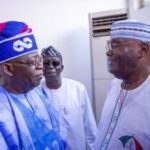
ActionAid Nigeria which stated these while reacting to President Bola Ahmed Tinubu’s recent directive to state governors to stop constructing unnecessary flyovers in areas without traffic congestion and instead focus on projects that address the needs of citizens, emphasised that the President’s comments should spark a broader national debate on public finance and the need to prioritise people-centred development over projects driven by political visibility.
These were contained in a statement by Dr. Andrew Mamedu, Country Director of ActionAid in which it urged governments at all levels to review spending on projects and activities it considers to have limited public value, including unnecessary prestige projects, luxury acquisitions, oversized official delegations, excessive local and foreign travel, and discretionary expenditures that lack transparency and accountability.
ActionAid cited figures from the Budget Office of the Federation that showed that President Tinubu and Vice President Kashim Shettima are proposed to receive a combined ₦9.36 billion in the 2026 budget for local travel, foreign travel, food and refreshments.
It pointedly said that the allocation does not necessarily represent the total cost of official trips, just as it noted that expenses for accompanying officials and operational support are often captured separately in the budgets of other government agencies.
ActionAid emphasised that reducing the proposed allocation by half would free about ₦4.68 billion, which could be redirected to critical public services, adding tat such savings could finance approximately 62 three-classroom school blocks, 208 solar-powered boreholes and five fully equipped primary healthcare centres, based on recently published government project costs.
ActionAid Nigeria further said; “Every unaccounted security vote represents communities that continue to live in fear without knowing how public resources intended for their protection were spent.
“Every prestige project that fails to address citizens’ needs represents another missed opportunity to reduce poverty and inequality. Public budgets are moral documents. They reveal whose interests’ governments choose to protect,” it stated.
ActionAid particularly urged the Federal and State governments to reduce the cost of governance by cutting unnecessary official travel, luxury purchases and oversized government delegations, while strengthening transparency and accountability in discretionary public spending, including security-related expenditure without compromising national security.
It counselled that infrastructure projects should be selected based on evidence, community needs and measurable development outcomes as against political considerations, just as it called for greater citizen participation in budget planning, implementation and monitoring.