BY COBHAM NSA – The Minister of Finance and Coordinating Minister of the Economy, Professor Taiwo Oyedele, says Nigeria is shifting focus from rewriting its tax laws to making them work effectively for everyday citizens and businesses across the country.
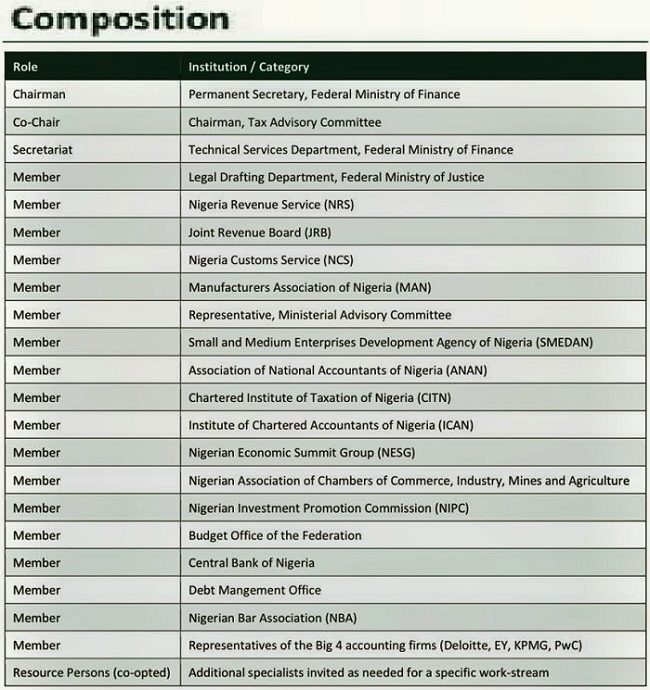
Oyedele stated the Federal Government’s position while inaugurating the Technical Sub-committee on Fiscal Policy and Tax Reforms, tasked with reviewing the country’s withholding tax regulations and the rules guiding the taxation of digital and cross-border businesses, ahead of the 2027 Finance Bill.
He said the assignment is building on the work that began in July 2023 when President Bola Tinubu launched the parent Committee, noting that Nigeria’s tax system was too complicated and scattered, with businesses burdened by multiple taxes and agencies, low-income earners and small businesses carrying more than their fair share of the load, while government revenue accruals remained stagnant, notwithstanding multiple tax streams.
The Minister stated that the sweeping legislative overhaul officially transformed Nigeria’s fiscal landscape following the full implementation of four major tax laws this January, emphasizing that the historic rollout, comprising the Nigeria Tax Act 2025, the Nigeria Tax Administration Act 2025, the Nigeria Revenue Service (Establishment) Act 2025, and the Joint Revenue Board (Establishment) Act 2025, represents the nation’s most aggressive and far-reaching tax reform in decades.
 However, Oyedele, who also chairs the Presidential Fiscal Policy and Tax Reforms Committee, said passing the legislation is only the first step in a complex economic shift, because a law’s true test begins when it collides with daily economic reality and the real challenge lies in how businesses interpret the rules, how tax officials enforce them, how investors react, and how deeply ordinary citizens feel the impact.
He said because the fiscal system spans beyond taxation to include government spending, borrowing, asset management, and institutional coordination, the public call for inputs was expanded to address fiscal policy, public financial management, debt and transparency, capital markets and cross-border money flows
In the process, the Minister disclosed that the government received 134 submissions, spanning all geopolitical zones, but insisted that these inputs from businesses, investors, civil society, and citizens be judged strictly on merit rather than their source.
With early submissions calling for simpler tax laws covering areas like VAT thresholds, withholding tax and capital gains treatment, an end to multiple taxation, and increased digitalisation to stop repetitive data filing, Oyedele said taxpayers also demanded stronger rights, faster refunds for small businesses, and incentives to boost investment in mining, renewable energy, healthcare, and capital markets.
Further laying out the principles to guide the Committee’s work, the Minister urged members to prioritize fair and workable policies over popularity, noting that every reform creates winners and losers but the team must rely on strict evidence, carefully weighing the costs, benefits, and side effects of every proposal.
However, he warned against chasing isolated revenue goals that could damage the wider economy, emphasizing that tax policy must drive investment and productivity, focusing on taxing wealth over poverty, profit over capital, and consumption over production.
On the need to keep things simple, Oyedele warned that complex tax systems act as a “hidden tax” by driving up costs and fueling abuse, urging the Panel to protect low-income earners, small businesses, and youth from unintended economic distortions.
Also, to put a stop on taxing capital, the Minister demanded a full overhaul of the 2024 withholding tax rules, emphasizing that withholding tax must serve strictly as an advance compliance tool, not a financial burden that drains corporate working capital, stressing that with the government focusing on taxing the digital economy, the committee must rewrite Nigeria’s 2020 Significant Economic Presence rules with the objective to successfully tax cross-border digital giants under new legislation while keeping the nation globally competitive.
With the Panel given six weeks to deliver on its assignment, Professor Oyedele noted that for the first time, key government agencies like the FIRS, Customs, SMEDAN, and the Justice Ministry are collaborating at a single table to eliminate bureaucratic friction, adding that the Federal Ministry of Justice will co-author the regulations from day one rather than vetting them at the end.
He charged the members to maintain strict confidentiality in their deliberations and draft documents, urging them to always declare any conflict of interest, and step aside from voting on any matter where such conflict exists.
The Minister said while the first phase of the exercise altered the tax structure, the next phase must eliminate complexity and deliver absolute clarity to taxpayers, maintaining that true success will be measured by actual problems solved rather than the number of legal clauses amended and urged members to challenge assumptions, listen broadly, and firmly prioritize national interest during the review.