“….While all genuflected, the iconoclastic Osoba simply shook the monarch’s hand and cheekily said: “Sikiru, what are you doing in this funny dress?”
BY OWEI LAKEMFA

The 1970s to the 1990s were some of the most pitiless seasons in Nigeria. Except for a four-year interregnum, the military was in power and, it was brutal. In the mid-1970s, the seemingly genial General Yakubu Jack Gowon had radical activists like Edwin Madunagu and Tony Engurube detained without trial.
But the Murtala-Obasanjo regime that succeeded Gowon was far more brutal and blood sucking. After its July 29, 1975, coup, that regime decimated the armed forces purging it of those considered as possible rivals. It also smashed the civil service so badly, that today, fifty years later, the service is yet to recover. Gone, was the secured tenure in office, processes and procedures. Public servants at state and federal levels were sacked en mass without queries. The judiciary was decimated and its inviolability attacked.
The seemingly impregnable trade union movement with icons like Michael Imoudu, Wahab Goodluck and Samuel Udoh Bassey was repeatedly attacked with some detained without trial. The central labour organization, the Nigeria Labour Congress, NLC was sacked and, the over one thousand trade unions in the country, dissolved. The Justice Adebiyi Tribunal on trade unions was established to work towards a preconceived end and, an Administrator, Michael Olu Abiodun was appointed to run all trade unions in the country.
By February 1976, the siege on the dynamic mass media was fully on with the removal of its doyen, Alhaji Babatunde Jose as the Managing Director of the Daily Times group and, the military regime’s 60 percent forced acquisition of the conglomerate.
So, by 1978, except for the universities, all possible forces of dissent in the country had been repressed. The universities had viable and militant student unions and lecturers that did not worship gods even if they wore military camouflage.
It was not that the rampaging military regime had not tried to subjugate the universities. But their appointment of new Vice Chancellors like Professors Ojetunji Aboyade in Ife, Gilbert Onuaguluchi in Jos, Emmanuel Alayande in Calabar, and Dr. Mahmud Tukur in Kano did not affect the power dynamics in the universities. What did was the April, 1978 Student protests led by the National Union of Nigerian Students, NUNS.
The military regime which killed protesters in cities like Lagos, Zaria and Ife, also used the opportunity to smash the universities and their autonomy. Vice Chancellors, student leaders and lecturers were sacked or expelled in universities like Lagos, Ibadan, Calabar and Ahmadu Bello, Zaria. Almost all the lecturers sacked were Leftists which indicated an ideological bent in the attacks.
However, the military met a brick wall in the University of Ife, now Obafemi Awolowo University, OAU as Vice Chancellor Aboyade, the students and lecturers rallied against fascism. Ife became the centre of resistance. Its students within months, insisted that NUNS President, Segun Okeowo who had been expelled from the University of Lagos must be admitted into Ife. This was achieved by the next session.
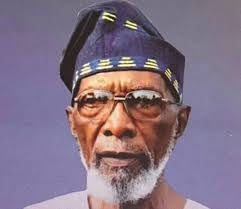
In those days, a meeting of Left lecturers, called the Ife Collective, was like a who is who on campus. They were led by the gangling historian, Dr Olusegun Samuel Osoba one of those who led in the decolonization of African history and thought. Osoba was a towering intellectual, who laughed, joked but was uncompromising on principles. His perception of scholarship and strict principles led him to decline the award of professorship.
He was fearless, quite perceptive and visionary; qualities he applied when in 1977, he was appointed into the Constitution Draft Committee to usher in civil rule. When it was clear to him that the majority in the Committee merely wanted a continuation of the old conservative system, he teamed up with fellow historian, Dr Bala Usman to midwife a Minority Report. In it, they demanded that rights like those to education, healthcare and employment, must be justiciable.
The Left in Ife led by Osoba groomed students not just to lead the students’ union, but also to make a difference in society. The direct products of that targeted grooming included Julius Ihonbvere, who became PRO of the Students Union, later professor and currently, Leader of the House of Representatives and, Opeyemi Bamidele, union PRO, later, President of the National Association of Nigerian Students, NANS and, current Senate Leader.
The lawyers produced by the Osoba political leadership are legion. They include Femi Falana, Adeyinka Olumide-Fusika and Ebun-Olu Adegboruwa, all Senior Advocates of Nigeria. A number of us ended up being journalists. Amongst our ranks are Dapo Olorunyomi, publisher of Premium Times, Bola Bolawole, former Punch Editor, Femi Ojudu, a founder of ‘The News’ and later, Senator and, Lanre Arogudade, Executive Director of the International Press Centre, IPC. Back in Ife, Arogundade was Secretary of the Students Union, and President of NANS. In the Nigeria Television Authority were Ola ‘Ifajo’ Fajemisin, Last ‘Last-for-Ever’ Eguavon and Adeola Soetan. It was from that movement Ambassador Ayo Olukanni, former High Commissioner to Australia, emerged.
In terms of scholarship, Osoba’s most famous product is Professor Toyin Falola, a book factory.
In his early days as Head of State, General Ibrahim Babangida during an interview referred to Segun Osoba and, the interviewer thought he meant the journalist but, Babangida corrected him that he meant Segun Osoba in Ife. In deed those who ran the country were bound to know him as he led the tribe of people the military accused of “teaching what they are not paid to teach” That is, lecturers producing thinkers rather than robots from the campuses.
You can imagine an intellectual clash between Osoba and Professor Wole Soyinka. I witnessed one in 1980. Following the assassination in Guyana of Walter Rodney, author of the famous book ‘How Europe underdeveloped Africa’ on June 13, 1980, a massive rally was held in Ife. There Soyinka threw a gibe at Osoba and his fellow Leftists. He said unlike them, Walter Rodney was not an arm chair revolutionary. Osoba responded that Walter Rodney did not write to intimidate the Appointments and Promotions Committee of a university to make him a professor.
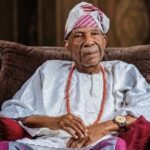
Osoba, an Ijebu once ran into his agemate, Oba Sikiru Adetona who was decked in his regalia as the Awujale of Ijebu land. While all genuflected, the iconoclastic Osoba simply shook the monarch’s hand and cheekily said: “Sikiru, what are you doing in this funny dress?”
Osoba retired from the university in 1991. Some years ago, some of us including Professor Funmi Adewumi visited him. He received us at the Ijebu Ode club and we gisted far into the night. He talked about the need to continue the struggle for a just society. He never witnessed that society he struggled so hard to build. On Thursday, May 14, 2026, the great heart of our leader, ceased beating at 92.