“Accountability means that the people are duly compensated for their lost livelihoods, that binding obligations on the polluters are enforced, that the era of extractivism without responsibility is brought to an end”.
BY JOYCE BROWN

For almost 70 years, the Niger Delta region has suffered untold or under reported devastation from the continued exploration of oil and gas. Despite the heavy reliance of the Nigerian economy on revenue from this region, its communities and people have little to show for it besides polluted air, rivers and farmlands, dying mangroves, abandoned pipelines and wellheads, and a stark struggle for survival. Now, as you may already know, the multinational oil companies are divesting and moving further offshore. The question that requires an urgent answer is who will clean up the mess? Who will answer this question?
The Niger Delta is known as one of the most polluted regions in the world. In 2024 alone, Nigeria recorded at least 589 oil spills, releasing about 19,000 barrels of crude into the environment. These spills continue to devastate rivers, forests and livelihoods across the region.
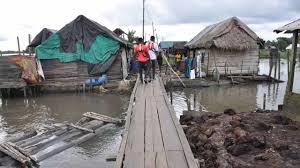
For so long, communities and civil society groups have called for cessation of oil exploration, decommissioning of used oil wells and reparation and for so long these calls have been ignored or at best met with window dressing efforts. When we speak of environmental pollution, many tend to overlook the impact on the people. We do not easily think about the people whose farmlands are degraded and cannot produce crops, fisherfolk who return home with empty nets, people including children bathing and drinking contaminated water because that is the main source of water available to them. These people do not have the luxury of treated boreholes. Studies have linked oil spills in the Niger Delta to severe health complications, including respiratory illnesses, skin diseases, higher infant mortality rates, infertility, birth defects and more. Studies have found that babies born to women living near oil spill sites face significantly higher risks of neonatal death.
At the 2024 Niger Delta Alternatives Convergence (NDAC) organised by Health of Mother Earth Foundation (HOMEF) and her partners, King Bubaraye Dakolo, Ibenanaowei of Ekpetiama Kingdom in Bayelsa State, describing the region as one of the most polluted places in the universe, spoke of how the nearly 7 decades of extraction has changed the very fabric of community life and made earning a living increasingly difficult for the people of the Niger Delta. This speaks to a painful loss of identity and dignity.
Yet, instead of a concerted effort for full remediation and justice, many communities are now watching as the oil companies exit operations onshore without accounting for decades of environmental damage and social oppression. These companies are abandoning oil infrastructure some of which are still sources of pollution in many communities. In May 2025, a major spill occurred along the Trans Niger Pipeline in B-Dere community in Gokana Local Government Area of Rivers State. This spill was reported to be the second major failure of this pipeline within two months following a previous leakage in March 2025. HOMEF and other groups called attention to the dangers of aging infrastructure and demanded proper decommissioning rather than expansion of fossil fuel operations.
Ogoniland continues to suffer from decades of oil spills from abandoned infrastructures, including more recent incidents in Kpean (August 2025) and an older incident in Eteo- Eleme (June 2023) which have destroyed farmlands, contaminated water, and displaced residents according to a HOMEF report titled Endless Oil Spills. Accountability in Ogoni means that plans for resumption of oil exploration in the land while the people are still neck deep in pollution must be halted and uprooted.
The call for decommissioning is expedient given the frequency and impact of pollution and the hurried divestment moves by the erring companies. Accountability in this era means to compel the national and international oil companies to completely and safely shut down and decommission old oil infrastructure, clean up polluted sites, restore degraded ecosystems and put measures in place to ensure that communities are protected from future harm. Accountability means that the people are duly compensated for their lost livelihoods, that binding obligations on the polluters are enforced, that the era of extractivism without responsibility is brought to an end. This is the least they should do given the years of exploitation of the environment and the people who depend on it for survival.
It is for this course that the Niger Delta Alternatives Convergence (NDAC) was created — to build and echo collective voices and people-centred alternatives for the region. Since 2022, the convergence has brought together activists, traditional and religious leaders, scholars, youth groups, women groups and civil society organisations to discuss pathways toward socio-ecological justice in the Niger Delta.
The NDAC leverages on the power of a unified and unrelenting voice for socio-ecological justice. It amplifies communities’ demands for accountability, highlights alternatives for development and insists on a Niger Delta where people live in dignity and in harmony with Mother Earth. The 2026 edition celebrates and spotlights the examples of communities in Ogoni in Nigeria and Yasuni in Ecuador that have successfully resisted fossil fuel exploitation for decades.
The 5th edition of the NDAC is set to hold in Uyo, Akwa Ibom State on 14th May 2026. The event will be streamed live on the YouTube page of Health of Mother Earth Foundation (HOMEF).
Join the movement for accountability and justice for vulnerable communities of the Niger Delta and other impacted regions. Join the upcoming convergence. Let your voice count.
…Joyce Brown is the Director of Programmes, Health of Mother Earth Foundation.