BY EVELYN DADU, ABUJA – Concerned stakeholders and experts working on Nigeria’s Food Future rose from a National conference on Biosafety and Agroecology with a demand on the Federal Government of Nigeria to Protect indigenous seeds farming and banking systems, and the need to protect farmers’ rights and Nigeria’s rich agricultural biodiversity.
The experts that represented various organisations that included; ‘The Health of Mother Earth Foundation (HOMEF), in collaboration with Corporate Accountability and Public Participation Africa (CAPA), Kebetkache Women Development and Resource Centre, the GMO-Free Nigeria Alliance among others specifically stressed the need for the protection of farmers’ rights to enable them save, exchange and reuse indigenous seeds.
While supporting community seed banks, farmer-managed seed systems and local breeding initiatives, the conference participants stressed that given the opportunity, organic agriculture could feed the Nigerian population comfortably.
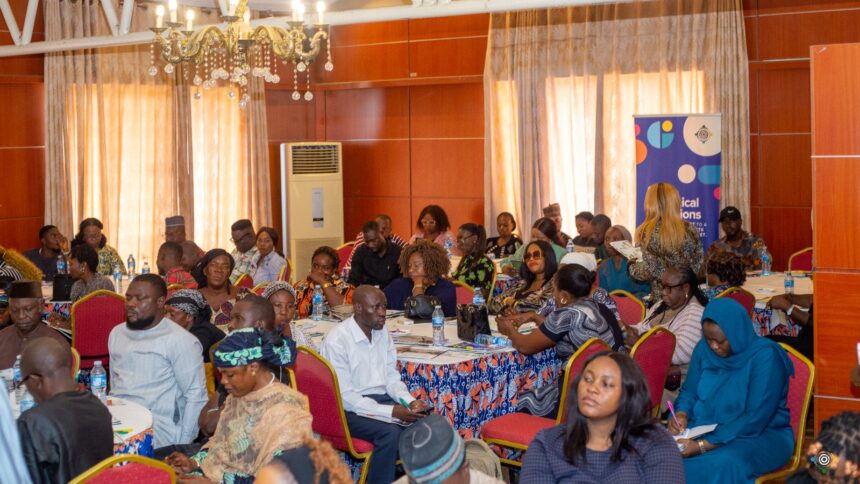
The conference which brought together government representatives from the Ministries of Agriculture and Food Security, Health and Social Welfare, Education; Standards Organisation of Nigeria; Agricultural Quarantine Service, National Agency for Foods Drug and Administration Control, the Federal Competition and Consumer Protection Commission, farmers, researchers, civil society organisations, legal practitioners, youth groups, media practitioners, traditional institutions and other critical stakeholders, called on the government to apply the precautionary principle in biosafety decision-making in order to establish a clear roadmap for the timely phase-out of all highly hazardous pesticides in Nigeria.
The conference participants also called on the government to critically examine the implications of the continued deployment of Genetically Modified Organisms (GMOs) in Nigeria and assess agroecology as a viable pathway to sustainable, resilient, and inclusive food systems.
The conference particularly reviewed the increasing approval and commercialization of GM crops in Nigeria, including Bt Cowpea, TELA Maize, and the recently registered transgenic cotton varieties, against ongoing concerns about biosafety, environmental protection, farmers’ rights, public health, food sovereignty, ecological integrity, and regulatory accountability.
The participants agreed that Nigeria’s food security challenges required a holistic, people centred and sustainable solutions beyond technological interventions, stressing that Highly Hazardous Pesticides (HHPs) have continued to pose significant risks to human health, biodiversity, soil fertility and water resources in Nigeria.
The conference raised concerns, stressing that Farmers’ rights to save, exchange, and improve seeds were under increasing pressure from proprietary seed systems with implications for seed sovereignty, rural livelihoods and local food systems.
Stakeholders agreed that existing biosafety governance frameworks require greater transparency, accountability, independence, scientific rigour, and meaningful public participation.
The conference agreed that Public Health concerns related to GMOs and associated chemical inputs require independent long-term assessment, robust surveillance and stronger monitoring systems in Nigeria.
They therefore advocated that Food system governance in Nigeria must be inclusive, democratic and ensure meaningful participation of farmers, especially women, youth, consumers, researchers and civil society in general.
The conference noted that Agroecology has demonstrated considerable potential to improve soil health, biodiversity, climate resilience, farmer livelihoods and sustainable food production in Nigeria
Participants resolved to carry out some activities that includes advocacy for a comprehensive review of GMO approvals and biosafety governance mechanisms in Nigeria as well as promote transparency, public participation, and independent risk assessment in all biosafety decision-making processes.
The conference advocated for a coordinated national agenda for sustainable, equitable, climate-resilient and health-conscious agricultural development in the country
Conference participants reaffirmed that ecological sustainability, food sovereignty, public accountability, social justice, human well-being, and the protection of present and future generations must guide Nigeria’s food and farming systems.
Participants further urged government institutions, policymakers, development partners, and relevant stakeholders to work collaboratively towards building a resilient, equitable and sustainable food system that prioritise people, biodiversity, environmental integrity and national food security.