“To assume thaWt “media blitz” can replace “historical record” is the same assumption that led to the Abuja@50 snub. It is the belief that if you talk enough, people will forget what came before. They won’t. Institutional diarists won’t. Historians won’t. And Nigerians won’t”.
BY MARTINS OLOJA
History has a way of keeping receipts. On February 3, 2026, Abuja turned 50. Fifty years since the Federal Capital was officially designated in 1976 by the Murtala/Obasanjo military government. Fifty years since the dream of a neutral, centrally-located capital for all Nigerians was put on paper. Fifty years of bulldozers, blueprints, blood, sweat, and billions.
It should have been a national moment. A day of reflection, of parades, of gratitude to the architects, the labourers, the military rulers, the civilian presidents, the ministers, and the citizens who built a city from forest and rock. Instead, there was silence.
The man constitutionally tasked to govern the FCT as its de-facto Governor — President Bola Ahmed Tinubu — said nothing of national weight on February 3, 2026
The man physically administering the FCT — Minister Nyesom Wike — was not in Abuja. He was in Rivers State, touring Local Government Councils in what was clearly a political show of force to his “master”, President Tinubu, to recognise that he is still in charge of Rivers politics. That was the trigger for my anniversary article here in which I pleaded with the president to apologise to the nation for the historic miss. He did not.
Months later, the Minister completed a 31-day commissioning spree to mark “Tinubu @ three (3)”. He crowned it with a lavish dinner. Earlier, in response to the query over the great miss in February, Wike promised, in his own words, a commemorative “compendium” for Abuja@50 to coincide with Tinubu@3. The compendium never came. The apology never came. The celebration never came. So we are left with one question:
Why did Nyesom Wike assume that Abuja@50 didn’t matter? And the more dangerous question: What does it say about a man who believes 31 days of his own projects can erase 47 years of history before him?
This is not about Wike. This is about memory. This is about the danger of a public official who believes his boisterous nature and media blitz can obliterate history.
‘Abuja@51980s: The Builders 0: What we should have celebrated real time’
To understand the crime of omission, you must first understand what was omitted. Abuja did not start with Wike in 2023. Abuja started with a decree in 1976.
1976-1979: The Founders
Gen. Murtala Mohammed chose Abuja to end the chaos of Lagos — too congested, too coastal, too tribal. They set up the Federal Capital Development Authority, FCDA in 1976. The first master plan was drawn. The first roads were cut.
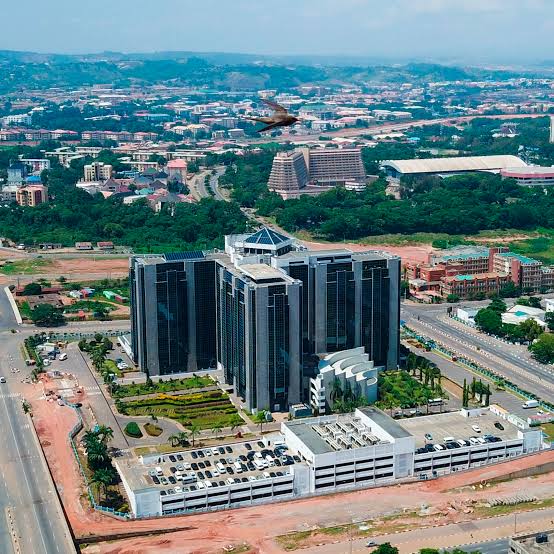
Obasanjo set the physical development tone. Shehu Shagari continued. Gen. Ibrahim Babangida solidified and moved the seat of government in 1991. Generals Sani Abacha and Abdusalami Abubakar prepared the city ready for democracy. The Three Arms Zone — Aso Presidential Villa, National Assembly, Supreme Court — rose. The National Mosque and National Christian Centre gave the city its spiritual symmetry. The International Conference Centre, the Federal Secretariat, the CBN Headquarters, NNPC Complex and Quarters, DSS and NIA Complexes, the Police Headquarters, the unique Radio House, Nnamdi Azikiwe International Airport, Garki, Wuse, Maitama, Life Camp, Asokoro Hospitals, University of Abuja, etc — all conceived and built before 1999 when democracy landed.
1999-2023: The Expanders
Obasanjo gave us, among others, many District infrastructure, the Millennium Park, completed National Hospital, CBN, restored Master Plan. Yar’Adua gave us policy – 10-lane Airport Road to Giri and Abuja-Madalla – Niger state boundary, etc. Jonathan gave us the Abuja Light Rail foundation and several Districts city roads infrastructure and many roads including the link from CBN to AYA, etc. Buhari gave us the second airport runway and light rail completion, among others Wike has been completing.
And sixteen (16) other FCT Ministers before Wike: John Jatau Kadiya, Abubakar Iro Dan Musa, Haliru Dantoro, Mamman Jiya Vatsa, Hamza Abdullahi, Gado Nasko, Jeremiah Useni, Mamman Kontagora, Ibrahim Bunu, Mohammed Abba Gana, Nasir el-Rufai, Aliyu Modibo, Adamu Aliero, Bala Mohammed, Musa Bello. This list included Ajose Adeogun, Special Duties Minister (in charge of Abuja 1976-1979) who began master plan and planning from Awolowo Road Ikoyi Office and Military Field Base, Suleja, Niger State.
They built several districts infrastructure and all the roads being expanded: Garki, Wuse, Maitama, Asokoro, Jabi, Gwarimpa — the largest single housing estate in Africa. They built schools, hospitals, markets, and 47 years of infrastructure. None of them claimed they did it alone. That is what Abuja@50 was meant to celebrate: continuity. The idea that Nigeria can build across regimes, across parties, across egos. Wike inherited that. He did not invent it.
‘The promise made and broken’
During the 31-day commissioning of projects to mark “Tinubu @ 3”, Wike was everywhere. Cutting ribbons. Facing cameras. Declaring himself “Mr. Projects”.
He forgot that at one point in February, he promised Nigerians “a commemorative compendium’ for Abuja@50. A book. A record. A tribute.
The date came and passed: 3rd February 2026. The book did not. The event did not. The apology did not. Instead, what we got was a dinner for Tinubu’s three years in July. A self-congratulatory dinner after 31 days of telling us how he had “done more in three years than other ministers in 47 years. That is the core of the problem: the assumption that Abuja began in August 2023. That assumption is dangerous because it is arrogant. It is ahistorical. And it is ungrateful.
‘Seven reasons “Abuja@50 didn’t matter assumption hurts Nigeria’
The danger to history: Erasure by ego. When a sitting minister acts as if nothing existed before him, he commits historical erasure. Did Wike build the Three Arms Zone? No. Did he pour the foundation of the National Assembly? Did he design the Unity Fountain? Did he award the contract for the Abuja-Kaduna rail? Did he build the NICON-NOGA HILTON, (now Transcorp Hilton), SHERATON HOTEL (now Abuja Continental Hotel) SOFITEL HOTEL (now NICON Luxury)? Did he build the Defence Headquarters and the Ministry of Defence? Did he construct the INEC Complex, NYSC Headquarters, NCC Towers, Foreign Affairs Ministry Complex?
Was Wike the Minister when 360 units of houses for House of Representatives’ members, 109 Units for Senators and their presiding officers were built in Apo Legislators Quarters before 1999? Who built the Supreme Court Justices Quarters in Maitama before he came? Did he build the FCT Minister’ sprawling residence in Life Camp? Where was Wike when the imposing CBN complex was built? Was he the Minister when the National Hospital was constructed? Where was “Mr. Project” when the University of Abuja began in 1988? Was he there when the Law School in Bwari was built as Centre for Democratic Studies?
To skip Abuja@50 is to tell the children of the engineers who died building the city in the 1980s that their fathers’ work doesn’t count. It is to tell Nasir el-Rufai, who cleared shanties and enforced the master plan, that his work was worthless. It is to tell Hamza Abdullahi and Gado Nasko, who built satellite towns, Wuse 1 and 11, Maitama that they were placeholders. A nation that forgets its builders will never build again.
The danger to institutions:
The FCT is not a personal estate. The FCT is not Rivers State. The Minister is not an elected Governor. He is an appointee administering land, a territory that belongs to all 230 million Nigerians. By choosing to campaign in Rivers even on the day of Abuja@50, Wike sent a message: “My political base matters more than my constitutional duty.” That is how institutions die — when office holders treat public office as a platform for personal relevance.
The danger to continuity: Projects without memory
Infrastructure without memory is just concrete. The 31-day commissioning was impressive. Roads in Bwari, Kuje, Karu, Kwali, water in Gwagwalada, etc. But what was the narrative? It was “Wike did this. Wike did that” But who built the Water Plant in Lower Usuma Dam in Abuja about 40 years ago?
A proper Abuja@50 celebration would have said: “This road connects to the one el-Rufai started. This hospital expands the one Abba Gana conceived. This is the 50-year journey.”
Without that, we teach the next minister that he can also ignore the past and start his own 31-day show. That is how we get 50 years of abandoned projects.
The danger to national unity: Abuja belongs to all
Abuja was built to be neutral ground. Hausa, Fulani, Igbo, Yoruba, Ijaw, Kanuri, etc — all were supposed to see themselves in it. An Abuja@50 celebration would have brought former Heads of State, former Ministers, traditional rulers, and citizens together. It would have been a healing moment – of reunion, grace and fulfillment!
By skipping it, Wike reduced Abuja to “Wike’s Abuja”. That is divisive. That is the opposite of why Abuja was created.
The danger to the presidency: Constitutional responsibility dodged.
Section 299 of the Constitution says the President is the Governor of the FCT. Tinubu bears ultimate responsibility. That was why I pleaded with the president to apologise for the great miss in February, 2026. His silence on Abuja@50, and his Minister’s absence, suggest that the presidency does not understand symbolism. Great leaders celebrate milestones. They don’t hide from them. By not apologising, the President allows the impression that the FCT is on autopilot.
The danger to public trust: Promises without consequence
Wike promised a compendium. He didn’t deliver. In any serious democracy, a public official who fails to deliver a public promise owes the public an explanation.
Silence breeds cynicism. If the Minister can promise a book for 50 years of history and then forget it, why should a contractor believe his promise on a road?
The danger to Wike’s legacy: ‘Vanity over vision’.
Here is the irony. Wike has done real work in three years. He has completed and constructed mainly roads and connected water in some rural areas. He will certainly be remembered. But by refusing to honor the 47 years before him, he ensures his own work will also be forgotten quickly. Because the next minister will also do 31 days of commissioning and say “I did more than Wike.” Legacy is built on humility, not on braggadocio. You don’t become the “greatest FCT Minister” by insulting the sixteen (16) who came before you.
‘Can media blitz noise erase facts?’
Let us address the style directly. Minister Wike is loud. He is quotable. He is combative. The media loves him because he gives headlines and adverts. But noise is not achievement. And headlines are not history. You cannot shout over a monument called Aso Presidential Villa. You cannot tweet over the Supreme Court building. You cannot do a press interview that erases the International Conference Centre built in 1991.
History is not moved by volume. It is moved by bricks, by budgets, by time.
The 47 years before Wike produced physical monuments you can touch. Wike’s three (3) years have produced asphalt and paint — important, but not the sum total of Abuja.
To assume that “media blitz” can replace “historical record” is the same assumption that led to the Abuja@50 snub. It is the belief that if you talk enough, people will forget what came before. They won’t. Institutional diarists won’t. Historians won’t. And Nigerians won’t. Wike can still organise a blueprint for Abuja@50.
It is not too late to correct this tragic error. Here is what a proper Abuja@50 would have looked like:
- The apology: A national broadcast by the President, with the Minister beside him: “We missed this. We are sorry. Here is how we will make it right.”
- The compendium: Not a Wike book. A “Nigeria Book”, documenting every phase from 1976-2026.
- The master-plan review: Launch a 50-year review. What did we get right? What did we get wrong? How do we protect Abuja from flooding, traffic, and urban decay?
That would have been statesmanship. That would have been legacy.
Let’s continue next week with why apology and humility matter for leaders and all that Wike needs to do to be remembered…