“When we examine both internal schisms and cross-regional tensions without hostility or romanticism, the discourse shifts—from accusation to architecture, from grievance to reform, and from suspicion to institutional renewal”.
BY BELLO GWARZO ABDULLAHI
Whenever respected voices address matters of national importance, debate inevitably follows. Such discussions may either clarify or obscure the issues, yet for discerning minds they provide a necessary path toward understanding. Any serious engagement with Nigeria’s ethnic tensions must rise above emotion and examine ideas side by side. We must be wary of half-truths and inflammatory narratives that deepen division—particularly when the historical reality of power struggles and dominance is treated as though it never existed. Identity, power, and history are not abstractions; they shape institutions, influence policy choices, and ultimately determine whether we advance or remain trapped in recurring discord.
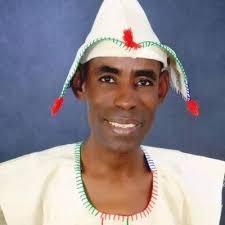
The recent interview by Tola Adeniyi on the “Fulani Question,” alongside longstanding interventions by Muhammadu Sanusi II and the late Dr. Yusufu Bala Usman, offers distinct yet illuminating lenses through which to assess our present condition.
For Tola Adeniyi, the “Fulani Question” is fundamentally one of sovereignty and security. He argues that trans-border criminal elements, enabled by weak enforcement and blurred identity lines, have destabilized host communities. In his analysis, the crisis reflects territorial pressures, demographic shifts, and federal hesitation. His proposed remedies are structural: genuine federalism, firm border control, and regional autonomy to safeguard land rights and local security.
Muhammadu Sanusi II advances a markedly different diagnosis—reform from within. He rejects ethnic generalization and cautions against collective blame, instead highlighting decades of educational neglect, environmental stress, pastoral displacement, and elite complacency. He has been forthright in criticizing Northern leadership for failing to modernize pastoral systems and broaden economic opportunity. His prescriptions emphasize ranching, mass education, economic inclusion, and institutional accountability. Where Adeniyi identifies territorial anxiety, Sanusi underscores governance failure and socio-economic vulnerability.
Dr. Yusufu Bala Usman’s contribution is more foundational still. He questioned the very architecture of ethnic narratives. In his scholarship, labels such as “Hausa,” “Yoruba,” and “Igbo” were not fixed biological nations but evolving linguistic and political identities shaped by migration, commerce, religion, and colonial administration. He warned that ethnicity is often instrumentalized by elites to mask structural inequities. For him, the deeper divide is class: the ordinary farmer or herder frequently shares more material interests across ethnic lines than with political elites who mobilize identity for strategic advantage.
These national debates acquire further significance when viewed against internal fractures within Southern Nigeria—Yoruba sub-group rivalries, Igbo state and clan contestations, and the resource-driven tensions of the Niger Delta. The idea of a monolithic “Southern interest” does not withstand scrutiny. No region is internally uniform. Contemporary commentary often frames instability as uniquely Northern, yet the historical record reveals otherwise. The Kaka–Wawa and Aguleri–Umuleri conflicts, Delta Igbo–mainstream Igbo tensions, Ijaw–Itsekiri–Urhobo resource disputes, and the Ife–Modakeke crisis all demonstrate that our challenges are national rather than regional. Acknowledging this complexity is not divisive; it is intellectually honest.
If identities consolidated under historical pressures—through trade, religion, and colonial policy—then present divisions are not immutable destinies. They are products of history. And what history has shaped; principled leadership and sound policy can reshape.
Nigeria’s strength lies not in denying differences but in managing them with discipline, equity, and institutional fairness. No ethnic group is inherently virtuous or inherently culpable. Every community has contributed to governance, commerce, agriculture, and scholarship. Ethnic profiling—whether directed at Fulani or any other group—undermines the constitutional promise of equal citizenship. Nigerians, regardless of origin, deserve equal protection, equal accountability, and equal dignity before the law.
National maturity requires analytical clarity rather than emotional accusation. Sentiment fragments; structural understanding strengthens. When we examine both internal schisms and cross-regional tensions without hostility or romanticism, the discourse shifts—from accusation to architecture, from grievance to reform, and from suspicion to institutional renewal.
Our diversity is not the liability. Mismanaging it is.
Until we confront history with sobriety and reform institutions without favoritism, we will continue to recycle familiar arguments under new headlines, mistaking repetition for progress.
…Bello Gwarzo Abdullahi, a public affairs analyst, can be reached via bgabdullahi@gmail.com